Outback Communities Face Prolonged Isolation as Floodwaters Engulf Queensland's Central West
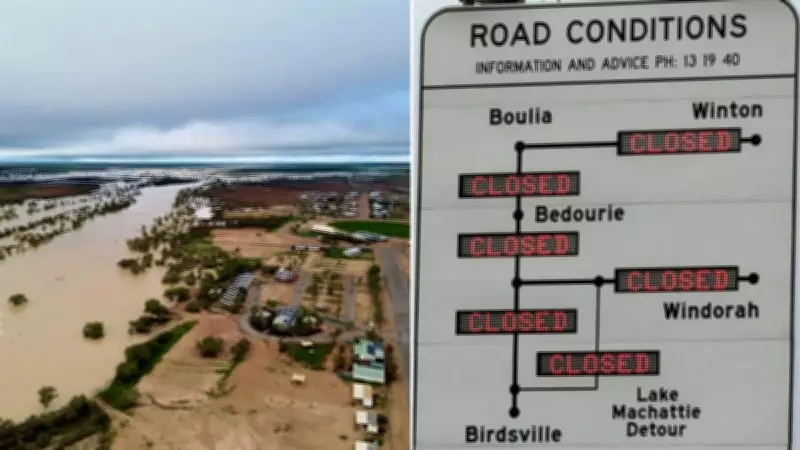
Several outback communities in Queensland's central west region could remain cut off for weeks or even months as rising floodwaters continue to isolate multiple towns. The extensive network of roads connecting towns within the Diamantina Shire Council area has been severely crippled by numerous closures, leaving residents stranded in what has been described as an inland sea.
Towns Transformed into Islands Amid Rising Waters
The townships of Birdsville, Bedourie and Betoota are among the areas most significantly affected, with floodwaters surrounding these communities and cutting off essential access routes. Assistant Minister for Primary Industry Development, Water and Western Queensland, Sean Dillon, has warned that locals are preparing for an inundation that could challenge the catastrophic floods of 1974 as water levels continue to rise steadily.
The 1974 floodwaters were driven by Cyclone Wanda in January of that year, causing record-breaking inundation across outback and western Queensland that resulted in widespread devastation and long-term recovery efforts.

"Road access in and out of these communities is going to take some time to be restored," Dillon stated on Sunday. "We're here for these communities, we'll be here to help them get through this period of time and for those who might suffer a bit of damage we'll certainly be there to help in the rebuild."
Emergency Response and Infrastructure Protection
The Queensland Reconstruction Authority (QRA), which serves as the state government's lead agency for disaster recovery and mitigation, reported on Wednesday that the flooded town of Bedourie is currently protected by a levee bank that remains structurally sound. However, additional works are underway to provide extra protection against the rising waters.
"Council have also identified low areas and are proactively raising these sections as a precautionary measure," the authority stated. "With prolonged isolation likely, council is working with the Queensland Government and local grocers to manage the resupply of essential goods."
The Queensland and Australian governments have activated funding to support local disaster response and repair efforts, with authorities emphasizing their readiness to provide any additional support required during this challenging period.
Agricultural Impact and Government Assistance
Heavy rainfall across large parts of Queensland has taken a significant toll on agricultural operations, with the state government extending grants of up to $75,000 to more local government areas affected by the flooding. Queensland Premier David Crisafulli shared photographs over social media showing the extent of flooding in southwestern towns.
"Communities near the iconic town of Birdsville are experiencing significant flooding, with many properties inundated and cut off," he stated in his post. "These Queenslanders live in a remote part of our state but we'll be with them every step of the way."
Flood Mitigation Investments and Future Preparations
At the end of February, the Bulloo and Quilpie shire councils received approximately $15 million for flood mitigation projects. This funding includes $10 million for flood risk management programs targeting the Bullo, Lower Thomson River and Cooper Creek Catchments, along with the construction of a levee for Thargomindah and other townships identified as at-risk areas.
An additional $5 million has been allocated to help identify optimal locations for flood monitoring assets and to install flood gauges in collaboration with the Bureau of Meteorology. In Quilpie specifically, the government has agreed to replace six concrete floodways to improve future flood resilience.
Weather Warnings Extend to Northern Regions
The current flooding crisis comes as areas of Far North Queensland have been warned of heavy rainfall and potential flooding from a low pressure system developing off the coast of Cairns. This weather system threatens to develop into a tropical cyclone as early as Friday, with meteorologists monitoring its progress closely.

The low pressure system, currently positioned off Cairns in the Coral Sea, is expected to make landfall around the Innisfail area within the next 24 hours. Senior meteorologists have indicated that as the system moves through the state, moderate to heavy rainfall could shift towards central Queensland, potentially impacting areas around Mount Isa and Julia Creek.
This developing weather pattern raises concerns about additional flooding in regions already struggling with water management and infrastructure challenges following weeks of sustained rainfall across Queensland's vast interior.