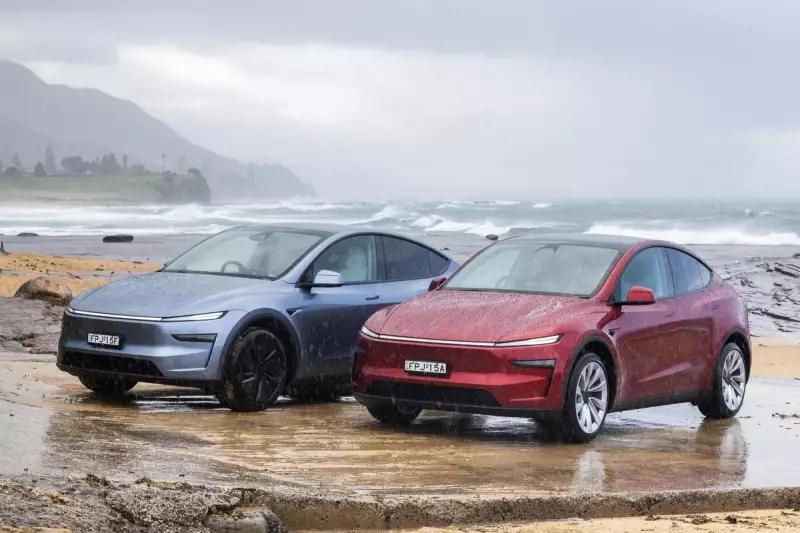
The Tesla Model Y has once again proven its safety credentials, securing the top spot in the Australian New Car Assessment Program's (ANCAP) 2025 safety ratings. This marks the second time the electric SUV has led the rankings, following its initial achievement in 2022 with the pre-facelifted model.
ANCAP's Top Performers for 2025
ANCAP's comprehensive assessment for 2025 evaluated vehicles across four critical areas: adult-occupant protection, child-occupant protection, vulnerable road-user safety, and safety assist technologies. The Tesla Model Y delivered standout scores of 91 per cent, 95 per cent, 86 per cent, and 92 per cent respectively in these categories.
The top-performer results were determined using a weighted sum of scores, with a significant emphasis on physical crash protection. Adult-occupant protection alone accounted for 40 per cent of the overall weighting, underscoring its importance in ANCAP's evaluation framework.

2025 Top-Performing Vehicles by Category
- Medium SUV: Tesla Model Y
- Medium car: Tesla Model 3
- Large SUV: Volvo EX90
- Large car: MG IM5
- Small SUV: MGS5 EV
- Light/small car: Mini Cooper E
- Ute: Toyota HiLux
ANCAP chief Carla Hoorweg highlighted that the top performers demonstrated consistent excellence across all safety domains rather than relying on strengths in a single area. "The safest vehicles are those designed with safety as a system, not a checklist," she stated.
Hoorweg also noted increasing alignment between ANCAP's test requirements and the safety technologies that matter most on Australian and New Zealand roads. Improvements in autonomous emergency braking, lane support systems, and driver monitoring technologies are translating into more robust protection for everyday driving scenarios.
Upcoming Changes to ANCAP Protocols
ANCAP reassesses its testing and rating methodologies every three years to ensure relevance to emerging automotive technologies. New protocols for 2026-2028, developed in partnership with Euro NCAP, took effect from January 1, 2026.
These updated protocols introduce significant changes, shifting assessment to focus on pre, during, and post-crash "stages of safety" that collectively determine the final rating. The four stages include safe driving, crash avoidance, crash protection, and post-crash scenarios, with minimal thresholds established to formulate star ratings.
Key Focus Areas in New Protocols
- Electric Vehicle Batteries: Enhanced evaluation of battery safety in crash scenarios
- Driver-Assist Technology: Assessment of potentially intrusive systems
- Vehicle Controls: Evaluation of cars without physical buttons
These changes reflect a holistic approach to crash scenarios, considering safety before, during, and after collisions. ANCAP's star rating system will continue to award up to five stars, with higher numbers indicating greater safety levels.
Vehicle safety ratings remain valid for up to six years, meaning the latest three-year protocols must anticipate advancements in vehicles on sale as late as 2034, ensuring long-term relevance in a rapidly evolving automotive landscape.