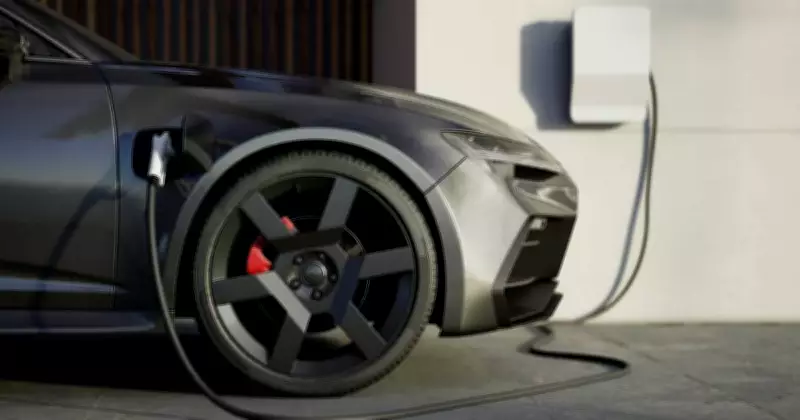
For decades, the primary function of a motor vehicle has been straightforward: to transport people and goods from one location to another. However, the rise of battery electric vehicles (BEVs) is fundamentally changing this dynamic. Today, a high-end EV is no longer just a mode of transportation; it is a rolling, high-capacity energy storage system.
The technology bridging the gap between driving and power generation is known as Vehicle-to-Load (V2L). For Australians, particularly tradespeople, off-grid campers, and those living in areas prone to power outages, V2L is not just a novelty; it is a game-changing feature that redefines vehicle utility.
What exactly is Vehicle-to-Load (V2L)?
At its core, V2L technology allows an electric vehicle to act as a mobile power bank. EV batteries store energy as Direct Current (DC). However, standard household appliances and power tools require Alternating Current (AC) to operate. A vehicle equipped with V2L features an onboard bidirectional inverter that takes the DC power from the massive high-voltage battery and converts it into usable AC power, exporting it through standard three-pin, 240-volt electrical outlets located in the car's cabin or exterior.

While traditional internal combustion engine (ICE) vehicles can run small 12-volt accessories via a cigarette lighter, V2L operates on an entirely different scale. It provides standard household-level voltage, allowing you to plug in everything from a coffee machine to a high-draw heavy-duty power saw.
Basic V2L vs. advanced mobile generators
It is important to understand that not all V2L systems are created equal. As the market expands, we are seeing a clear divide between lifestyle V2L and industrial V2L.
Basic V2L (The Lifestyle Solution)
Many popular electric SUVs and sedans, such as the Kia EV9 and the BYD Seal, offer basic V2L capabilities. These systems typically max out at a combined output of around 3.6 kW (3,600 watts). This is highly useful for recreational purposes. It is enough power to run a laptop, charge camera batteries, boil an electric kettle, or keep a dual-zone camping fridge running for days at the beach. However, if you plug in multiple high-draw power tools simultaneously, the system will trip and shut down to protect the vehicle's circuitry.
Advanced V2L (The Industrial Solution)
For heavy-duty applications, basic is simply not enough. This is where American-sized electric pickup trucks rewrite the rules. The Ford F-150 Lightning is equipped with an advanced iteration of this technology called Pro Power Onboard. Instead of a modest 3.6 kW, the F-150 Lightning delivers a staggering 9.6 kW of exportable power. This power is distributed across multiple 240V outlets located in the massive Mega Power Frunk (front trunk), the interior cabin, and the rear tub. This transforms the vehicle into a true industrial-grade generator.
Real-world applications for Australians
The implications of a 9.6 kW mobile power station are massive for the Australian lifestyle and economy:
1. Revolutionising the Job Site
For tradespeople, the F-150 Lightning eliminates the need for noisy, petrol-chugging, exhaust-spewing site generators. You can simultaneously run air compressors, drop saws, concrete mixers, and heavy-duty welders directly from the truck's tub. The power delivery is pure, silent, and completely emission-free, meaning you can safely run tools inside enclosed warehouses or underground garages without ventilation concerns.
2. The Ultimate Off-Grid Camping Rig
Australians love venturing off the beaten path, but roughing it is no longer a requirement. With an advanced V2L system, you can power an entire off-grid campsite. Imagine running electric induction cooktops, high-lumen site lighting, portable heaters, and a massive fridge/freezer simultaneously in total silence, with no thumping generator to ruin the serenity of the bush.

3. Emergency Home Backup Power
In regions prone to severe storms, bushfires, or grid instability, power outages are a constant threat. The battery in a Ford F-150 Lightning Extended Range model holds 131 kWh of usable energy. To put that in perspective, the average Australian home uses roughly 15 to 20 kWh a day. By utilising Pro Power Onboard, you can run extension cords to your home's essential appliances, including refrigerators, medical equipment, lighting, and internet routers, keeping your household fully operational for nearly a week during a blackout.
The future is bidirectional
V2L is just the beginning. The industry is rapidly moving toward Vehicle-to-Home (V2H) and Vehicle-to-Grid (V2G) technology, where your truck can directly power your home's electrical panel or sell energy back to the grid during peak pricing hours. If you want a vehicle that works just as hard when parked as it does on the highway, a heavy-duty electric ute is the ultimate tool.
Ready to upgrade your utility? Because the Ford F-150 Lightning is manufactured in left-hand drive, it requires expert engineering to be driven legally in Australia. Performax International leads the industry in right-hand-drive conversions, ensuring every electrical system, including Pro Power Onboard, is flawlessly integrated for local use. To secure yours, contact Performax International today at 07 5482 7833 or email enquiries@performax.com.au.