Why swimwear is hard to make sustainable
Swimwear must stretch to fit and withstand salt water, sunlight and chlorine, which typically means it is made from petroleum-based fibres like nylon or polyester. However, more environmentally friendly options exist. Helen Lofts, circular economy advocate and founder of Davy J, says: "Better swimwear should first and foremost mean longer lasting and higher quality. Nylon and polyester fibres are incredibly hard-wearing but the elastane they’re woven with is often not. The quality and density of the fibre weave determines how robust they are." Cheap, thin swimsuits degrade quickly, while quality lining and tight weaves last longer.
Recycled and alternative fabrics
Brands now use recycled synthetic fabrics such as Repreve, Econyl, NetPlus and Evo, made from recycled materials, bio-based castor beans or plastic waste like fishing nets. These often carry Oeko-Tex certification, ensuring they are tested for harmful substances. Swimwear is also becoming more circular, with platforms like Reskinned offering recycling. Co-founder Ross Barry notes: "Swimwear is typically made from nylon, polyester and elastane, blended in ways that make recycling difficult. However companies like Epoch Biodesign are developing new approaches to nylon recycling, while Syre, Re&Up and Worn Again are scaling textile-to-textile recycling for polyester."
Best regular use: Wallien Yemaya one-piece swimsuit
The Wallien Yemaya one-piece is a personal favourite. Made from Econyl and elastane, it is chlorine-proof with UPF50+ sun protection. After a year of regular sea swimming, it still looks almost brand new. Price: £119.

Best coverage: Junk LDN Sydney bikini
Junk LDN offers bright bikinis for fuller figures. The Sydney top is A-J cup friendly with adjustable cup coverage. Made from Reclaim Prime recycled nylon and elastane, Oeko-Tex and GRS certified. Top £55, briefs £50.
Best for watersports: Finisterre Senara V-neck swimsuit
Finisterre’s Senara swimsuit provides support and freedom of movement. Senior product designer Joanna Bury says: "We use Econyl because it’s soft and silky. It’s made from discarded fishing waste, reducing energy and water consumption by 60%." Price: £90.
Best innovation: Davy J Statement cut-out swimsuit
Davy J’s fabric mill uses renewable energy, recycles 83% of water and 99% of production waste. The Statement cut-out swimsuit is made from 100% regenerated nylon (Econyl) and elastane, with a deep plunge neckline that can be worn as a body. Price: £140.
Best sustainable shorts: Passenger Drifter swim shorts
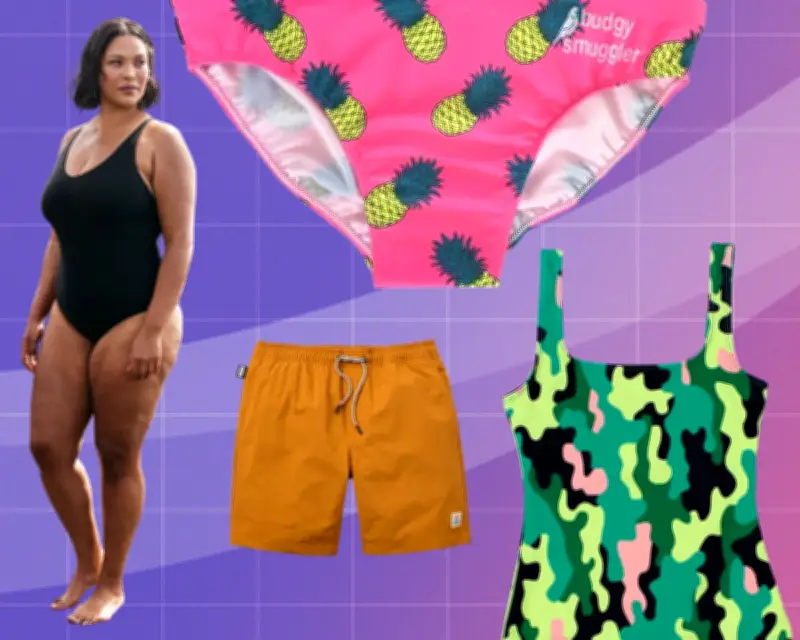
Passenger’s shorts use NetPlus recycled nylon from discarded fishing nets sourced directly from fishing communities. Available in five colours, including retro orange. Price: £44.95.
Best chic bikinis: Kōraru Bellina bikini
Kōraru upcycles end-of-roll fabrics from fashion houses near its London manufacturer. The brand donates $5 from every set to the Coral Reef Alliance. Made from polyamide and elastane. Top and bottoms £62 each.
Best multi-brand shopping: Made of Water classic swimsuit
This Cornish-founded brand offers a classic one-piece made from Econyl and elastane, and its website allows searching by fibre type. Price: £85.
Best bright briefs: Budgy Smuggler Pink Pineapples trunks
Australian brand Budgy Smuggler offers recycled polyester tighties in vibrant prints, GRS certified. Customisable with logos or photos. Price: £39.99.
Best for local swim club: Batoko Camo swimsuit
Batoko’s swimsuits are designed for supportive swimming without underwiring, with thick lined fabric and high-back design. Sizes up to 3XL (UK 24-26). Digitally printed for less waste. Made from recycled polyester and elastane. Price: £60.
Best for time-of-month: Modibodi high-waist bikini brief
Period underwear specialist Modibodi offers bikini briefs with high absorbency, holding the equivalent of 10 tampons. Made from recycled nylon and elastane. Price: £31.99.

Swimwear care tips
Rinse in fresh water after every use to prevent chlorine and seawater degradation. Helen Lofts advises: "If used in chlorine, put it on a 30C hand-wash cycle with mild detergent." Dry out of direct sunlight to avoid fading. For repairs, use local menders or apps like The Seam. Old swimwear in good condition can be donated or sold. Reskinned prioritises reuse; if not possible, items are directed to textile-to-textile recycling or mechanically recycled for filling products. Brands like Finisterre, Davy J and Kōraru accept back worn-out swimwear.