
It is the longest night of the year, and I am uncomfortably close to many strangers, queueing to eat something I am not used to seeing on a menu: brushtail possum.
Dark Mofo, Tasmania’s mid-winter art, music and food festival, has always dished up a side-serve of discomfort, and this year’s Winter Feast is no exception. Part food tourism, part theatre, the wonderfully weird food market of your dreams is bathed in blood-red light with long, candlelit communal tables. The wholly decadent market centres on unusual Tasmanian ingredients like bull kelp, abalone and wild-caught wallaby.
The Possum Bao That Divided Diners
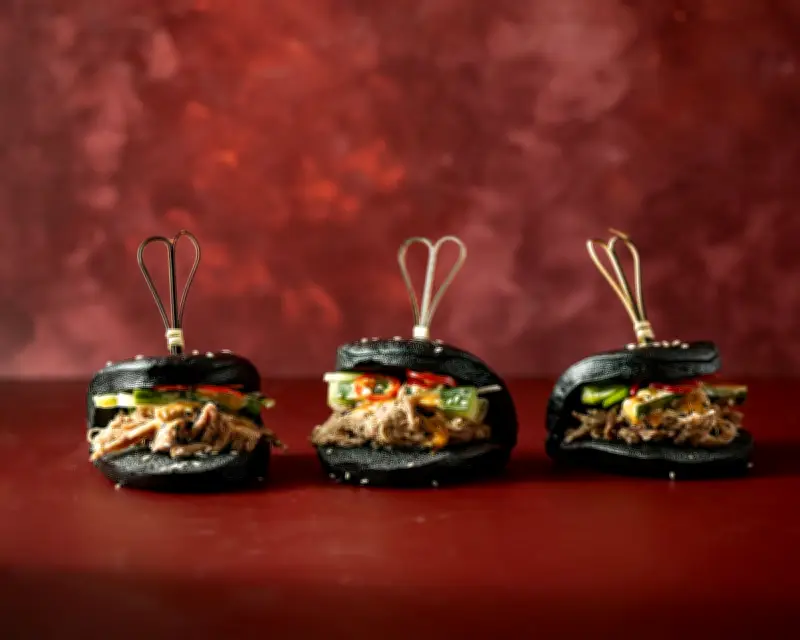
This year, sitting casually beside ex-dairy cow burgers, is possum bao: delightfully innocuous, sweet-as-pie little parcels filled with slow-cooked wild Tasmanian possum. So why do I feel odd about eating it?

Jeremy “Jezz” Waterhouse, chef from Hobart’s South Wine Bar, first put possum on his restaurant’s menu roughly three years ago. “People were a bit freaked out. My wife thought I was crazy, so I ordered it on the sly,” he says.
It took Waterhouse about six months of trial and error to create a recipe that would feel familiar enough to coax people into trying it. To make the bao served at Dark Mofo, the whole carcass is brined for 24 hours, dusted with spices, then sous vide in a steam oven for a further 10 hours before the meat is shredded. At his restaurant, Waterhouse puts possum on the specials menu half a dozen times a year, in dishes like rillette and pizza.
Ethical Questions and Ecological Realities
Last year, Winter Feast received some questions about the ethics of possum appearing on the menu, ranging from “but aren’t they protected?” to the difficult to answer “how could you?”. Possums are a national icon, a native backyard visitor, an annoyance. They have been anthropomorphised, befriended and hated.
While I am not a vegetarian, I am not insensitive to the ethical dilemma of consuming any animal. It is legal to harvest brushtail possums in Tasmania, but the process is highly regulated to ensure it is sustainable and humane. Ecologist Henry Cook says: “Ecologically, it’s all very much above board.”
Over the years, Cook has worked to protect the swift parrot, orange-bellied parrot and spotted pardalote. He says that modification of habitats through agriculture and forestry has benefited brushtail possums, while the Tasmanian devil, one of their only natural predators, has experienced catastrophic decline. These possums are now abundant enough to have become a problem. So if the animals are already being culled, why not eat them?
Indigenous Traditions and Modern Solutions
Possum-as-protein has a long history. Kitana Mansell, a Palawa woman, business manager and chef, says that Palawa people have eaten possum for millennia. She describes a traditional method of slow cooking it in an earth oven. Her catering company Palawa Kipli is Tasmania’s only Aboriginal-owned and operated food enterprise.
At Lenah Game Meats, which supplied Winter Fest stallholders with wallaby, venison and possum this year, nothing is discarded. Possum and wallaby fur is sold as a raw product for yarn, while wallaby skins are tanned in Melbourne and used to create Lenah’s own Wugg boots. “Most of our possum skins go to First Nations people and organisations,” says Lenah’s Katrina Kelly. “A big percentage are made into cloaks.”
John Kelly, co-founder of Lenah Game Meats, set out to normalise the eating of wild Tasmanian game. His honours thesis explored the idea of “eating the problem”, viewing invasive species and abundant wildlife as a nutritious food source for humans. Wallaby and possum require no cleared land, fertiliser or feedlots. A recent carbon emissions assessment suggests that harvesting abundant local wildlife and invasive species carries a remarkably low emissions footprint. Kelly calls this “pragmatic environmentalism”.
A Personal Taste Test
Time to put my money where my mouth is. Possum tastes a little sweet, melts in the mouth, perhaps in the ballpark of duck, but lighter. Was it a transcendent experience? No. But nor did it feel like an offence. I asked a couple of other punters what they thought of their possum bao. Andrew “loved it!”. Angus felt he had finally settled a score with the species wreaking havoc in his roof.