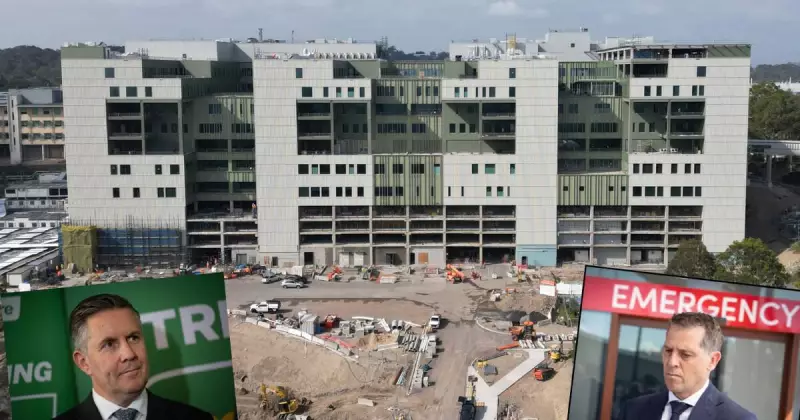
John Hunter Hospital's Specialist Clinics Handle a Third of NSW's Outpatient Appointments
John Hunter Hospital in Newcastle has revealed its overwhelmed public specialist clinics provided a staggering one-third of the state's outpatient appointments during the last financial year. This critical service, however, is under immense strain due to skyrocketing waitlists and a lack of physical space, with health officials warning that expansion is impossible without a massive injection of government funding.
Soaring Waitlists and Patient Frustration
The Newcastle Herald reported that more than 51,500 people were on the waitlist for 15 outpatient clinics at John Hunter Hospital last year. This represents a dramatic increase of 71 per cent from just 30,100 patients only four years ago. The situation has left many patients frustrated and facing significant delays in receiving essential treatment, with some going without care altogether.
Julie Tait, John Hunter Hospital's executive general manager, emphasised the physical constraints, stating, "to get more [outpatient] capacity, we need more space physically." She clarified that new outpatient clinics are not included in the $835 million hospital redevelopment, known as stage one of the "John Hunter Health and Innovation Precinct." Ms Tait indicated that any further growth would require significant capital investment, potentially through a proposed stage two redevelopment.

Specialist Wait Times Reach Up to a Decade
The longest waits to see specialists at John Hunter's clinics are alarmingly high, with patients facing delays of up to 10 years for ear, nose, and throat appointments, and eight years for rheumatology, gastroenterology, colorectal, and orthopaedic services. The longest median waits are in rheumatology at 2.8 years, ear, nose and throat at 2.2 years, and immunology at 1.9 years.
Specific waitlist numbers highlight the scale of the issue:
- Ear, nose and throat: 10,486 patients
- Orthopaedics: 8,106 patients
- Gastroenterology: 7,872 patients
- Neurosurgery: 4,384 patients
- Dermatology: 2,870 patients
- Urology: 2,771 patients
- Neurology: 2,207 patients
Calls for Government Funding and Systemic Reform
Greens MP Amanda Cohn condemned the situation, saying, "People waiting up to 10 years for a specialist outpatient appointment is totally unacceptable." She argued that investing in outpatient care would not only shorten waiting times but also reduce pressure on hospital beds across the system.
Doctors Reform Society president Tim Woodruff has called for the federal government to directly fund state hospitals to boost outpatient clinics. In response, NSW Minister for Health Ryan Park stated that the Minns government would "always welcome more funding from the federal government," emphasising that it is imperative the Commonwealth pays its fair share. He noted constructive conversations are underway for an updated National Health Reform Agreement (NHRA).
Mr Park added that the state government is playing its part by hiring more staff, building new hospitals, and investing in urgent care services and clinics to ensure more timely access to outpatient care statewide.
Financial Commitments and Future Solutions
A federal health department spokesperson highlighted that the Commonwealth has increased its funding to the NSW hospital system by 11 per cent this financial year, providing an additional $985 million to reach $9.88 billion in 2025-26. The Albanese government has also offered the states an additional $20.9 billion over five years under a new NHRA.
In June, the Grattan Institute recommended that federal and state governments invest about $500 million a year to expand public specialist clinics. This aligns with the push to attract an estimated $900 million in funding for the second stage of the John Hunter Hospital redevelopment.

NSW Health stated that patients on specialist outpatient service waitlists are assigned a clinical urgency category based on their need and are treated in turn. The department is establishing statewide referral criteria for specialist outpatient services to support health professionals in making and triaging referrals. Additionally, the implementation of the Single Digital Patient Record, due for completion in 2028, will provide a statewide view of specialist outpatient waiting lists, aiming to improve efficiency and patient care.
Across NSW, outpatient clinics handle 15 million "service events" annually, with about five million occurring at John Hunter Hospital. These include medical consultations, procedures, diagnostic services, allied health, and nursing care, underscoring the hospital's pivotal role in the state's healthcare infrastructure.