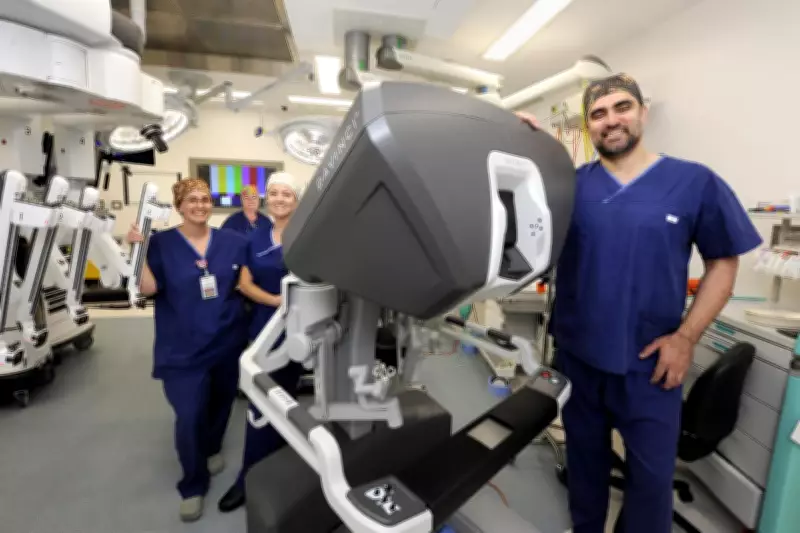
Joondalup Hospital Acquires Advanced Surgical Robot for Prostate Cancer Operations
Joondalup Health Campus has significantly enhanced its surgical capabilities with the acquisition of a state-of-the-art da Vinci surgical robot, specifically designed to assist surgeons in performing delicate procedures through tiny incisions. This technological advancement represents a major step forward for medical services in Perth's northern suburbs.
Revolutionizing Prostate Cancer Treatment
The da Vinci robot utilizes robotic arms that control miniature surgical instruments, enabling surgeons to execute complex procedures through small keyhole incisions with unprecedented precision compared to conventional laparoscopic methods. This acquisition means prostate cancer patients in the region can now access less invasive surgical options closer to home, as the robot is primarily utilized for urological procedures.
Among the first surgeons at Joondalup Health Campus to employ the da Vinci robot for robotic prostatectomy—a specialized treatment for prostate cancer—is urological surgeon Dr Haider Bangash. He expressed enthusiasm about this development, stating that suitable patients can now benefit from the latest advanced surgical treatments locally, which also helps minimize complication risks.

"Prostate cancer accounts for approximately 30 percent of all new cancer diagnoses in Australian men," Dr Bangash explained. "While treatment options like prostatectomy result in high survival rates, all surgery carries inherent risks. The more we can reduce these risks through appropriate technologies like robotics, the better outcomes we can achieve for our patients."
Addressing a Critical Health Concern
According to data from the Australian Institute of Health and Welfare, prostate cancer remains the most commonly diagnosed cancer in Australia. Statistics reveal that around 79 Australian men receive a prostate cancer diagnosis daily, with one in five men facing the risk of diagnosis during their lifetime. The condition is most frequently identified in men aged 60 to 79 years.
The surgical robot is anticipated to improve access to hard-to-reach anatomical areas and potentially reduce recovery times due to smaller, less painful incisions that result in minimal scarring. This technological advancement aligns with broader trends in Australian healthcare, where robotic-assisted surgery has seen substantial growth—increasing from one percent of general procedures in 2008 to 17 percent in 2023 across Australasia.
Expanding Surgical Applications
Beyond prostate procedures, the new robot at Joondalup Health Campus will be deployed for a diverse range of surgical interventions, including:
- Urological reconstruction procedures
- Colorectal cancer operations
- Hysterectomies
- Thoracic procedures for suitable patients
This addition joins an existing fleet of robotic systems at the hospital, available to both public and private patients. Dr Kevin Hartley, Director of Medical Services at Joondalup Health Campus, emphasized the growing demand for robotic-assisted surgery due to its demonstrated benefits.
"Ramsay Health Care is deeply committed to delivering high-quality healthcare for the Joondalup community and surrounding regions," Dr Hartley stated. "By integrating the latest technological advancements like the da Vinci surgical robot, we not only enhance patient care but also strengthen our ability to attract and retain a skilled medical workforce."
The integration of this advanced surgical technology marks a significant milestone in Joondalup's healthcare infrastructure, promising improved surgical outcomes, reduced patient recovery times, and enhanced access to cutting-edge medical treatments for residents throughout Perth's northern metropolitan area.