A severe mould contamination has forced the shutdown of critical care areas at a major Hunter region hospital, raising serious concerns about patient safety and systemic infrastructure failures.
Intensive Care Unit Closed for Emergency Cleaning
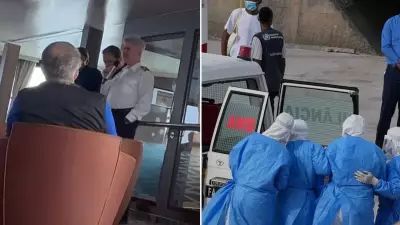
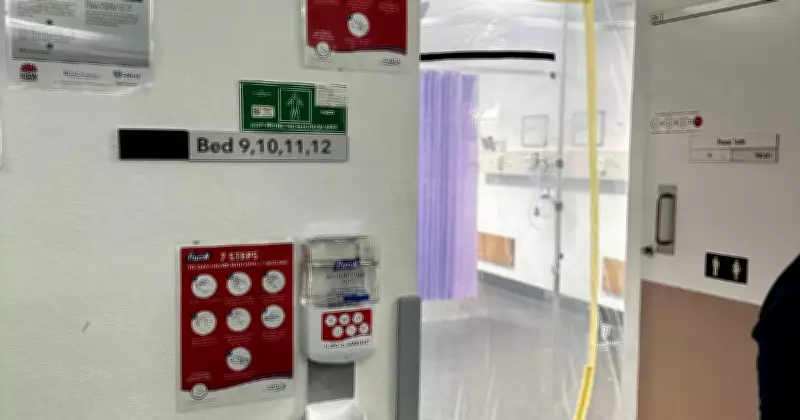
Calvary Mater Newcastle hospital was compelled to close most of its intensive care unit and rooms across three separate wards over the weekend. This drastic action was taken to facilitate what management termed a "deep cleaning" operation targeting mould identified as a potential hazard to vulnerable patients.
The hospital confirmed it had to transfer two stable patients from the ICU to other wards to allow for clinical cleaning. Staff sources indicate approximately five patients in total were moved from the intensive care environment.

A Deepening Pattern of Contamination
This incident is not isolated. The hospital previously closed two wards in January after mould was discovered in air-conditioning ducts, with reports of maggots falling from ventilation vents onto patients below. One affected area was a haematology day ward, known as Ward 5D, where cancer patients were relocated to alternative treatment spaces.
As the crisis escalated, the Minns government announced on Sunday that "critical cladding remediation works" would commence at the hospital "as soon as practicable." Hospital staff, however, argue that while cladding repairs may address water leaks, the core mould problem stems from the air-conditioning system and persistent humidity issues within the building.
Staff Voice Anger and Psychological Distress
Frontline healthcare workers have expressed profound frustration with the ongoing situation. One staff member stated they are "angry, shocked and deeply disillusioned with those in positions of authority."
The psychological impact on staff is significant, with reports of escalating distress, burnout, moral injury, and a pervasive fear of speaking out about the conditions. "Staff are experiencing escalating psychological distress, burnout, moral injury and fear of speaking out," the staff member revealed.
Test Results Reveal Specific Mould Strain
An email sent to hospital staff at 8pm on Friday detailed air quality test results provided to management. The tests indicated slightly elevated levels of Aspergillus fumigatus, a specific type of mould, in the ICU and in three rooms across Wards 4A, 4B, and 4C.
While the email stated the levels were "not at a level considered dangerous to healthy individuals," it acknowledged that specific patient groups—including those who are immuno-compromised, have severe respiratory disease, or are in ICU—can be particularly vulnerable.
A cleaning company, Medirest, was engaged to conduct the deep clean of the entire ICU and the affected ward rooms.
Systemic Failures and Temporary Measures
Staff have highlighted that temporary measures implemented to manage the mould risk continue to fail. One hospital worker noted this was the first time all areas had been tested for mould, with an anaesthetic bay in a theatre also returning a positive result.
The cleaning operation itself caused disruption, with cleaning staff reportedly required to stay back at short notice with little warning, leaving them feeling pressured.
A Hunter New England Health spokesperson confirmed that deep cleaning of impacted clinical and non-clinical spaces is complete, with follow-up cleaning ongoing. They stated that routine air testing will continue throughout mould remediation works, which are expected to take several months and involve the replacement of mechanical systems and ductwork.
Government and Management Response
NSW Health Minister Ryan Park stated that improvement works to the heating, ventilation, and air-conditioning (HVAC) system began on January 14. Hospital management has requested a full inspection of the HEPA filtration in each of the six ICU rooms and has distributed "hospital grade air purifiers" across all affected areas.
However, staff argue these purifiers should be more widespread, with one claiming, "The mould is absolutely everywhere through the whole air-conditioning system." Hunter New England Health has committed to inspecting individual HEPA filtration systems and deploying additional portable HEPA filters.

Long-Standing Issues and Patient Risk
Staff report that water has been leaking into the hospital for years, contributing to the persistent mould problem. The constant disruptions are taking a heavy toll. "The constant sudden disruptions are unsettling and exhausting. Staff just want to come to work, feel safe and do their jobs properly," a staffer said.
They painted a dire picture of the working environment: "The Mater now feels less like a cancer hospital and more like an episode of Stranger Things. Staff are on constant high alert, bracing for what may come next."
The situation raises critical questions about accountability. "Passive words of reassurance are no longer acceptable. It is incomprehensible that this situation has been allowed to continue for so long," a staff member stated. "Who is taking responsibility, and when will this be fixed? Patients continue to be exposed to potentially serious and preventable risks."
Links to Health Outcomes and Hospital Structure
The mould found, Aspergillus fumigatus, has been linked in medical research to pneumonia. A recently released Bureau of Health Information study found the Calvary Mater had "higher than expected mortality" for pneumonia, despite a statewide decrease in such cases.
The Calvary Mater is a public hospital operated under a unique structure, run by a private company named Novacare, which is responsible for building maintenance and cleaning. Honeywell, one of four companies within Novacare, is responsible for the hospital's maintenance.
In a statement last month, Honeywell clarified that its scope of work does not include "rectifying structural defects or mechanical design, including cladding issues and facade leaks," pointing to a potential gap in responsibility for the root causes of the moisture problem.
By Sunday morning, following the intensive cleaning operation, patients had been returned to the ICU. However, the broader remediation works are projected to continue for months, leaving staff and patients in a state of uncertainty regarding the long-term resolution of this critical health infrastructure failure.