Health Alert: Counterfeit Blue Pills Contain Deadly Synthetic Opioids
Authorities across New South Wales have issued a critical public health warning regarding bright blue pills that mimic legitimate prescription painkillers. These counterfeit tablets, which appear similar to standard OxyContin medication, may contain a dangerous synthetic opioid cocktail featuring nitazenes. This substance is alarmingly potent, with experts confirming it can be up to 500 times more powerful than heroin.
South Coast Arrest Sparks Regional Concerns
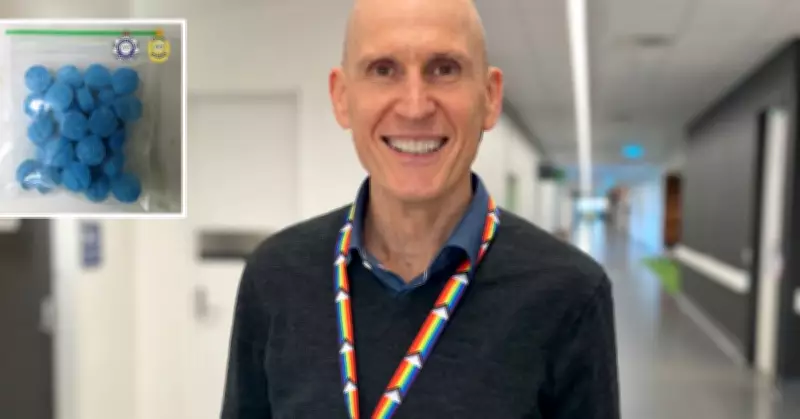
The warning follows a recent arrest of a South Coast man allegedly attempting to import these synthetic opioids. This incident has heightened fears among health authorities and police that the pills could already be circulating within the Illawarra and South Coast communities. NSW Health has specifically identified the dangerous pills as blue, scored, round tablets marked with 'M' and '30', designed to closely resemble legitimate prescription medications.
South Coast Police District Detective Inspector Justin Marks emphasised that saving lives remains the absolute priority. "We certainly don't want people to be under the opinion that police will be turning up and arresting them," Detective Inspector Marks stated. He highlighted the existing memorandum of understanding between NSW Health and NSW Police, ensuring that individuals seeking medical help for overdoses receive treatment without immediate legal consequences.

The Dangerous Reality of Illicit Drug Manufacturing
Detective Inspector Marks provided disturbing insights into how drug suppliers maximize profits at the expense of consumer safety. "A drug supplier will often try and make as much money by adding bulk to what they've got," he explained. Dealers frequently incorporate household chemicals, including laundry powders and acids found under kitchen sinks, to dilute their products while maintaining the appearance of purity.
"To a drug supplier, you are a profit margin; to Detective Inspector Marks, you are a potential knock on a parent's door that he never wants to make," the investigation revealed. This stark contrast underscores the human cost behind the illicit drug trade.
Global Opium Shortage Fuels Unregulated Production
Dr James Blogg, Clinical Director for Alcohol and Other Drugs at Southern NSW Local Health District, connected the emergence of nitazenes to broader global trends. With Afghanistan's opium cultivation plunging by 95 percent in 2022, the resulting void is being filled by unregulated online production. "They are producing it online, they are not answerable to anyone and will produce and label things with whatever they like," Dr Blogg warned. "There's no correlation between what people think it is, what it is labelled, and what it actually is."
Recognizing and Responding to Opioid Overdose
Dr Blogg outlined crucial signs that may indicate someone has overdosed:
- Person becomes unresponsive or "flat" after taking a pill or vape
- Breathing stops or becomes dangerously shallow
- Pinpoint pupils appear
- Skin turns grey with an overall awful appearance
In such emergencies, immediately calling an ambulance and beginning CPR can save lives. Importantly, NSW residents have access to naloxone, a life-saving medication that temporarily reverses opioid overdose effects. Available as NYXOID nasal spray or injection, naloxone is free for anyone at risk of opioid overdose in NSW and requires no prescription.
Dr Blogg cautioned that naloxone's effects last only 30-90 minutes, making emergency follow-up care essential. "Whatever you do to resuscitate someone probably will not be enough and they will probably go into a coma again or start respiratory depression again," he explained, emphasizing the need for continued CPR until professional help arrives.

Concurrent Warning on GHB Overdose Surge
As authorities warn about nitazenes, Australia faces another concerning trend with gamma-hydroxybutyrate (GHB), also known as "liquid ecstasy." A recent study reveals that GHB-related deaths have increased tenfold since 2013, while hospitalisations have tripled. The National Drug and Alcohol Research Centre analysis found statistically significant rises in both fatalities and medical emergencies related to this substance.
Associate Professor Amy Peacock, senior author of the study, stated "GHB is a drug that carries quite a high risk of overdose and other harms. Those harms are rising and they are preventable." St Vincent's emergency medicine director Dr Jonathan Karro reported that GHB-related presentations at the Melbourne emergency department have become a daily occurrence, affecting patients across all ages and backgrounds.
The Australian Federal Police has simultaneously warned of a "tidal wave" of illegal importation of 1,4-Butanediol, the precursor to GHB. Acting Assistant Commissioner Paula Hudson emphasized that "there is no safe dose of this drug" and highlighted how criminal networks profit from creating demand for these dangerous substances.
These dual warnings about nitazenes and GHB come against a sobering national backdrop: according to the Department of Health, Disability and Ageing, three Australians die daily from opioid-related use, over 110,000 struggle with opioid dependence, and 64 percent of drug-induced deaths in 2018 involved opioids.