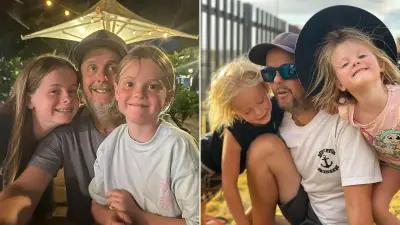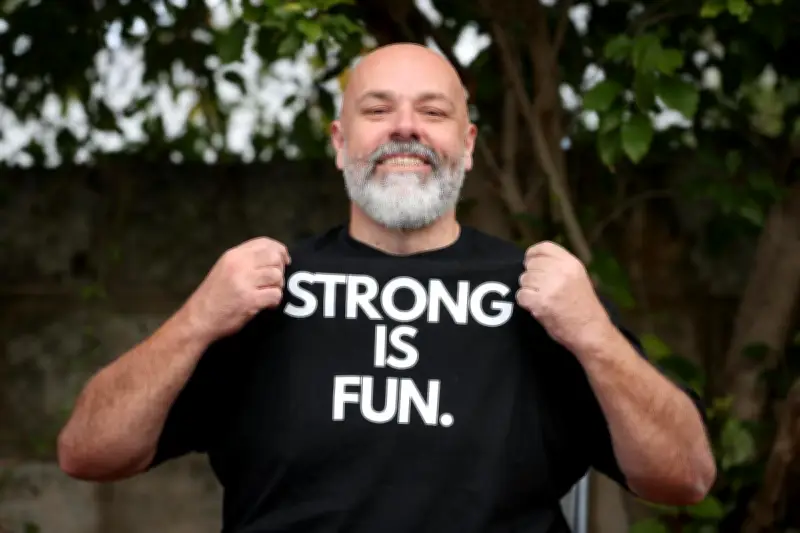
Nathan Baxter, a 49-year-old West Leederville man and former professional powerlifter, survived five strokes caused by an undiagnosed heart condition. He is now urging Australian men not to ignore symptoms or settle for incomplete medical answers. Baxter is the face of the Stroke Foundation's Bloke Beside You campaign, which aims to improve stroke awareness among men.
From Powerlifting Champion to Stroke Survivor
Before his strokes, Baxter was one of Australia's top powerlifters, competing internationally as the nation's leading super heavyweight lifter. Between 2014 and 2016, he began experiencing unexplained symptoms, including chest pain, breathlessness, and episodes where his body “wouldn’t work right.” He consulted multiple doctors, who attributed his chest pain to his intense training regimen—he could bench press over 300 kilograms several times a week. However, the true cause was atrial fibrillation that had gone undiagnosed for about 20 years, eventually leading to heart failure.
“I started seeing doctors to find out what was going on, and every single one of them said that the pains in my chest were because I was able to bench press over 300 kilos several times a week,” Baxter said. “It turned out that it was atrial fibrillation that had gone undiagnosed for about 20 years, and eventually all the training had led to heart failure.”

Misdiagnosis and Deteriorating Health
Baxter’s symptoms worsened over time and were repeatedly misdiagnosed. “The last two diagnoses I was given was that I was having panic attacks,” he said. “They weren’t panic attacks, they were actually central apnoeas, which is when your brain thinks you’ve stopped breathing.” The turning point came shortly after his 39th birthday when he woke up struggling to breathe and could barely speak. He turned to his wife and said, “I don’t feel right,” but the words came out slurred. His wife called an ambulance, and he was at the hospital within eight minutes, where doctors diagnosed him with five simultaneous strokes.
His wife had recently learned the F.A.S.T. stroke warning signs after a close friend died from a stroke. “My wife went straight to it, did the FAST, got on the ambulance, said ‘My husband’s having a stroke’ and they were there within 15 minutes,” Baxter said.
Road to Recovery and Ongoing Challenges
Doctors later discovered that blood clots had formed in his heart and traveled to his brain. “What happened that night was a couple of hard beats of my heart squeezed some of those blood clots out of my heart,” he explained. “They made their way to my brain and five blood clots all simultaneously, or almost simultaneously, lodged inside my brain.” The road to recovery was long and difficult. “It took me the best part of six months or more to be able to speak properly again,” he said. He also experienced significant memory issues, including episodes of transient global amnesia where he temporarily stopped forming new memories.
To better understand his condition, Baxter completed a Bachelor of Science and honours degree in neuropsychopharmacology at UWA. His heart remained unstable for years following the strokes. “I was defibrillated 20 times to get my heart back in rhythm,” he said. “I spent the best part of eight-and-a-half, probably nine years, worried that my heart was going to go out again and it was all going to happen again.” Fortunately, a new heart procedure finally brought the condition under control. “I’ve gone 18 months now without needing to present to ER. I’ve had no symptoms, everything seems to be stable and under control now,” he said.
Continuing to Inspire and Advocate
Baxter now runs Baxter Strength Systems, working with aspiring elite athletes, including those with disabilities, who may not receive the same support as those in mainstream programs. He continues to powerlift but now trains for enjoyment. “It’s a hobby. It’s how I express myself. It’s my form of art, I guess,” he said.

The Bloke Beside You campaign aims to address the lack of understanding among men. Stroke Foundation data shows that two out of five men cannot identify any of the common F.A.S.T. warning signs. Baxter urges men to trust their instincts and persist in seeking medical answers. “If there’s something wrong, don’t take someone else’s word that you’re all right,” he said. “If you feel something’s wrong, keep going and find out what is wrong. Don’t stop going to doctors until they tell you ‘Yeah, this is it’.” He advises against waiting months between visits. “If you think something’s wrong, then it’s wrong. You’re the best person to know whether it feels good or it doesn’t.”
Stroke Statistics and Urgency
Stroke Foundation chief executive Dr Lisa Murphy emphasised that stroke does not discriminate. “The data is confronting. Someone in Australia experiences a stroke every 11 minutes, yet two in five Aussie men are unaware of what a stroke looks like, and one in three don’t know to call triple 000 in the event of a stroke. Stroke can strike at any age, and we know that the faster people access treatment, the more likely they are to prevent death and disability,” Dr Murphy said. “We’re asking all Australians to look out for the Bloke Beside You. Your mate, your dad, your brother, your colleague and start a conversation about stroke. Stroke doesn’t care how strong you are. Knowing the signs is your real power. Learn the F.A.S.T. message, it may just save a life.”
According to the Stroke Foundation, about 21,000 Australian men experience a stroke each year—approximately 57 men daily—and men are 50 per cent more likely to have a stroke than women. Stroke is the fifth leading cause of death for Australian men, costing more than 4,000 lives and 27,000 years of potential life lost every year. The F.A.S.T. acronym highlights three common stroke signs: facial droop, inability to lift both arms, and slurred speech. The T stands for time, reminding that medical treatment for stroke is time-critical.