
A Night of Profound Farewell
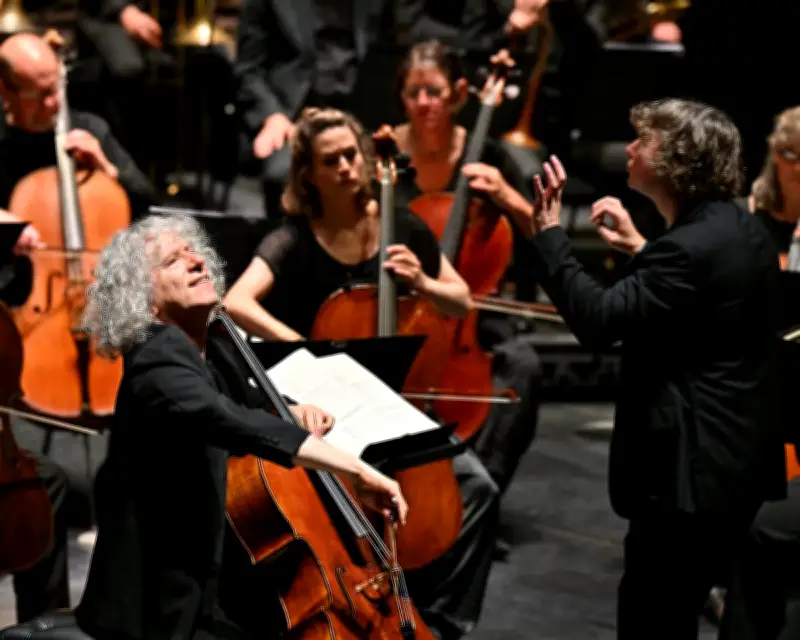
The Orchestra of the Age of Enlightenment (OAE), under the baton of Maxim Emelyanychev, presented a deeply moving interpretation of Johannes Brahms' last concert program at London's Royal Festival Hall on June 24, 2026. The performance, which marked the 130th anniversary of Brahms' death, recreated the program he conducted in 1896, featuring his own Piano Concerto No. 2 and the German Requiem.
Historical Context and Artistic Choices
Brahms' final concert was a poignant event in music history, as he was already suffering from the liver cancer that would claim his life a year later. The OAE, known for its historically informed performances, used period instruments and techniques to evoke the sound world of the late 19th century. Emelyanychev, who also played the piano, brought a sense of urgency and introspection to the concerto, balancing the work's monumental structure with its lyrical passages.
The concert opened with the Piano Concerto No. 2 in B-flat major, Op. 83. Emelyanychev's playing was both powerful and nuanced, with the orchestra providing a robust yet flexible accompaniment. The horn solo in the first movement was particularly noteworthy, played on a natural horn by the OAE's principal hornist, capturing the rustic quality Brahms intended.

Emelyanychev's Dual Role
As both conductor and soloist, Emelyanychev faced the challenge of maintaining coherence between the piano and orchestra. He succeeded admirably, with the ensemble responding to his every gesture. The second movement scherzo was driven and energetic, while the andante showcased the cello section's warm, singing tone. The finale was a joyous romp, with Emelyanychev and the OAE trading phrases with playful precision.
The second half of the program was devoted to Brahms' German Requiem, Op. 45. The OAE Choir, augmented to 60 voices, delivered a performance of remarkable clarity and emotional depth. The choir's blend and intonation were exemplary, and the soloists—soprano Sophie Bevan and baritone Roderick Williams—brought heartfelt expression to their parts.
Revelatory Interpretation
Emelyanychev's interpretation of the Requiem emphasized its consolatory nature rather than its liturgical somberness. The tempos were generally flowing, allowing the text to be heard clearly. The orchestral playing was transparent, with woodwind solos particularly poignant. The famous setting of 'How Lovely Is Thy Dwelling Place' was radiant, while the final fugue built to a powerful climax, leaving the audience in contemplative silence.
The performance was met with a lengthy standing ovation. Critics praised the OAE for shedding new light on familiar works. According to The Guardian's classical music critic, "Emelyanychev and the OAE reminded us why Brahms' music continues to speak across centuries, with performances that were both historically aware and viscerally immediate."
Significance and Reception
This concert marked a high point in the OAE's current season, drawing a capacity audience of over 2,500. The program's recreation of Brahms' last concert was not merely a historical exercise but a living tribute to a composer who bridged the classical and romantic eras. The OAE's commitment to period performance practices, combined with Emelyanychev's insightful direction, resulted in a Brahms that felt both authentic and fresh.
The concert also highlighted the OAE's ongoing exploration of 19th-century repertoire. Founded in 1986, the orchestra has become renowned for its interpretations of music from the Baroque to the early Romantic periods. This Brahms program, however, pushed their boundaries further into the late Romantic era, demonstrating the versatility of period instruments.
In the Piano Concerto No. 2, Emelyanychev's use of an 1876 Bösendorfer grand piano added a distinctive timbre, with a lighter bass and clearer treble compared to modern instruments. This choice allowed for greater transparency in the orchestral texture, making the dialogue between piano and orchestra more intimate.

The German Requiem, often performed with large forces, benefited from the OAE's leaner sound. The choir's use of vibrato was restrained, aligning with historical performance practices. The result was a performance that emphasized the work's structure and textual clarity, without sacrificing its emotional impact.
Overall, the concert was a testament to the enduring power of Brahms' music and the skill of the OAE and Emelyanychev in bringing it to life. It served as a fitting tribute to a composer whose final public appearance was marked by both melancholy and triumph.