Sydney Jeweller Meg Maskell's Journey with Multiple Sclerosis Inspires Hope
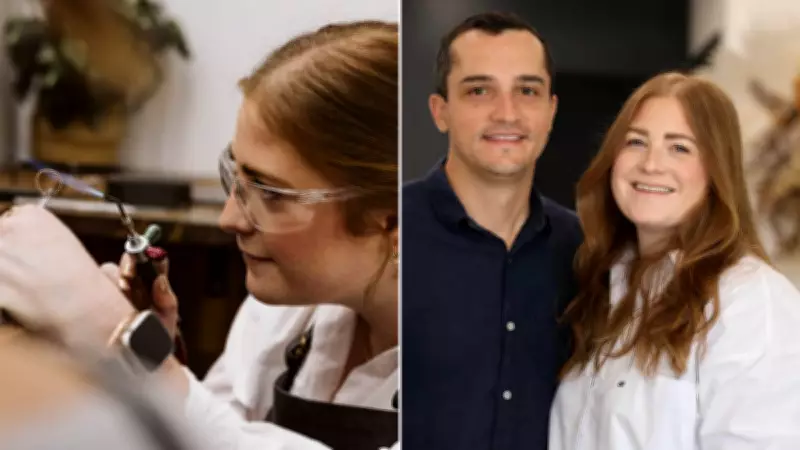
Sydney jewellery designer Meg Maskell understands the critical importance of detail in her craft. Each engagement and wedding ring she creates is a miniature masterpiece, demanding precision, intense focus, and sharp eyesight. So, when her vision abruptly turned blurry six years ago, Maskell, now 36, immediately sensed something was seriously wrong.
"At first, I thought it was just the bushfire smoke," she recalled. "But even after a few weeks back at work, my eyesight remained persistently hazy." A routine optometrist visit provided no clarity, prompting Maskell to seek emergency care at the Sydney Eye Hospital, where she underwent extensive testing.
Diagnosis and Initial Shock
The results delivered a devastating blow. "They told me it was either caused by a brain tumour, motor neurone disease, or MS," Maskell said. "It was a big punch in the face." Further examinations, including a spinal tap and MRI, confirmed she had relapsing-remitting multiple sclerosis (RRMS), the most prevalent form of this neurological condition.

Multiple sclerosis is an autoimmune disorder where the immune system erroneously attacks the nerves in the brain and spinal cord, leading to inflammation and scar tissue, known as lesions. It stands as the most common acquired chronic neurological disease affecting young adults, typically diagnosed between ages 20 and 40. In Australia, women are three times more likely to be affected than men.
While Maskell had some prior knowledge of MS—her mother-in-law also lives with the condition—she was acutely aware of its frequent misunderstandings and misdiagnoses. "MS doesn't always just affect your eyes. That's just my experience of it," she explained. "It is a disease that attacks the coding of your nerves. So you can have symptoms like numbness in your fingertip, weakness on one side, or issues with a leg. In my case, it was my eyes."
Adapting and Thriving with MS
Since her diagnosis, Maskell has learned to manage her symptoms through medication and by adapting her daily routine, particularly in running her jewellery business. "I get tired very quickly, way more than I used to before," she admitted. "But I've learnt to maximise the mornings. I've also moved to using magnification glasses at work, so my eyes don't get fatigued."
Despite the challenges, Maskell has not allowed MS to hinder her professional life. Leading a small business and a team, she continues to thrive with the unwavering support of her husband Daniel and family. She is resolute in demonstrating that life with MS is not defined by fear or limitation.
"When people hear MS, they think wheelchair. They think you can't work. They think it's a death sentence. But that's not everyone's story," Maskell asserted. "It doesn't define who you are."
National Campaign to Challenge Misconceptions
Maskell is now a key figure in a broader national campaign, supported by MS Australia and the Swiss pharmaceutical company Novartis. This initiative highlights how modern treatments and robust support systems enable individuals with RRMS to lead active and fulfilling lives.
Recent research reveals that 65 percent of Australians do not believe people with MS can maintain hope or a positive outlook—a misconception the campaign aims to directly address. Rohan Greenland, CEO of MS Australia, emphasised the diagnostic challenges due to the disease's variable and unpredictable symptoms, which often overlap with other conditions.
"This means no two people experience MS in the same way, which can make it harder to identify," Greenland stated. "Raising awareness of MS is critical because in MS, time matters. When the signs are better understood, it supports earlier diagnosis and earlier treatment, helping to reduce the long-term impact of the disease."
Through her story, Meg Maskell not only showcases resilience but also advocates for greater understanding and timely intervention in the fight against multiple sclerosis.