Wollongong's Pioneering Lab Leads Global Fight Against Motor Neurone Disease
Nestled within the verdant campus of the University of Wollongong, the Yerbury Lab stands as a beacon of hope in the battle against motor neurone disease (MND). This debilitating neurodegenerative condition, which is invariably fatal, has become the focal point of world-leading research conducted by a dedicated team of approximately twenty scientists and students.
A Legacy of Dedication: The Yerbury Lab's Foundation
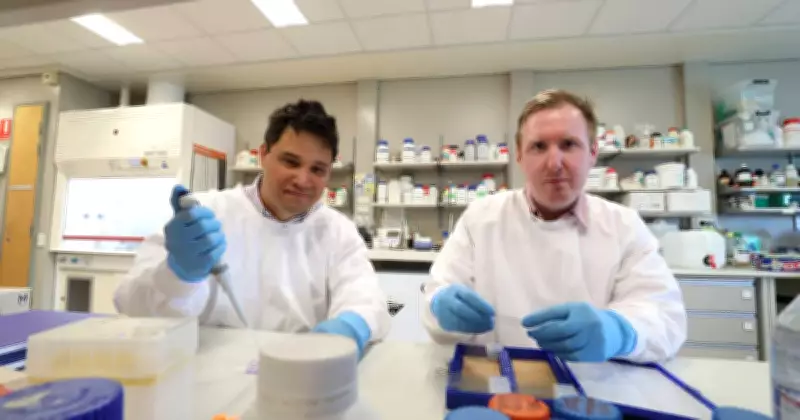
The laboratory bears the name of its founder, the late Professor Justin Yerbury, a distinguished molecular biologist who devoted his career to understanding MND. Tragically, the very disease he studied claimed his life in 2023, but his legacy endures through the ongoing work of his colleagues. On February 6, the lab welcomed around two hundred members of the public for an open day, offering a rare glimpse into their critical research efforts.
Dual Focus: Unravelling Causes and Developing Cures
Dr Luke McAlary, one of the lab's leaders, explained that their work is strategically divided into two broad areas: investigating the causes of MND and developing potential cures. "We still don't know why MND occurs. We're finding out more and more every day, but still more needs to be done," Dr McAlary stated. The team examines a wide range of potential factors, from genetic mutations and protein malfunctions to environmental chemicals that might trigger the disease.

Simultaneously, researchers leverage existing knowledge to pioneer therapeutic interventions. "We look at small molecule drugs, entire protein gene therapies," Dr McAlary added. Dr Jeremy Lum, another lab leader, focuses on the critical connections between nerve cells and muscles, which deteriorate in MND patients. His research aims to identify biological processes that disrupt this communication, with the goal of developing treatments to prevent paralysis.
Innovative Techniques: From Proteins to Stem Cells
The lab employs cutting-edge methods to study MND's mechanisms. MND typically involves proteins misfolding and clumping together, leading to nerve cell death and progressive muscle weakness. Postdoctoral researcher Tom Walker detailed how he genetically engineers bacteria to produce TDP-43, a protein that misfolds in most MND cases. This allows the team to study aggregation rates and test compounds that might inhibit clumping, potentially paving the way for future treatments.
In the tissue culture facility, research assistant Natalie Farrawell grows motor neuron-like cells, known as immortal cells, for experimentation. "We can introduce MND-related proteins into our cells, such as SOD1 and TDP-43, and attach fluorescent markers to visualise them within the cell," Ms Farrawell explained. These cell lines are crucial for disease modelling and therapeutic testing.
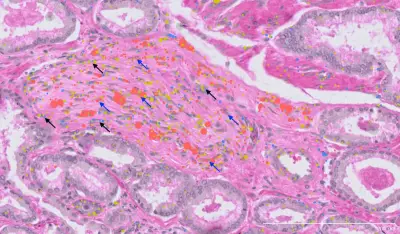
PhD candidate Siobhan Suters works with induced pluripotent stem cells, which are differentiated into motor neurons for therapy assessment. Promising treatments are subsequently tested on mice engineered to develop MND. Dr Christen Chisholm, whose research centres on the SOD1 protein linked to genetic MND, evaluates whether these therapies extend the mice's lifespan and preserve motor neurons upon post-mortem examination of brain and spinal cord tissues.
Community Impact: From Personal Struggle to Philanthropic Support
The lab's work has profoundly impacted individuals like Peter McGovern, a former teacher and principal diagnosed with MND in late 2024. Initially grappling with grief and anger, Mr McGovern found renewed hope after touring the Yerbury Lab. "The experience I had over here when I first came and looked at the lab was overwhelming, and it changed my perspective quite significantly," he reflected.
In response, Mr McGovern authored a memoir, What's Luck Got to Do With It?, launched alongside the lab's open day. He donated all proceeds from book sales to support the Yerbury Lab's research. Writing proved therapeutic for Mr McGovern, fostering a sense of gratitude and purpose. "I've been lucky, I've had a great life," he remarked, emphasising the importance of celebrating scientists as unsung heroes in society.

The Yerbury Lab continues to advance our understanding of motor neurone disease, blending innovative science with compassionate community engagement to forge a path toward effective treatments and, ultimately, a cure.