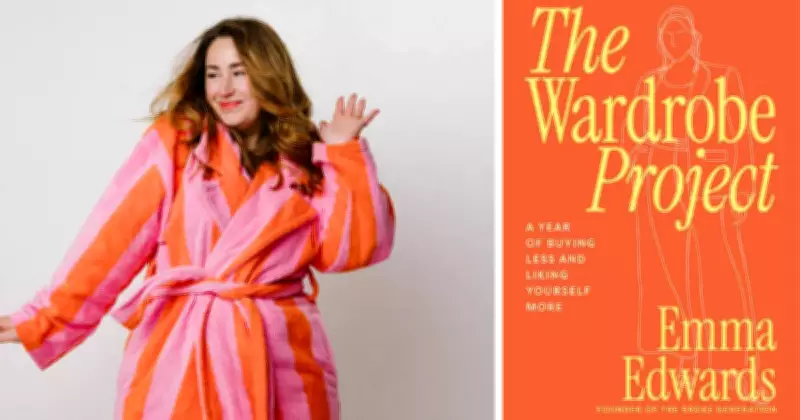
Have you ever considered what it would be like to step off the fashion treadmill entirely? For author Emma Edwards, this became a reality when she embarked on a radical personal experiment: one whole year without purchasing a single item of clothing. This journey was born from a realisation that her shopping habits had spiralled into an expensive cycle of dissatisfaction and fleeting confidence boosts.
The Wardrobe Wake-Up Call
Edwards describes reaching a point where she felt trapped on a hamster wheel, constantly searching for the next outfit to make her feel better about herself. "I was always searching for the next thing, never quite satisfied with what I had, or the way my clothes made me feel," she recalls. This pattern wasn't just draining her bank account—it was costing thousands annually—but more importantly, it was masking deeper issues with self-image and confidence.
The turning point came when she recognised that buying clothes had become an emotional buffer. Instead of addressing underlying feelings, she would purchase new items for temporary relief. "Buying clothes felt like I was taking control, but really, I was fuelling the fire," Edwards admits. This insight prompted her to take drastic action and commit to a full year of abstinence from clothing purchases.

Uncovering Common Buying Pitfalls
Through her year-long experiment, Edwards identified several recurring patterns that contribute to wasteful spending and wardrobe dissatisfaction. By understanding these habits, she believes anyone can transform their relationship with fashion and consumption.
1. The Multi-Colour Trap
One of the most common mistakes Edwards discovered was buying the same item in multiple colours. "If you ever utter the words 'I'm going to go and get this in another colour'—run. It's a trap," she warns. This approach often results in garments that never get worn, simply collecting dust in the closet while providing no real value.
2. The One-Outfit Wonder
Another pattern involves purchasing items specifically to recreate an outfit seen on someone else. While this might work for that particular combination, such pieces often fail to integrate into the rest of one's wardrobe. "Unless we actually integrate the item into other outfits, it'll always just be a one-hit wonder," Edwards explains.
3. Settling for Imperfection
How many times have you kept something that wasn't quite right, hoping it would somehow work out? Edwards identifies this as a major contributor to wardrobe clutter. "Trying to get yourself to wear things you don't love or aren't quite right is always going to keep you wanting to buy more," she observes. The temporary dopamine hit of purchase never translates to lasting satisfaction.
4. The Urgency Purchase
When searching for a specific item—like a black jumper or white jeans—the frustration of not finding the perfect version can lead to settling for something that's almost right. Edwards recognises this as evidence of "the urgency and pace that existed in my buying habits," where the desire to acquire overrides practical considerations.
5. The Neutral Colour Myth
Many assume that neutral colours automatically coordinate, but Edwards learned this isn't necessarily true. "Who knew that not all blacks are the same. Not all whites are the same," she remarks. A wardrobe full of neutrals doesn't guarantee a wardrobe full of outfits without careful consideration of tones and textures.
6. The Special Occasion Splurge
Events and occasions frequently trigger clothing purchases, but these items often become siloed for single use. "We've built up that behavioural loop of an event or occasion being a trigger to buy," Edwards notes, creating a cycle where every special moment demands new attire.
Breaking the Cycle
Edwards's experiment wasn't just about saving money—it was about fundamentally changing her relationship with clothing and self-worth. By stepping away from constant consumption, she gained clarity about what truly works in her wardrobe and why she was buying in the first place.

The key takeaway is understanding your personal buying patterns. When we recognise the emotional triggers and habitual mistakes that drive our purchases, we can make more intentional choices. Edwards's experience demonstrates that breaking free from the wardrobe treadmill requires confronting uncomfortable truths about consumption and self-image.
Her journey offers valuable insights for anyone feeling overwhelmed by their closet or their spending habits. Sometimes, the most radical fashion statement isn't about what you buy, but what you choose not to purchase.