Australia Deploys Advanced Surveillance Aircraft to Middle East Amid Escalating Tensions
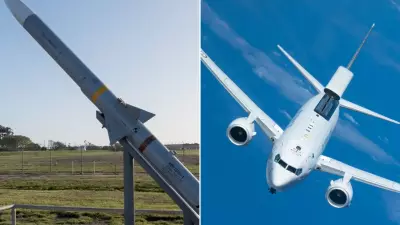
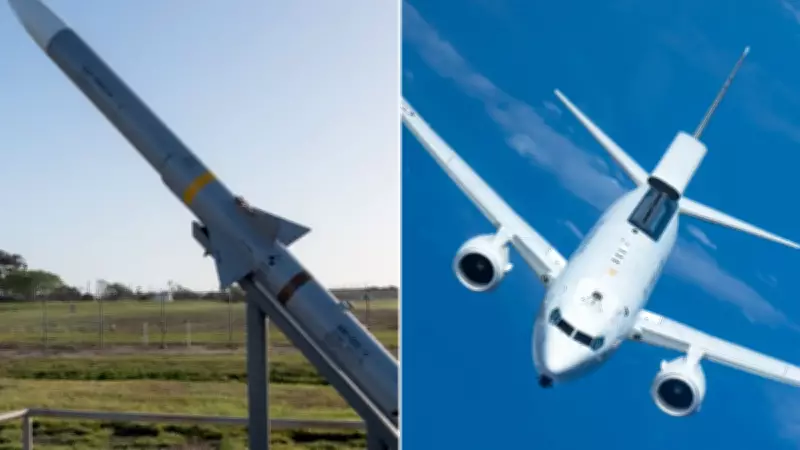
Australia is dispatching one of its most sophisticated military aircraft to the Middle East as regional tensions continue to escalate across the Gulf region. Prime Minister Anthony Albanese has confirmed the deployment of an E-7A Wedgetail surveillance aircraft along with advanced medium-range air-to-air missiles following a formal request for assistance from the United Arab Emirates.
Operational Details of the Deployment
The Wedgetail aircraft will deploy for a four-week mission, departing Australia on Tuesday and expected to become operational in the region by the end of the week. Approximately 85 Australian Defence Force personnel will accompany the aircraft to operate its complex systems. This military response comes as Iran continues launching missiles and drones across multiple countries, with intercepts reported over Qatar, the United Arab Emirates, and Turkey.
The Capabilities of the E-7A Wedgetail
The E-7A Wedgetail represents one of the world's most advanced airborne surveillance and command platforms. Based on a modified Boeing 737-700 airframe, this aircraft functions as a flying command center capable of monitoring vast expanses of airspace while coordinating military responses in real time. Former Defence Department member Jennifer Parker explained that the aircraft's sophisticated radar system enables operators to detect threats long before they reach their intended targets.
"It has a very capable radar system, which allows it to detect and track missiles and drones at range," Parker stated during a television interview. The radar system possesses the unique capability to track airborne and maritime targets simultaneously, providing comprehensive situational awareness.
Mission Capabilities and Operational Experience
During typical missions, the Wedgetail can monitor more than four million square kilometers of airspace, an area roughly equivalent to the size of Western Australia. With in-flight refueling capabilities, the aircraft maintains significant long-range deployment potential. Parker noted that Australian crews already possess valuable experience operating this platform in active conflict zones, having previously deployed to Europe following Russia's invasion of Ukraine.
"Not only does it have that capable system, it has crews that have had experience doing this in Europe during that conflict in Ukraine," she explained. "That will help the Gulf states have a better picture of what missiles are flying at them and where exactly they are coming from."
Missile Support and Regional Defense Enhancement
In addition to the surveillance aircraft, Australia is providing advanced medium-range air-to-air missiles to the United Arab Emirates. Parker described this missile deployment as somewhat unexpected given Australia's current efforts to increase its own missile stockpiles. These missiles, which will likely be launched from UAE platforms, will significantly enhance the region's ability to defend against the growing wave of drone and missile attacks.
"We know that the biggest challenge for the Gulf states right now is this regular barrage of missiles and drones," Parker observed. "The barrage is reducing based on the impact of the US and Israeli air campaign in Iran, but they are certainly not diminished."
A Measured but Significant Contribution
Parker characterized the deployment as an important yet carefully measured contribution to regional security. "It is a significant contribution in terms of capability," she noted. "I think it's a good contribution; it is a small contribution, but it will uplift the capability of the Gulf states."
While acknowledging opportunities for the Australian Defence Force to provide additional support, Parker indicated that a large troop deployment remains unlikely. "I don't see any planning or any intent to send a large ground force... I don't think that would be in Australia's interests."
Strategic Implications and Government Position
This deployment represents one of Australia's most significant military contributions to the escalating Middle East conflict to date. The primary objectives include helping Gulf nations defend against ongoing missile and drone attacks while supporting Australian citizens living in the region. Prime Minister Albanese has emphasized that this move is strictly defensive in nature and forms part of broader international efforts to stabilize the increasingly volatile situation as regional tensions continue to rise.