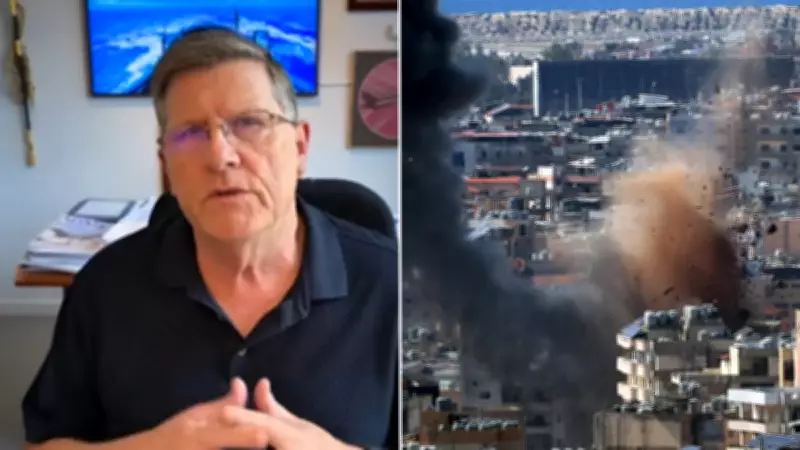
Former RAAF Deputy Chief Warns of Australia's Fuel and Resilience Crisis
For John Blackburn, the month of March has been a whirlwind of activity and exasperation. As a former Air Force pilot who ascended to the position of Deputy Chief of the Royal Australian Air Force (RAAF), Blackburn has spent over a decade establishing himself as a prominent authority on Australia's resilience. His expertise has become particularly sought-after in recent weeks, following the sudden prominence of the Strait of Hormuz in national discourse.
Frenetic Pace Amid Global Fuel Concerns
Blackburn has been tirelessly engaged in explaining the far-reaching implications of Iran's disruption of the critical oil gateway. He details how this event, occurring twelve thousand kilometres away, will directly impact Australia's petrol stations, airports, and the diesel delivery trucks essential to our agricultural sector. In a recent interview for the 7NEWS podcast The Issue, the retired Air Vice Marshal explored national resilience on multiple fronts, from ensuring fuel reaches service stations to navigating complex foreign policy landscapes, particularly Australia's relationship with the United States under President Donald Trump.
He expresses clear frustration when addressing governmental discussions about potential prolonged fuel shortages. "We still have 80 per cent of the world's oil. We've got to remember that," Blackburn emphasizes, questioning the alarmist narrative.

Analyzing Fuel Stockpiles and Supply Chains
Much of the public debate has centered on Australia's reserves of petrol, diesel, and jet fuel, which currently range between 29 and 36 days of supply. Blackburn provides a critical perspective: "If you cut the supply chain by 20 per cent, one fifth, that 30 days will last 150 days. And I don't hear any politicians saying that." He argues that with prudent management, the situation could be handled without significant shortages, barring those induced by panic buying.
The Strait of Hormuz, a vital maritime passage, typically facilitates about 20 per cent of global oil exports. Blackburn warns that the real severity of the problem emerges only if conflicts in Iran persist. "If this continues, we're not only losing fuel," he cautions. "We're losing ammonia, urea and nitrogen fertilisers. We're losing plastics, textiles, construction materials, a whole bunch of things like sulphuric acid and helium."
Broader Resilience Weaknesses Exposed
While there are growing indications that President Trump may seek to end the war soon, potentially stabilizing fuel prices and availability, Blackburn hopes this threat catalyzes action on other resilience vulnerabilities. He points to Australia's heavy reliance on imported medicines, with 90 per cent of our medicines being imported. This weakness triggered alarms during the COVID-19 pandemic but remains unaddressed.
"We never went public with it otherwise we'd cause a panic, but in Victoria at one stage, in some key areas, we went down to three days of morphine supplies, even though we produce about 30-35 per cent of the world's medicinal opium," Blackburn reveals, underscoring the precariousness of critical supply chains.
Foreign Policy and Independence Imperatives
For Blackburn, Australia's resilience extends beyond safeguarding essential goods to encompass foreign relationships, notably the nation's longstanding dependence on the United States. He expresses respect for the US military but criticizes its political system, describing it as "in decay." Blackburn is particularly vocal about President Trump, whom he labels a "rogue" president.
"I mean, the man's got no idea of history and how he's treating Europe and the Brits is just amazingly bad," he states. Blackburn asserts that Trump's presidency has fundamentally altered the dynamics for Australia, urging the nation to mature and pursue greater independence. "We've got to grow up. So it's time to take the training wheels off. And man, that's scary," he concludes.

Ultimately, for John Blackburn, resilience signifies not only affordable petrol at service stations but also a more self-reliant and strategically autonomous Australia, capable of weathering global uncertainties.