
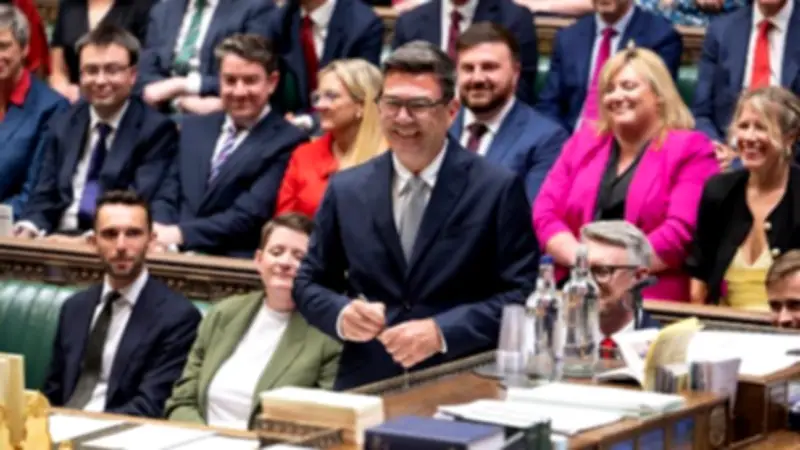
Andy Burnham is set to become the new British prime minister, replacing Keir Starmer as leader of the Labour Party. This marks the seventh UK leader in less than a decade. Burnham's rise raises critical questions about the changing dynamics of political parties, leadership, and representation in an accelerated political climate.
Labour's Gender Gap in Leadership
One aspect overlooked in Burnham's rise is that the British Labour Party has still not achieved what the Conservative Party has done three times—select a woman to lead the party. Sister social democratic parties in Australia, New Zealand, Denmark, Sweden, Finland, and Austria have all achieved this at least once. Burnham's elevation highlights changing patterns of representation and leadership.
Experience and the Trend of Novice Leaders
A key reservation about Burnham becoming prime minister immediately after being elected as an MP revolves around experience. While he had a successful stint as mayor of Greater Manchester, there are concerns this is inadequate for national leadership. His local policy agenda, dubbed "Manchesterism," might have limited appeal nationally. However, Burnham had previously been an MP at Westminster and served as a minister in Gordon Brown's government. In contrast, the five previous Conservative prime ministers and Starmer had either not held a ministerial post before getting the top job or had limited senior experience.

Over the 21st century, UK major party leaders have had less political experience, with a rise of "novice" cabinet ministers. Liz Truss is a prime example: she briefly served as international trade secretary and foreign secretary before taking the leadership in 2022, becoming Britain's shortest-serving prime minister. Former Conservative MP Rory Stewart reflected on how "grotesquely unqualified so many of us were." There have been warning bells about ministerial churn for quite some time.
Representation and the Labour Party
Burnham's rise also tells us about patterns of representation in British Labour politics. The previous Conservative government had a high level of prominence of senior cabinet figures from Black and minority ethnic backgrounds. The last democratic audit of the UK in 2018 confirmed representation of key groups in parliament, including those from minority ethnic groups and the working class. While Labour has internal structures to champion Black and ethnic minority members, pathways to leadership roles have been less clear. Only three of the 28 members of the Starmer cabinet have an ethnic minority background.
In descriptive terms, the Conservatives look far more like the diverse and multicultural UK. However, Labour stalwarts argue that in substantive terms, their policy agenda makes a far greater difference to many communities. There is also a well-established scholarship suggesting political parties are "middle-classing," made up of and pitching to the middle classes. Part of Burnham's appeal is his northern roots from an area that has long struggled economically. His supporters hope he can champion regional and neglected parts of the UK, especially where Nigel Farage's Reform UK is making inroads.
Labour's Record on Gender Representation
Labour appears yet again to have chosen a man to lead the party. On broader gender representation, Labour's record is arguably stronger. Since the 1993 Labour Party Conference, all-women shortlists (AWS) have been used for winnable seats. The 2024 general election returned the highest number and proportion of women MPs ever recorded: 263 women, around 40% of the House of Commons, with Labour accounting for 190 of them, close to half of its parliamentary party. Byelections have since nudged the total to 266. However, Labour has never had a permanently elected woman leader; Margaret Beckett and Harriet Harman held these roles only in acting capacities. There is ongoing speculation about the future role of Rachel Reeves, the UK's only serving female chancellor. A critical focus for Burnham will be how he harnesses all the talents of his party and lays foundations for the next wave of leaders.