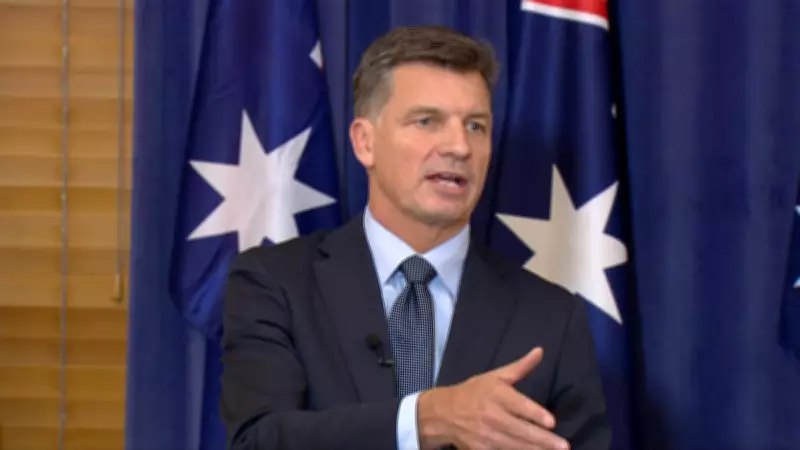
Angus Taylor has issued a stark warning that the Liberal Party must fundamentally transform or face extinction, following his successful leadership challenge against Sussan Ley on Friday morning. The 59-year-old politician secured the party's top position with a decisive 34-17 vote among Liberal members, immediately declaring the organisation was in critical condition after failing to properly reset following the devastating 2025 federal election loss.
'We Are Running Out of Time'
In his first press conference as Liberal leader, Taylor delivered a blunt assessment of the party's predicament. 'It is clear we are running out of time. I won't mince words,' he stated emphatically. 'If an election was held today, our party may not exist by the end of it.' The new leader acknowledged that many Liberal supporters were rightfully angry after the last election, having expected meaningful change that never materialised.
Taylor conceded the party had made significant policy errors, particularly regarding personal income tax, and vowed such mistakes would not be repeated under his leadership. 'I'm particularly conscious that we got some big calls wrong, especially on personal income tax and it won't happen again,' he affirmed.

A Party That Stopped Listening
The newly installed leader offered a candid diagnosis of what went wrong for the Liberals, suggesting the party had 'stopped listening to Australians' because 'we were attracted to the politics of convenience.' Taylor declared this approach would end immediately, presenting his leadership as representing a clear choice between transformation and oblivion.
'The party has one choice: change or die, and I choose change,' Taylor proclaimed, outlining his vision for a revitalised Liberal Party focused on restoring living standards and protecting the Australian way of life.
Policy Priorities and Immigration Stance
Taylor identified home ownership as a central priority, pledging to 're-establish home ownership as the centrepiece of the Australian dream.' He emphasised that all Australians, especially younger generations, deserved stability and the opportunity to own property.
The new Liberal leader also outlined a firm immigration policy approach, stating the party would 'stand for an immigration policy that puts the interests of Australians first and puts Australian values at the centre of that policy.' He added unequivocally: 'If someone doesn't subscribe to our core beliefs, the door must be shut. If someone was to import the hatred and violence of another place to Australia, the door must be shut.'
Acknowledging Ley's Contribution
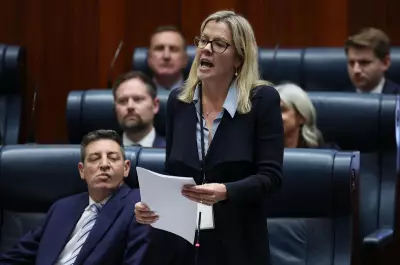
Despite the leadership contest, Taylor paid tribute to his predecessor Sussan Ley, who will resign from parliament after more than two decades of service. Ley made history as the Liberal Party's first female leader, taking on the role after the party's humbling election defeat in May 2025.
'She took on an incredibly difficult task after a humbling election defeat back in May 2025,' Taylor acknowledged. 'Her work ethic has been absolutely relentless and her commitment to the Liberal Party and this nation has extended over a long period of time. She is a great person and a great Liberal.'
New Leadership Team and Coalition Relations
Taylor will be supported by new deputy leader Jane Hume, a Victorian senator who vowed to make it her mission to ensure the party has a 'bright future.' The new leader also expressed his commitment to working with Nationals leader David Littleproud, describing their coalition as having 'served us so well over such an extended period of time.'
The leadership change has prompted reactions from across the political spectrum, with current and former politicians offering their perspectives on Taylor's ascension. The Labor Party wasted little time firing its first political shots at the new Liberal leadership arrangement, signalling the beginning of a new phase in Australian political contestation.

Taylor's dramatic rise to the Liberal leadership represents a pivotal moment for the party as it seeks to rebuild from electoral devastation and reconnect with Australian voters who have increasingly turned away from the once-dominant political force.