Australia should learn from the mistakes of the resources boom and set the terms for the artificial intelligence and datacentre boom, the assistant minister for the digital economy, Andrew Charlton, has said.
Rapid Growth in Datacentres
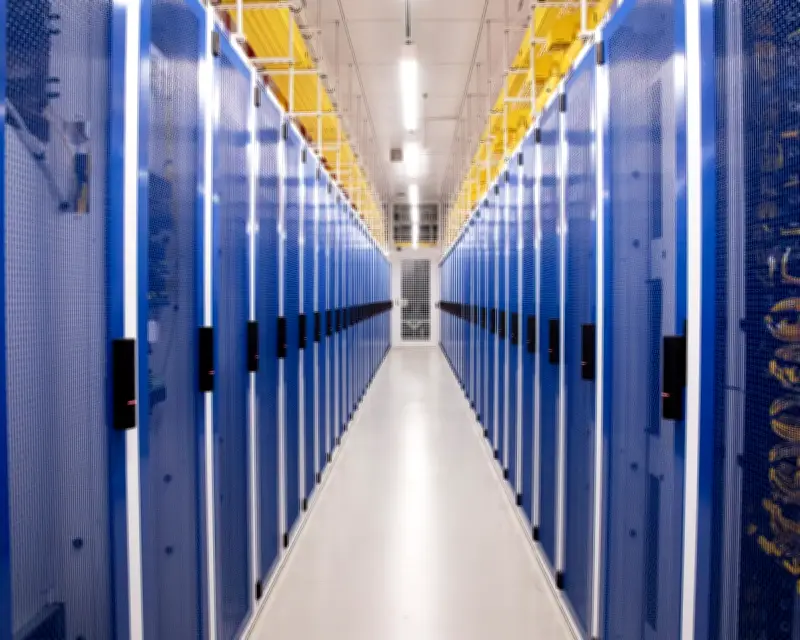
Growth in datacentres has exploded in the past two years, Charlton told the Sydney Institute on Wednesday night, with 44 projects in the pipeline in New South Wales alone seeking 11GW of capacity on the electricity grid.
Datacentres currently use about 2% of the national electricity market – the equivalent of 700,000 homes – but that is rising, he said, with demand doubling in Victoria and rising 18% in NSW in the past year.

Contested Infrastructure
Against that meteoric rise, Charlton said datacentres have become “one of the most contested pieces of infrastructure in the world”. Advocates say they could bring a new wave of economic value while critics say they are “giant sheds … creating few jobs and risking some of the same mistakes we made in the resources boom”.
Charlton said both sides contain important truths, but the boom was happening regardless. “It’s accelerating. And it’s likely to be larger and more consequential than anything we’ve lived through in recent decades,” he said.
Lessons from the Resources Boom
In an apparent reference to comments made by independent senator David Pocock this week, Charlton said some of the response to the datacentre boom is “rightly or wrongly” shaped by the resources boom, in particular gas.
“We had abundance – but we didn’t lock in our advantage early enough. We built for export before securing supply at home,” he said. “We became one of the largest gas exporters on earth and then watched households and factories pay more for gas dug up beneath their feet.”
Guardian Australia has reported on the growing concerns on energy use, water use, and the locations where the centres are planned to be built. Charlton said those concerns were legitimate.
Triple Lock for Datacentres
He said the Australian government, learning from the growing backlash in the United States and other countries to datacentres using more water and resulting in higher electricity bills for residents nearby, would institute a so-called “triple lock” for datacentre development.
The triple lock requires that datacentres must bring new and renewable energy supply to offset demand; pay their full share of network infrastructure cost so it is not passed on to consumers; and provide demand flexibility and cooperate with market operators to strengthen the grid.
Industry Response
Belinda Dennett, the chief executive of Datacentres Australia, told ABC Radio National that datacentre operators were already “voluntarily” offsetting 70% of their energy use by underwriting new renewable energy projects. She said while they “would love to meet the 100% offset requirement”, there was a mismatch in timelines for datacentres and renewable energy projects.
“Datacentres can be built within three years. A renewable energy project, seven to 10 years. So are we asking operators and their customers to sign agreements for a project that won’t commence until seven years after the datacentre is built?” Dennett said.
However, analysis by the Clean Energy Investor Group (CEIG) found that in NSW – where the majority of datacentres are operating and proposed – development approvals for renewable energy projects took about three years, while batteries could be approved in under two. Timeframes in other states were generally faster.
Richie Merzian, chief executive of CEIG, said state and federal governments had been working hard to reduce the timeframes for planning and environmental approvals. “Gone are the days where things usually take more than 10 years,” he said. “A lot of clean energy projects are already in the works, we’re not starting from scratch.”

Political Criticism
Independent MP Kate Chaney noted the government’s talk of a “triple lock” for datacentre construction was not locked in with legislation. “A set of loose non-binding expectations can hardly be called a ‘triple lock’,” she said. “Datacentre deals are being done across the country every day - without legislated requirements, we will miss the chance to share in the economic benefit of AI infrastructure and jeopardise our net zero commitment.”
The government plans to develop the “triple lock” rules through the Energy and Climate Change Ministerial Council of federal and state and territory energy ministers, who next meet in July.