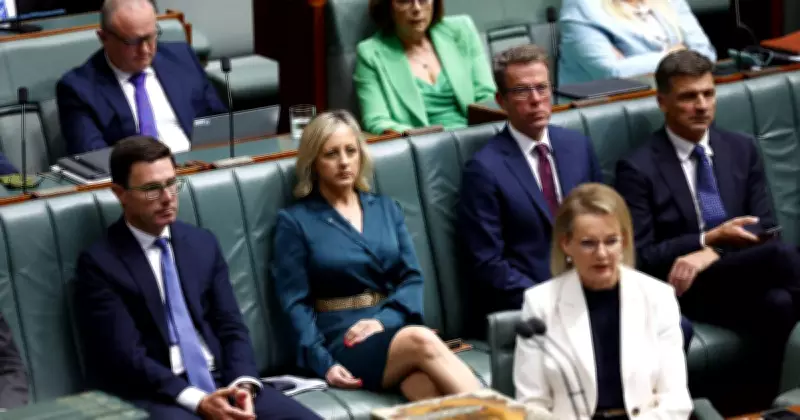
Coalition's Self-Destruction Leaves Voters Seeking New Political Home
A recent anecdote from a regional newsagency starkly illustrates the Coalition's deepening electoral crisis. As a radio report detailed the opposition's latest internal split, one customer expressed being completely "over" the Coalition, comparing its members to "petulant children arguing over a spade in a sandpit." This sentiment met with immediate and furious agreement from others present, highlighting a growing public disillusionment that threatens to become existential for Australia's traditional conservative alliance.
Fractured Trust and Political Instability
While leaders Sussan Ley and David Littleproud have publicly attempted to paper over their differences, political observers rightly question the durability of this fragile truce. Trust remains the fundamental currency of politics, and Mr Littleproud's account appears severely overdrawn. Having now fractured the Coalition on two significant occasions, his actions have contributed directly to disastrous polling outcomes that reflect profound voter unease.
The Nationals' decision to cross the floor on legislation concerning anti-Semitism and gun laws proved particularly damaging. Since the Albanese government already possessed sufficient Senate numbers to pass these bills, the Nationals' protest achieved nothing substantive beyond making the opposition appear chaotic and undisciplined. This performative differentiation served only to confuse their own supporters while failing to present any coherent alternative to government policy.

Leadership Vacuum and Policy Void
The Coalition's internal turmoil has created a leadership crisis with no obvious resolution. Speculation surrounds Sussan Ley's tenure, with palpable agitation for a leadership spill circulating within party rooms. Yet potential successor Angus Taylor appears a tentative candidate, seemingly drafted rather than eagerly seizing the opportunity with clear vision.
The harsh political reality is that no saviour waits in the wings. In the absence of a Josh Frydenberg return—who would likely be considered too moderate for the current Nationals mood regardless—no messiah exists to lead the opposition from the desolate wilderness of its own creation. This leadership vacuum coincides with a profound policy void that has persisted for nearly three years since the Coalition's worst electoral defeat.
Voter Exodus and One Nation's Appeal
As the Coalition renders itself unelectable through internal chaos, sensible former Liberal and National voters find few appealing alternatives within the traditional political spectrum. Frustrated by the relentless squeeze of cost-of-living pressures and housing affordability crises, many are understandably prepared to try something different.
This environment has proven fertile ground for Pauline Hanson's One Nation, whose superficial message of a "pox on both your houses" resonates with voters exhausted by Coalition infighting and perceived self-indulgence. While One Nation may offer simplistic solutions to complex economic challenges, their anti-establishment rhetoric provides an attractive outlet for political frustration.
Even if One Nation's polling surge diminishes as a federal election approaches—as often occurs with minor parties—this likely won't save vulnerable Coalition seats, particularly in the Senate where preference flows become critical.
The Path Forward Requires Fundamental Change
Barring miraculous improvement in political fortunes, the opposition appears to have minimal chance at the next election. The Coalition must undertake genuine rebuilding—regrouping, rethinking policy positions, and demonstrating the hard work necessary to persuade Australians it represents a credible government in waiting.
History shows such recoveries are possible. Labor managed similar resurgences after the Whitlam dismissal and again following the Crean-Latham leadership turmoil. But these transformations required intelligence, discipline, sustained effort, and—crucially—a willingness to collaborate effectively within the political sandpit.

Unfortunately for Australian democracy's health, these essential qualities appear conspicuously absent from today's Coalition. Instead of developing robust policies on immigration, economic management, energy transition, and defence strategy, the opposition has squandered time, energy, and political capital on self-destructive internal conflicts. Until this changes fundamentally, the Coalition's electoral prospects will remain as bleak as that country newsagency conversation suggested.