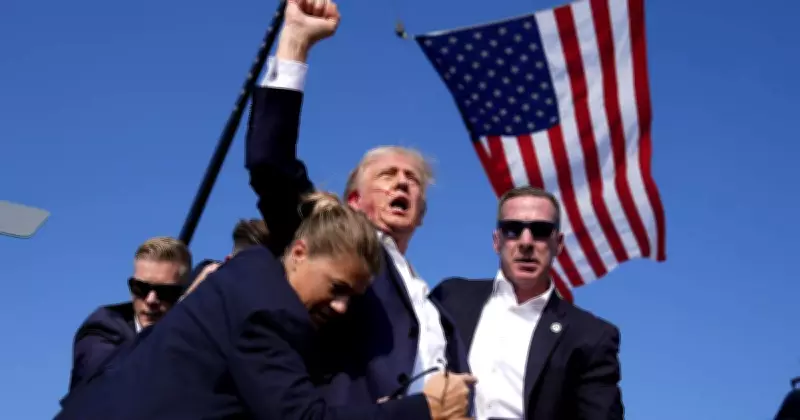
In the wake of multiple assassination attempts against former President Donald Trump, questions arise about the measures that keep him alive. The United States Secret Service, tasked with protecting current and former presidents, employs a multi-layered security approach that combines human intelligence, physical barriers, and cutting-edge technology.
The Secret Service's Role
The Secret Service is the primary agency responsible for the safety of the president, vice president, and their families, as well as former presidents like Donald Trump. Their protective mission involves advance planning, threat assessment, and rapid response. Agents undergo rigorous training in tactical operations, surveillance detection, and emergency medical care.
Threat Assessment and Intelligence
Before any public appearance, the Secret Service conducts a thorough threat assessment. This includes analyzing intelligence from the FBI, Department of Homeland Security, and local law enforcement. Potential threats are categorized and mitigated through a combination of undercover agents, sniper teams, and counter-surveillance units.

Physical Security Measures
At events, the Secret Service establishes multiple security perimeters. The inner perimeter includes a secure zone with metal detectors and bag checks. The outer perimeter may involve road closures and restricted airspace. Bulletproof barriers, known as "hard walls," are deployed to shield the president from potential gunfire. Additionally, the presidential limousine, "The Beast," is armored with military-grade protection and can withstand chemical attacks.
Advanced Technology
The Secret Service utilizes state-of-the-art technology to detect threats. This includes biometric screening, drone detection systems, and real-time monitoring of social media for hostile rhetoric. In recent years, the agency has invested in artificial intelligence to predict and prevent attacks. Cybersecurity measures are also crucial, as digital threats could compromise security protocols.
Counter-Assault Teams
These highly trained teams are ready to neutralize threats immediately. They employ a variety of weapons and tactics to create a protective bubble around the president. In the event of an assassination attempt, their primary goal is to evacuate the president to a secure location while engaging the attacker.
Lessons from Past Attempts
Assassination attempts against Trump have led to protocol enhancements. For instance, after an incident at a rally, the Secret Service increased the distance between the stage and the crowd, and added more layers of ballistic protection. Psychological profiling of potential attackers has also improved, with a focus on individuals exhibiting extreme rhetoric or behavioral changes.
The Secret Service's commitment to protecting Donald Trump remains unwavering. While no system is foolproof, the combination of dedicated personnel, advanced technology, and constant adaptation to emerging threats significantly reduces the risk of successful assassinations. The agency's motto, "Worthy of Trust and Confidence," underscores its mission to safeguard the nation's leaders.