Rebel Officer's Defiance Uncovers Murder in Staged Accident
In a remarkable case of police determination, a killer narcissist who nearly escaped justice was ultimately brought down by his own arrogance, according to the rebel cop who spearheaded the investigation. Gerry Thornton, who was leading an outback police station in south-west Queensland at the time, deliberately disobeyed orders to secure a murder conviction against a former officer who insisted his partner's death was a tragic accident.
Initial Suspicion and Staged Scene
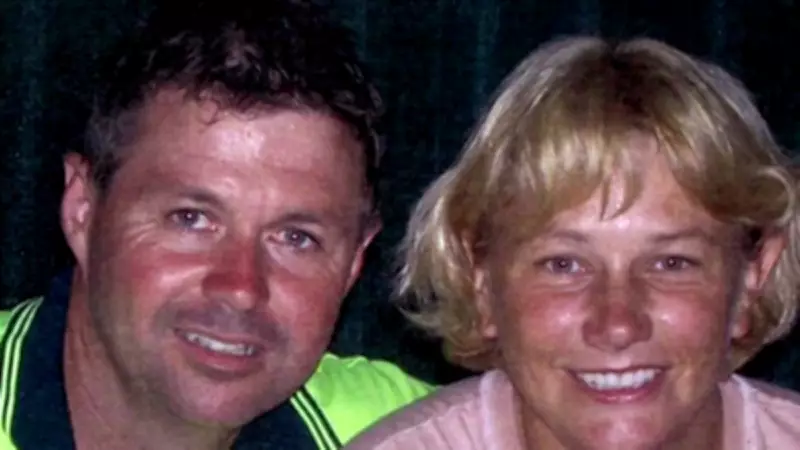
"It just looked staged to me," Thornton recalled regarding the 2009 death of 36-year-old Lainie Coldwell. During the murder trial of her killer, Louis Mahony, the court heard shocking details: the former Northern Territory constable had brutally bashed Coldwell in the back of the head with an iron inside their Charleville home. Mahony then transported her body to the base of a large gum tree, fabricating a story that she had fallen while removing Christmas decorations.
Thornton described his early efforts: "I went to the police station and there was no CIB (Criminal Investigation Bureau) there, and I said to a uniform fellow: 'You better tell him to check this out, check the insurance out, because that didn't happen like he's saying.' And then nothing happened." With no backing from the Queensland Police Service, Thornton took an unconventional path, collaborating directly with the insurance company Westpac Life, which was already investigating Mahony for potential fraud.

Insurance Fraud and Overwhelming Evidence
The investigation uncovered multiple insurance policies totaling a staggering $2.25 million, highlighting financial motives behind the crime. Thornton emphasized the clarity of the evidence: "There was never any doubt he was responsible because there were only three people there that day — the daughter, Lainie and Louis. There was no way in the world she was ever in that tree." This assertion dismantled Mahony's elaborate accident narrative, pointing directly to premeditated murder.
Psychological Profile of a Killer Narcissist
Louis Mahony is the second killer narcissist examined in the popular new podcast/vodcast series Kiss & Kill, following the case of Gerard Baden-Clay. Forensic criminologist Claire Ferguson, featured in the podcast, analyzed Mahony's behavior, noting he attempted to portray himself as a lovable larrikin but was "much more calculating" than that appearance suggested.
Ferguson explained: "It's interesting, right — because what we know about intimate partner homicides, especially the ones that are concealed, like this case and like Gerard Baden-Clay and Borce Ristevski, is that they don't actually do a lot of stuff to the evidence. They don't manipulate that much evidence. They manipulate people, and they're really good at that." This insight underscores the manipulative tactics often employed by such offenders to evade detection.
Arrogance as the Ultimate Undoing
Kiss & Kill delves deeply into the behaviors, patterns, and psychopathy of killer narcissists and expert abusers, challenging the notion of so-called 'crimes of passion' as a "load of rubbish." Thornton attributed Mahony's capture directly to his overconfidence: "He kept tripping up because he thought he was invincible. And you've got to admit, those first few months, he had a pretty good run. No one questioned him. So his confidence is sky high. And I think he was a little bit disappointed that people didn't recognise sort of what a good job he'd done." This arrogance ultimately led to critical mistakes that exposed his guilt.
Broader Implications and Support Resources
The case highlights ongoing issues with domestic violence and intimate partner homicide in Australia. For those impacted by sexual assault, domestic, or family violence, support is available through 1800RESPECT at 1800 737 732 or via their website. In emergencies, always call 000. Additional resources include the Men's Referral Service at 1300 766 491 for men concerned about their use of family violence.

Various organizations continue to advocate for victims and raise awareness, such as The Red Heart Campaign, Australian Femicide Watch, The Allison Baden-Clay Foundation, Beyond DV, The Red Rose Foundation, White Ribbon Australia, and Friends with Dignity. Their work remains crucial in combating domestic violence and supporting affected communities.