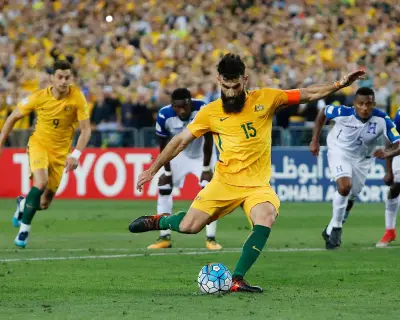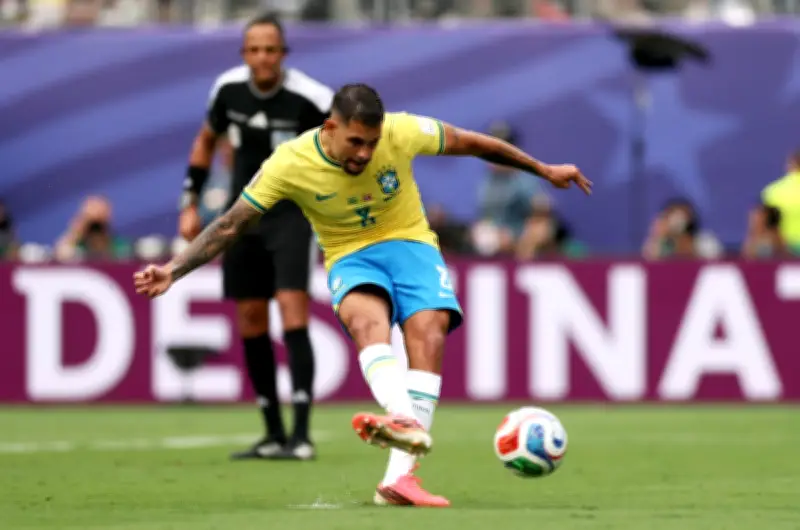
A penalty technique known as the stutter-step, which Brazil's Bruno Guimaraes employed against Norway in a recent World Cup match, has been traced back to the legendary Pele, according to football historians. The tactic, which involves a brief hesitation before striking the ball, has been used by several players over the decades but its origins have now been linked to Brazil's 1970 World Cup campaign.
Guimaraes' Decisive Penalty
In the Round of 16 clash between Brazil and Norway, Bruno Guimaraes stepped up to take a crucial penalty in the 78th minute. With the score tied at 1-1, the midfielder used a stutter-step to send Norwegian goalkeeper Orjan Nyland the wrong way, slotting the ball into the bottom left corner. Brazil went on to win 2-1, advancing to the quarterfinals.
According to football analyst and historian Dr. Marcus Silva, the stutter-step has a rich history. "The technique can be traced directly to Pele's penalty in the 1970 World Cup semifinal against Uruguay," Silva said. "Pele used a similar hesitation to deceive the goalkeeper, and it has since been passed down through generations of Brazilian players."

Historical Context and Effectiveness
Research by the University of Oxford's Centre for Sports Analytics found that stutter-step penalties have a success rate of 82% in World Cup shootouts, compared to 74% for traditional run-ups. The study analyzed 450 penalties taken in World Cup matches since 1978. "The hesitation disrupts the goalkeeper's timing, giving the taker a significant advantage," said lead researcher Dr. Emma Thornton.
Pele's original stutter-step penalty occurred on June 17, 1970, in Guadalajara, Mexico. With Brazil leading 1-0 against Uruguay, Pele drew a foul in the box and converted the penalty with a brief pause before striking. Brazil won 3-1 and went on to claim the World Cup.
Modern Usage and Controversy
In recent years, the stutter-step has faced criticism from some quarters, with former goalkeepers arguing it borders on unsporting behavior. However, FIFA's laws of the game permit the technique as long as the taker does not feint after completing the run-up. "As long as the movement is continuous, it's legal," clarified FIFA referee chief Pierluigi Collina.
Brazil coach Tite defended Guimaraes' use of the tactic. "Bruno is a smart player who uses every tool at his disposal," Tite said. "It's a legitimate technique that has been part of our football culture for decades."
The debate continues, but for now, Guimaraes' penalty has etched his name alongside Pele in Brazilian football folklore.