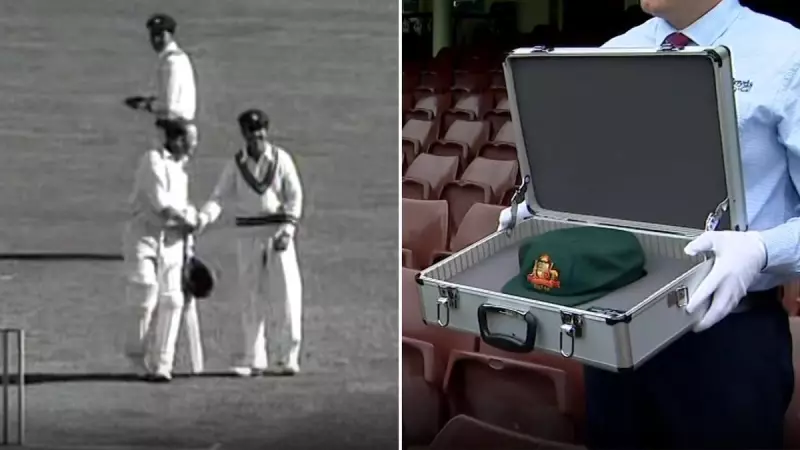
A baggy green cap worn by the legendary Sir Donald Bradman has been sold at auction for a remarkable $460,000, setting a new record for the cricketing icon's memorabilia. In a significant victory for Australian cricket enthusiasts, the anonymous local purchaser has committed to placing the historic item on public display at a prominent museum, ensuring it remains accessible to fans and historians alike.
The Historic Significance of Bradman's Cap
This particular baggy green holds immense historical value, as it was worn by Bradman during his final Test match on Australian soil. It was during this memorable game that the batting maestro scored his 100th first-class century, cementing his legacy as one of the greatest cricketers of all time. The cap represents a tangible connection to a pivotal moment in sporting history.
A Gesture of Sportsmanship and International Friendship
The cap's journey began with an act of remarkable sportsmanship. After the match, Bradman personally gifted the baggy green to Indian bowler Sriranga Sohoni, who was participating in his country's first Test since gaining independence. Despite Sohoni's efforts, he had been unable to claim Bradman's wicket during the game.

In a touching display of camaraderie, Bradman placed his arm around the young bowler and positioned the cap on his head. This gesture was intended to ensure that the Indian team did not become too discouraged by their performance, highlighting the spirit of international sportsmanship that transcends competition.
Three Generations of Careful Preservation
For more than seventy-five years, Sohoni's family meticulously safeguarded this precious artifact at their home located west of Mumbai. They maintained the cap behind a glass cabinet with strict family protocols in place, including a rule that prevented younger family members from viewing it until they reached sixteen years of age.
This careful preservation contributed to the cap's exceptional condition, which auction experts have noted as being remarkably well-maintained. Late last year, the family made the decision to share this treasure with the wider world, leading to its appearance at Lloyds Auctions.
Record-Breaking Auction Results and Historical Context
The $460,000 selling price establishes a new benchmark for Bradman baggy greens at auction. According to Lloyds Auctions, this represents the highest amount ever paid for one of the cricketer's caps. Lee Hames, the chief operating officer, emphasized the item's significance, describing it as "a genuine piece of Australian cricket history" that has been preserved by the same family for over seven decades.
Hames further noted that "Bradman's status as a national icon, combined with the cap's remarkable condition, makes it extraordinarily rare to see an item like this enter the public domain." The fact that it will remain in Australia and be publicly displayed represents what Hames called "a fitting outcome" for such an important artifact.
The Rarity of Bradman Baggy Greens
This particular cap is one of only eleven known Bradman baggy greens still in existence, adding to its collectible value and historical importance. While the specific museum that will become its new home remains undisclosed, its future as a publicly accessible item is now assured.
For comparison, Bradman's first baggy green from his 1928 debut season sold for $450,000 in 2020, according to Cricket Australia records. However, the overall record price for a baggy green belongs to Shane Warne, whose cap was sold for $1,007,500 to the Commonwealth Bank in a charity auction benefiting emergency services during the 2019-20 bushfires.
It is worth noting that unlike Bradman, Warne wore only a single cap throughout his entire career, which contributes to the unique value of his memorabilia. The recent sale of Bradman's cap reinforces the enduring fascination with cricket history and the cultural significance of sporting artifacts in Australian society.