Formula 1's Bold New Era Kicks Off with Australian Grand Prix
Formula One has officially ushered in its highly anticipated new generation, with the entire paddock converging on Melbourne for the season-opening Australian Grand Prix. This landmark event marks a significant shift in the sport, introducing revamped cars, updated regulations, and fresh team lineups that promise to redefine racing dynamics.
Practice Sessions Reveal Early Struggles and Surprises
After the first day of practice, many teams appeared no closer to mastering their new vehicles than during preseason testing. Ferrari emerged as the standout performer in the initial session, with veteran driver Lewis Hamilton showing renewed confidence behind the wheel, while Charles Leclerc topped the timing sheets after the first hour of action.
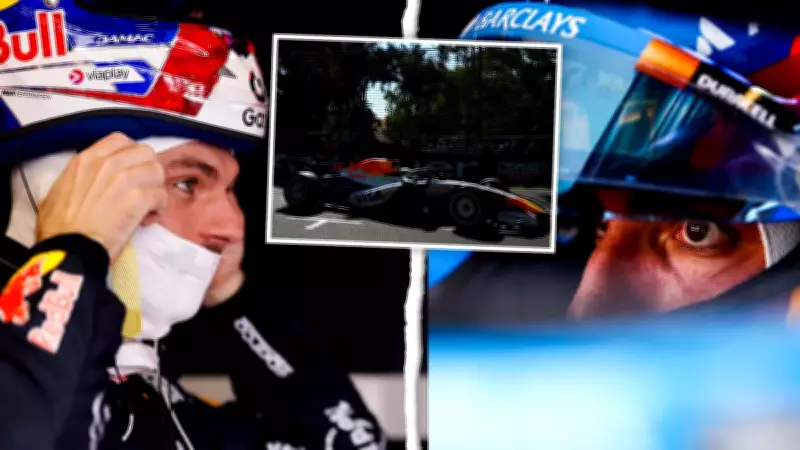
Reigning champion Lando Norris and his McLaren teammate Oscar Piastri encountered car troubles early in the opening session but managed to find some pace towards the end. Four-time champion Max Verstappen faced engine issues as he attempted to exit the pit lane during the second practice, yet all cars that reached top speeds displayed remarkable agility, sometimes excessively so, with rear ends sliding around Albert Park.

Aston Martin's disastrous start to the campaign showed no signs of improvement, with the team needing a miracle just to reach the starting line. Verstappen tested the gravel on his return, damaging his floor, but it was Australian hopeful Piastri who set the fastest lap of the day. With nearly every team grappling with challenges, the 2026 season's must-know changes are under intense scrutiny.
Key Changes for the 2026 Season
This year's cars are shorter and narrower, with 32 kilograms removed to enhance agility and promote closer racing. Redesigned power units feature increased battery capacity, providing extra power that allows drivers to push their top speeds further. New active aerodynamics from moveable front and rear wings are expected to facilitate tighter racing.
For the first time in 15 years, there is no Drag Reduction System (DRS). Instead, drivers can access an overtake mode when within one second of the car ahead, aimed at encouraging more overtaking maneuvers. Additionally, a boost button gives drivers control over electrical power at any point on the track.
With more agile cars, downforce capabilities have been reduced through a flat floor and narrower wings. These changes have fundamentally altered race tactics, requiring teams to learn optimal power deployment strategies and drivers to adjust to increased speeds entering corners. The new 50/50 electric split has also modified the starting process, with the grid receiving an extra five seconds at the line to prepare the turbo.
Fresh Teams Enter the Fray
The 2026 season welcomes two new outfits: Audi, replacing Sauber and adopting a grey livery, and Cadillac, making its brand-new debut as spots 21 and 22 on the grid. Audi, now known as the Audi Revolut F1 Team, retains drivers Niko Hulkenberg and Brazilian Gabriel Bortoleto, with former Ferrari team principal Mattia Binotto and ex-Red Bull executive Jonathan Wheatley guiding the team off-track, aiming to challenge for the title by 2030.
The new Silverstone-based Cadillac team boasts the most experienced driver pairing in the field, featuring F1 favourites Sergio Perez, who previously partnered Max Verstappen at Red Bull, and honorary Australian Valtteri Bottas, who was Lewis Hamilton's teammate at Mercedes before being replaced. They are currently running with Ferrari power units, with plans to transition to their own General Motors components in the future. On the engine front, Red Bull has invested over a billion dollars in producing their own units in collaboration with Ford for this season.
The Lone Rookie on the Grid
Only one new driver joins the grid this season: Red Bull rookie Arvid Lindblad, who takes over Isack Hadjar's seat at Racing Bulls after the Frenchman was promoted to replace Yuki Tsunoda. Hailing from Great Britain, Lindblad, at 18 years old, is not only the youngest driver on the grid but also the youngest British driver in F1 history. Meanwhile, Bottas and Perez, both returning after missing last season, bring a combined 16 Grand Prix wins and over 500 race starts to the competition.