Swimply App Gains Traction in Western Australia for Private Swimming Lessons
In Western Australia, a growing number of families are embracing the Swimply app to hire strangers' backyard pools for swimming lessons, as public facilities face increasing strain and backyard spaces shrink. This innovative platform, often described as the "Airbnb for pools," connects pool owners with individuals seeking private aquatic experiences, fostering a unique community solution to swimming access challenges.
Addressing High Demand and Limited Public Pool Access
Swimply, which launched in 2022, has seen a remarkable 50 percent annual growth, driven by rising demand for swimming lessons and recreational swim time. Caroline Lepron, the general manager of Swimply Australia, highlighted a recent trend where families are using the app specifically for private swimming instruction. "As demand for public pool access and swimming lessons increases, many local facilities are becoming stretched, particularly over summer," she explained. "At the same time, there are private pools sitting unused in backyards across Perth. Swimply helps unlock that under-used capacity, providing families with more flexible options to practice swimming skills and build water confidence in a safe and secured environment."
Lepron emphasized that not every family has the means or space for a backyard pool, making swimming access tricky. "Our goal is to make swimming simple, safe, and enjoyable for everyone," she added, noting the significant growth since the app's introduction in Perth.

Personal Stories Highlight the Benefits of Swimply
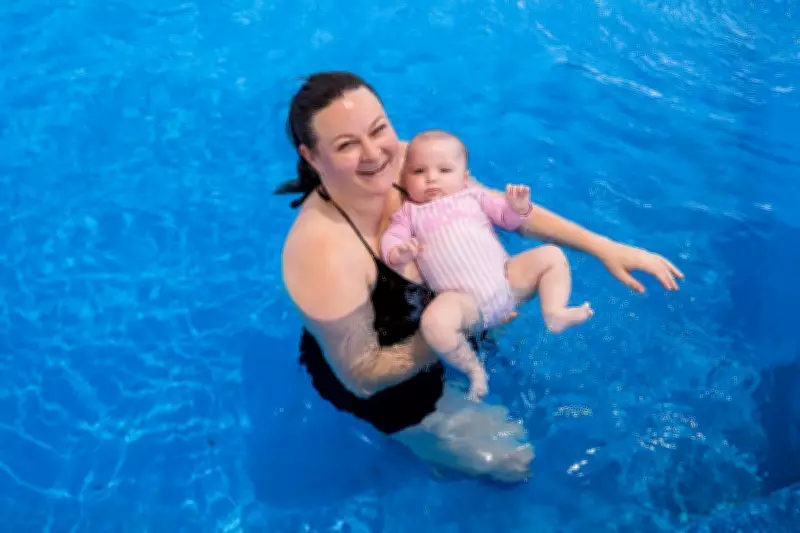
Sarah Naude, a mother from Harrisdale, turned to Swimply after struggling to find a spot for her two-month-old daughter, Lily, in local baby swim classes. "There's also a lot going on in public swimming pools, multiple classes at the same time, the smell of chlorine . . . I wanted something more relaxed," she said. Naude and her partner, Michael Field, hired Justin McEvoy's pool in Forrestfield for two hours at a cost of $45 per hour. "It's a beautiful property with a low chlorinated salt pool, it had a shade sail and was heated. It was wonderful, I felt really comfortable and we're planning to go back," she shared. Naude expressed enthusiasm for the option, mentioning they could even hire the pool for Lily's birthday, as owning a pool isn't practical for their family.
On the other side, Justin McEvoy, a Forrestfield homeowner, listed his pool on Swimply in January and received two bookings within 48 hours. He now runs a Facebook group for pool owners and noted that many are frustrated with underused pools. "Twice a week I get people saying to me 'no one swims in this pool and it costs me a fortune,'" he said. McEvoy views Swimply as a win-win situation: "This is a win-win, having happy kids jumping in your pool and getting a bit of cash on the side to help you maintain it." He has hosted 15 bookings so far, with four guests returning for a second visit, catering to various needs like parties or those uncomfortable at aquatic centers. McEvoy allows up to 15 guests per booking and believes that while it might not suit everyone, many pool owners take pride in seeing their pools utilized.
Economic and Social Impacts of the Swimply Platform
The Swimply app enables users to rent private pools for an hourly fee, offering a cost-effective alternative to pool ownership without the stress and maintenance. In return, homeowners can earn hundreds of dollars monthly, offsetting upkeep expenses. This model not only provides financial benefits but also fosters community connections, as strangers like Naude and McEvoy come together through shared aquatic interests. The platform's success reflects broader trends in the sharing economy, where underutilized assets are leveraged to meet consumer demands, particularly in urban areas with shrinking backyard spaces.
As Perth continues to experience growth and development, Swimply offers a practical solution to the challenges of accessing swimming facilities. By bridging the gap between pool owners and families, it promotes water safety, recreation, and social interaction in a controlled and enjoyable setting. This innovative approach is likely to see continued adoption as more Australians seek flexible and personalized options for aquatic activities.