Teen's Epic Four-Hour Swim Saves Family After Being Swept Out to Sea
A thirteen-year-old boy has been hailed as a hero for undertaking what rescuers describe as a "superhuman" swim through treacherous surf to save his family, despite having recently failed a state-run swimming program. Austin Appelbee's incredible four-hour journey to reach land and raise the alarm has captured global attention, shining a spotlight on swimming safety in Australia.
The Harrowing Ordeal Off Western Australia's Coast
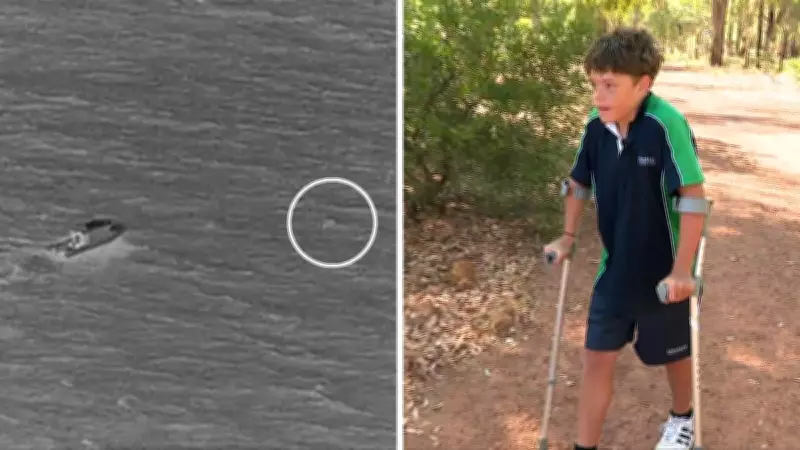
The Appelbee family found themselves in a life-threatening situation approximately 250 kilometres south of Perth near Quindalup on Friday. What began as a holiday water activity with two paddleboards and a kayak quickly turned dangerous when conditions deteriorated rapidly. Strong winds pushed them offshore, they lost two oars, and their kayak began taking on water, leaving them stranded and clinging to paddleboards.
"I was very puffed out but I couldn't feel how tired I was," Austin recalled of his marathon swim, describing how he was battered by "massive" waves during the ordeal. "I just keep swimming. I did breaststroke, I did freestyle, I did survival backstroke. Then finally I made it to shore and I hit the bottom ... and I just collapsed."

A Desperate Decision and Race Against Time
Facing fading daylight and no rescue in sight, Austin's mother Joanne made what she described as "one of the hardest decisions I ever had to make" - asking her son to attempt the swim to shore. "As the sun went down, I thought something's gone terribly wrong here and my fear was that Austin didn't make it," she said. "Did I make the wrong decision by sending him, because I knew he was the strongest and he could do it?"
After his gruelling four-kilometre swim to shore, Austin sprinted two kilometres to find a phone and call Triple-0, providing critical details to emergency services. "I said, 'I need helicopters, I need planes, I need boats. My family's out at sea'," the teen recounted, noting he remained surprisingly calm despite the shock of the situation.
Rescue and Recovery
Austin's bravery triggered a major search operation that ultimately located his mother Joanne and younger siblings Beau, 12, and Grace, 8, 14 kilometres out to sea. They were rescued by helicopter more than eight hours after being swept offshore, tired but alive. Naturaliste Marine Rescue commander Paul Bresland praised Austin's effort as extraordinary, initially assuming the teen "must be a strong swimmer."
The Swimming Program Paradox
In a surprising twist, Bresland learned from Austin's father that the teenager had just completed the VacSwim program and failed. The VacSwim program, which made headlines in 2025 due to plummeting enrolments, is designed to teach children "skills to stay safe and build their confidence in the water."
Austin himself acknowledged that his swimming abilities came from years of consistent training rather than any single program. "Luckily my parents had put me through lessons since I was four and I am a good swimmer," he said. "I've always learnt to swim. If I fall into the water, the likelihood of me swimming back up to the surface and start treading water, I can always do that."
Australia's Swimming Skills Crisis
This dramatic rescue comes against the backdrop of what experts describe as a swimming skills crisis in Australia. In August, it was revealed that 357 people had been killed in drownings during 2024-25, reaching unprecedented levels. While current drowning statistics show some improvement - with 64 deaths since December 1, 2025, below the five-year average of 76 - the situation remains concerning.
Joanne Appelbee emphasized the importance of swimming education, particularly in a country surrounded by water. "I'm Irish. We don't get into the water over there so this land is surrounded by water and if [the kids are] going to be on the beach they have to learn how to swim," she said, noting her family's commitment to regular swimming lessons through VacSwim and school programs.

Lessons in Water Safety
Austin credited his comprehensive water safety training with giving him the skills needed during the emergency. "So I have a lot of skills. I've been taught how to take off my life jacket in water, so that was really helpful," he explained. "I didn't have to, but I've learned how to take my clothes off in the water and a bunch of other things."
The Appelbee family's experience serves as both a heartwarming story of survival and a sobering reminder of water safety importance. Austin, who remains on crutches but is expected to make a full recovery, has demonstrated that consistent swimming education can make the difference between tragedy and survival, even when formal program assessments might suggest otherwise.