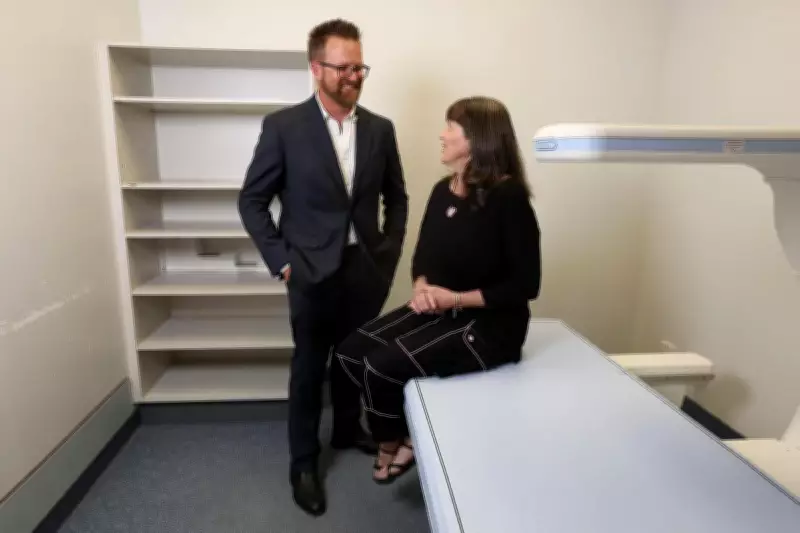
A WA researcher and his global team have successfully demonstrated that artificial intelligence can detect a marker of heart disease from bone scans.
Breakthrough in Heart Disease Detection
Edith Cowan University professor Joshua Lewis used an AI algorithm on the DEXA bone density scans of 50,000 people. These scans are typically used to assess osteoporosis risk, but the AI tool could determine in seconds whether a person had a risk of heart disease.
The AI detected calcium buildup in the abdominal aorta, a major indicator of heart disease risk. This early detection could prevent heart attacks or strokes.

Currently, detecting this calcification requires a specialist review, which is often expensive and time-consuming.
Potential Impact on Australians
Professor Lewis noted that the findings could mean that about 700,000 Australians who undergo a DEXA bone scan each year could also learn about their heart health using the same machine.
“Heart disease is one of Australia’s biggest killers, and what we’ve done in the research has shown that we may have found a new way to spot risk earlier,” he said.
“Vascular calcification often starts in the abdominal aorta before blood vessels such as the heart, so if you can detect it earlier, you can make changes—whether diet, lifestyle, or medications—to prevent going on to have a heart attack or stroke.”
Patient Story
For Pippa Lukeis, discovering she had blood vessel disease changed her life for the better.
“Getting the results was definitely a catalyst for increasing my knowledge and awareness of heart health because otherwise it’s very silent—you don’t know you have anything,” she said.
“It motivated me to reassess my lifestyle and look at changes, which included regular exercise as well as cardio and resistance exercises, also adopting a Mediterranean diet, and getting more regular heart health checks.
“Without the scans, you can go blindly on until the calcification buildup is too great and you end up having a heart attack or a much longer road back to better health.”
Funding and Future Steps
The research is coming to life through the Heart Foundation’s Catalyst Partnership program, which provided funding to the project in 2025.
Professor Lewis said he was now seeking further backing from private and philanthropic funders to bring this groundbreaking research to patients sooner.
“Australia is home to some of the leading minds in cardiovascular research, and this work is one example of how Heart Foundation donors enable us to fund life-changing research that can have an impact in preventing heart disease for future generations,” said Heart Foundation chief medical advisor Garry Jennings.