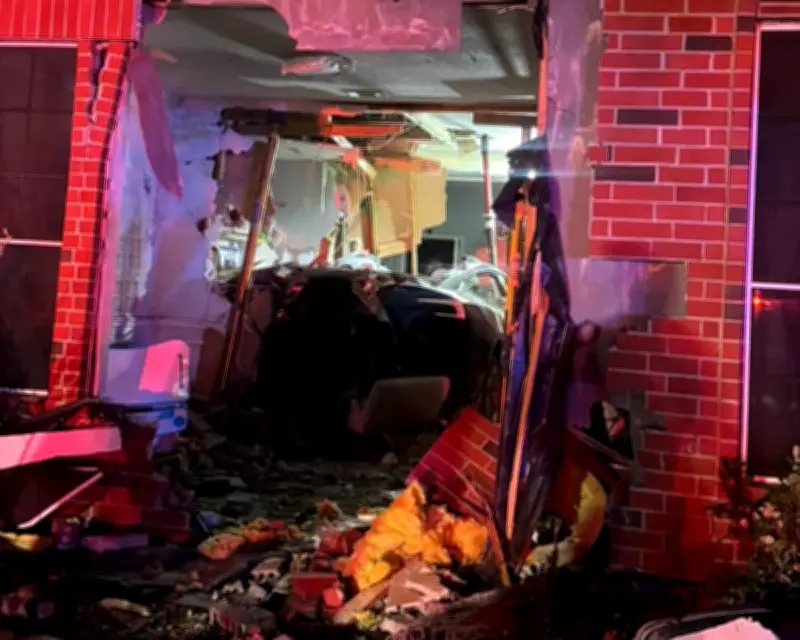
Federal authorities have launched an investigation into a fatal Tesla crash in Texas that claimed the lives of two individuals, focusing on whether the vehicle's advanced driver-assistance systems were active during the incident. The crash occurred on June 23, 2026, in Spring, Texas, a suburb of Houston, when a 2022 Tesla Model S veered off a road and struck a tree, bursting into flames.
Details of the Incident
The Harris County Sheriff's Office reported that the vehicle was traveling at a high rate of speed when it failed to negotiate a curve. Both occupants, a man and a woman, were found in the front seats, with no one in the driver's seat at the time of the crash, according to initial reports. This detail has raised questions about the possible use of Tesla's Autopilot or Full Self-Driving (FSD) features.
The National Highway Traffic Safety Administration (NHTSA) has deployed a team of investigators to the scene. The agency is examining whether the vehicle's automated driving systems were engaged and if they played a role in the crash. NHTSA has been investigating a series of Tesla crashes involving the use of driver-assistance technologies.

Autonomous Features Under Scrutiny
Tesla's Autopilot and FSD systems have come under increased scrutiny from regulators and safety advocates. While Tesla warns that these features require active driver supervision, critics argue that the naming and marketing of the systems can lead to misuse. The Texas crash is the latest in a string of incidents where drivers have been found not in the driver's seat.
According to data from NHTSA, there have been over 30 crashes involving Tesla vehicles with Autopilot engaged since 2016. The agency has opened multiple investigations into these incidents. In a statement, NHTSA said, "We are committed to ensuring the safety of all road users and will take appropriate action based on the findings of this investigation."
Legal and Regulatory Implications
The crash has reignited calls for stricter regulations on autonomous vehicle technology. U.S. Senator Edward Markey (D-Mass.) tweeted, "This tragic crash underscores the urgent need for federal safety standards for autonomous vehicles. We cannot allow companies to test their technology on public roads without proper oversight."
Meanwhile, Tesla has not publicly commented on the incident. The company's CEO, Elon Musk, has previously defended the safety of Tesla's systems, stating that they are safer than human drivers when used correctly. However, data from Tesla's own safety reports show that Autopilot reduces crash rates by about 40%.
Impact on Tesla and the Industry
The investigation could have significant implications for Tesla's stock and its reputation. Tesla shares fell 2.5% in after-hours trading following news of the crash. Analysts warn that if NHTSA finds the automated systems at fault, it could lead to recalls or stricter regulations that might slow the adoption of autonomous driving technology.
Other automakers and tech companies developing self-driving systems are also watching closely. Waymo, Cruise, and others have faced their own regulatory challenges, but the Tesla case highlights ongoing concerns about the safety of semi-autonomous systems that rely on driver vigilance.
Local Response
The crash has deeply affected the Spring community. Local fire department officials noted that the fire from the lithium-ion battery made extinguishing the flames particularly difficult. "The fire was intense and took over an hour to put out," said Fire Chief John Smith. "We urge all drivers to remain attentive and not rely solely on automated systems."
The Harris County District Attorney's office is also monitoring the investigation and has stated that criminal charges could be filed if evidence of negligence is found.