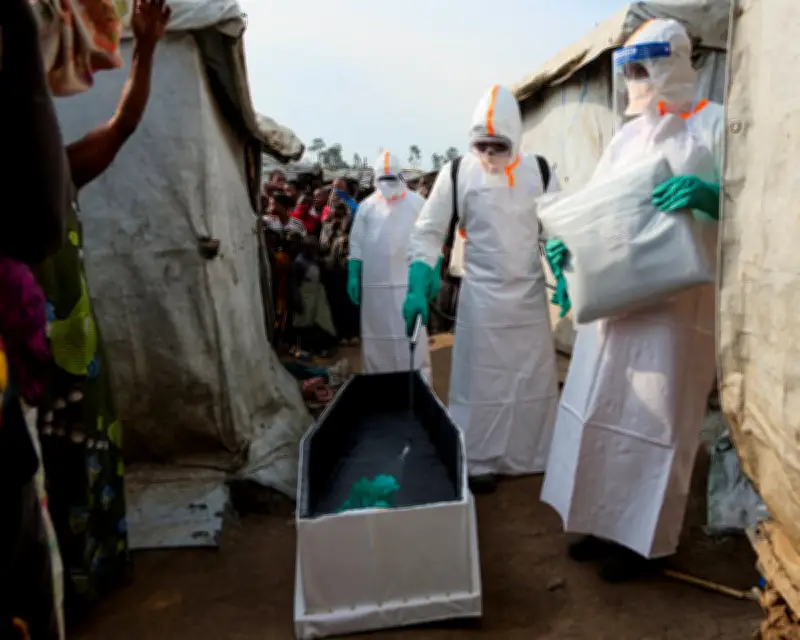
Health authorities in the Democratic Republic of the Congo (DRC) have lost track of nearly 300 people who came into contact with Ebola patients, sparking concerns that the virus could spread undetected. The World Health Organization (WHO) reported on Friday that contact tracers have been unable to locate 287 individuals linked to confirmed cases in the current outbreak, which began in early June in the northwestern province of Équateur.
Outbreak details and response
The outbreak has so far infected 21 people, with 13 deaths, according to the DRC's health ministry. The first cases were reported in the city of Mbandaka, a major transport hub on the Congo River, raising fears of rapid dissemination to other regions. The WHO has deployed teams to support local health workers in tracing contacts and vaccinating at-risk populations.
“The missing contacts are a serious concern because they could unknowingly spread the virus to their families and communities,” said Dr. Matshidiso Moeti, WHO Regional Director for Africa. “We are working with the DRC government to intensify community engagement and find these individuals as quickly as possible.”

Challenges in contact tracing
Contact tracing is a cornerstone of Ebola containment, but it faces significant hurdles in the DRC due to population movement, distrust of health workers, and insecurity in some areas. In the current outbreak, many contacts have fled their homes after being identified, while others have provided false addresses. The WHO estimates that the case fatality rate stands at 62% in this outbreak, higher than the average for the Zaire strain of Ebola.
The DRC has experienced 14 Ebola outbreaks since the virus was first discovered in 1976, making it the most experienced country in managing the disease. However, each new outbreak tests the capacity of the health system, which is also battling other diseases like measles and cholera.
Vaccination efforts underway
Vaccination campaigns have started in Mbandaka and surrounding areas, with more than 1,000 people immunized so far. The rVSV-ZEBOV vaccine, which proved highly effective in previous outbreaks, is being used to create a ring of immunity around confirmed cases. But health officials warn that vaccination alone cannot stop the outbreak if contacts remain untraced.
“Every missing contact is a potential new chain of transmission,” said Dr. Jean-Jacques Muyembe, director of the DRC's National Institute for Biomedical Research. “We urge everyone who was in contact with a patient to come forward and receive the vaccine. It is safe and it saves lives.”