Just days after signing a 60-day peace deal with the United States, Iran has sparked fresh tensions by declaring the Strait of Hormuz closed. Iran's Islamic Revolutionary Guard Corps announced the strategic waterway was shut and warned ships not to approach, citing Israeli strikes in Lebanon as a breach of commitments made under the peace agreement.
US Rejects Iranian Claim Over Strait Control
US Central Command rejected the claim, insisting Iran does not control the Strait and that commercial traffic continues to flow through the route. According to US officials, 55 merchant vessels transited the Strait on Saturday, transporting more than 17 million barrels of oil and other cargo to global markets.
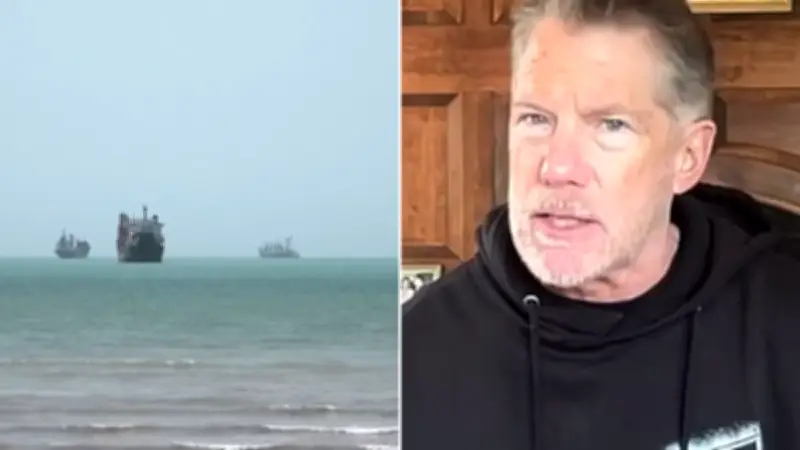
Former CIA officer Mike Baker told Sunrise on Sunday the dispute highlighted a major challenge facing negotiators. “The problem is that the US says that Iran doesn’t control the Strait… but it doesn’t matter because all Iran has to do, in a sense, to control the Strait is say it’s closed,” he said. “That then creates this uncertainty within the shipping industry, the insurance industry, the cargo operators. And they don’t feel it’s worth the risk to push their vessels through the Strait.”

Iran's Influence Over Shipping Routes
Baker said the disagreement demonstrated how Iran could still exert significant influence over one of the world’s busiest shipping routes, even without formally controlling it. While the United States may be technically correct from a military perspective, he said Iran’s warnings were enough to create uncertainty among shipping companies, insurers and cargo operators.
The dispute comes as fighting continues in Lebanon, threatening another key pillar of the agreement. A ceasefire between Israel and Hezbollah was one of the conditions underpinning the broader 14-point deal between Washington and Tehran. But Israeli strikes killed at least 10 people in Lebanon on Saturday, hours after the truce took effect. Israel said it was responding to attacks launched by Hezbollah, while the Iran-backed militant group warned it would not allow Israel “freedom of movement” inside Lebanese territory.
Fragile Agreement Under Pressure
Baker said the violence highlights the fragile nature of the agreement. “Iran controls Hezbollah. Iran just is basically working for time. The regime still exists. They believe they’ve got the upper hand because they still exist,” he said.
The ceasefire in Lebanon is a condition for the start of 60 days of negotiations between the United States and Iran aimed at resolving disputes over Tehran’s nuclear program and securing a more lasting regional settlement. A high-level Iranian delegation has arrived in Switzerland for talks, while US Vice President JD Vance is travelling to the country in the hope of making progress on both the nuclear issue and the Lebanon ceasefire.