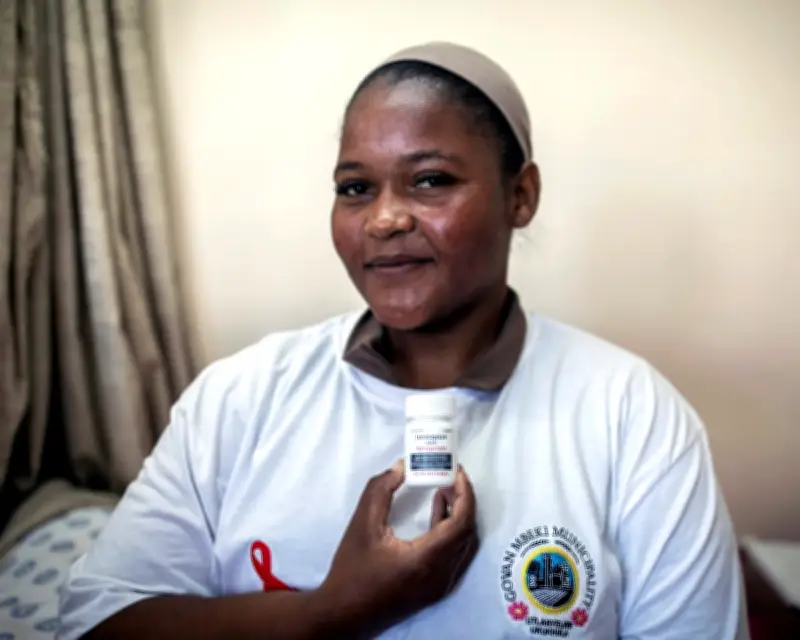
Africa can end AIDS as a public health threat by 2030, but it must do so on its own terms—with strengthened health systems, community leadership, and equitable access to treatment—while still relying on sustained global support, according to a new report from UNAIDS released on Monday.
Progress and Persistent Gaps
The report, titled “The Path That Ends AIDS,” shows that new HIV infections in sub-Saharan Africa have declined by 56% since 2010, and AIDS-related deaths have fallen by 58% in the same period. However, the region still accounts for 60% of all new HIV infections globally. In 2025, an estimated 1.3 million people in Africa became newly infected with HIV, and 380,000 died from AIDS-related illnesses.
“Africa has shown remarkable leadership and innovation in the HIV response,” said UNAIDS Executive Director Winnie Byanyima. “But the gains are fragile. We need a partnership of equals—where African nations lead and the world provides consistent financial and technical support.”

African-Led Solutions
The report emphasizes that ending AIDS requires African-owned strategies, including community-led monitoring, local manufacturing of antiretroviral drugs, and integration of HIV services into primary health care. Seven African countries—Botswana, Eswatini, Kenya, Lesotho, Malawi, Rwanda, and Uganda—have already achieved the 95-95-95 targets (95% of people living with HIV know their status, 95% of those diagnosed are on treatment, and 95% of those on treatment have suppressed viral loads).
“We are proving that it is possible to turn the tide,” said Dr. John Nkengasong, former director of the Africa Centres for Disease Control and Prevention. “But we cannot do it alone. The global community must honor its commitments.”
Funding Shortfalls and the Way Forward
Despite progress, funding for HIV in Africa has stagnated. International donor contributions for HIV in sub-Saharan Africa fell from $8.2 billion in 2020 to $7.5 billion in 2025. The report calls for increased investment in community-led organizations, which are often the first line of defense but remain underfunded.
“We have the tools and the knowledge to end AIDS,” said Byanyima. “What we lack is the political will and the resources. Africa is ready to lead, but the world must walk with us.”
The report urges African governments to increase domestic HIV funding, which currently covers only 35% of the total response. It also recommends removing patent barriers to allow generic production of new long-acting HIV prevention and treatment drugs.
Community at the Center
Community health workers and peer educators have been critical to reaching marginalized populations, including sex workers, men who have sex with men, and people who inject drugs. In South Africa, community-led programs have increased HIV testing rates among young women by 40%.
“Communities are not just beneficiaries; they are the architects of the response,” said Lillian Mworeko, executive director of the International Community of Women Living with HIV Eastern Africa. “We need resources to go directly to community organizations, not just through big international NGOs.”
The report concludes that with renewed global solidarity and African leadership, ending AIDS by 2030 is achievable. “This is Africa’s moment,” Byanyima said. “Let us seize it together.”