

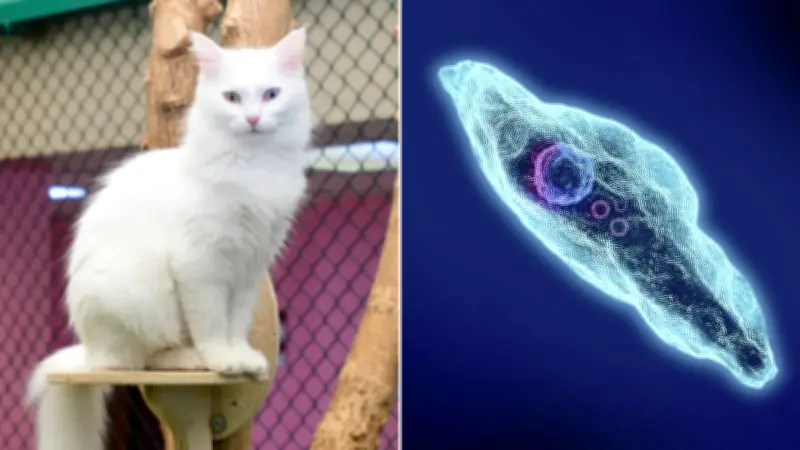
Australian researchers have discovered that the parasite Toxoplasma gondii, commonly spread by cats, can damage the retina and cause vision loss, and they are joining international scientists in urging the World Health Organisation to classify toxoplasmosis as a neglected tropical disease.
Parasite Infects Nearly Half of Global Population
Toxoplasma gondii is a single-celled parasite that infects birds and mammals worldwide. Its primary hosts are members of the felidae family, including domestic cats and wild felines like lions. The parasite is typically spread through cat faeces, even in trace amounts in soil or water. Humans can also become infected by consuming undercooked meat from an infected animal.
While many people carry the parasite without symptoms, it can cause toxoplasmosis, a serious infection. Flinders University Professor Justine Smith explained that when the parasite infects a human, it often targets the eye, particularly the retina. "So it eats a little piece of the retina and it incites a lot of inflammation and in some cases scarring," Smith told 7NEWS.com.au.

Retinal Scarring Found in One in 150 Australians
A study of 5,000 residents in Busselton, Western Australia, found that one in 150 people had retinal scarring due to toxoplasmosis. The severity of vision impairment depends on the scar's location on the retina. In immunocompromised individuals, the dormant parasite can reactivate and cause further scarring.
Pregnant women face the most severe risks. If a woman is first infected during pregnancy, the parasite can pass to the unborn child, potentially causing life-long eye and neurological issues, or even miscarriage. Women are routinely advised to avoid cat litter trays while pregnant.
Call for WHO Recognition
Smith and her team are calling on the WHO to add toxoplasmosis to its list of neglected tropical diseases (NTDs). "That recognition is really important because it gives it visibility," she said. "It means that governments are aware of it and they build it into their public health programs. It unlocks the opportunity to obtain funding for better prevention, treatment and also research."
Toxoplasmosis already qualifies for the list, but remains excluded despite being on the WHO's list of most impactful food-borne illnesses. "Given the congenital consequences, including loss of the unborn child and the substantial contribution to childhood and adult vision impairment and blindness, there is no reason toxoplasmosis should remain excluded from the group," Smith added.
Global Impact and Preventable Tragedies
In developed countries like Australia, severe outcomes are often preventable, but in underdeveloped nations, the parasite spreads through untreated water and poor sanitation, with minimal medical infrastructure to treat it. The researchers hope that WHO recognition will raise awareness and funding to address these disparities.