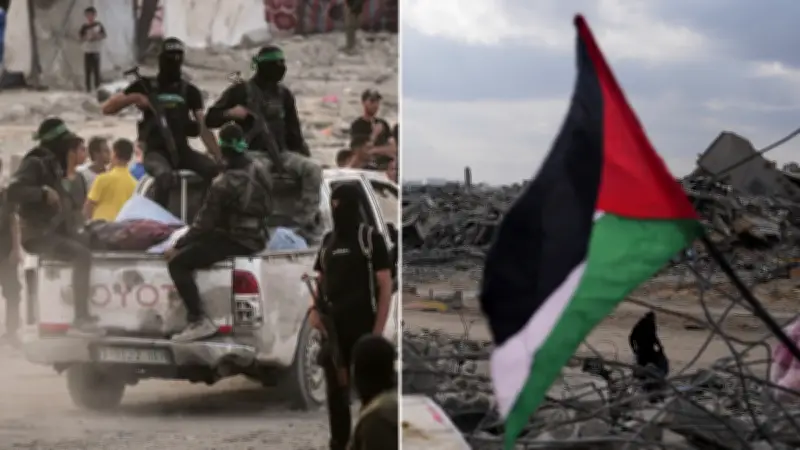
Hamas has relinquished control of the Gaza Strip after nearly two decades in power, paving the way for a civilian-led government. The head of Hamas media office in Gaza, Ismail al-Thawabta, announced the move on Monday, local time, stating that the group's political arm has been dissolved and day-to-day governance will be overseen by the National Committee for the Administration of Gaza (NCAG).
End of an Era: Hamas Steps Down
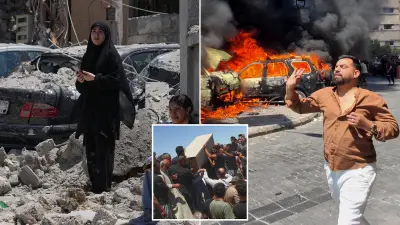
The transition brings an end to Hamas's nearly 20-year rule over the region, which began when it seized power from rival Palestinian faction Fatah in 2007. Hamas's tenure was marked by repeated conflicts with Israel, leading to its designation as a terrorist organization by the European Union and several countries, including Australia. The most significant escalation occurred on October 7, 2023, when Hamas launched an attack that killed more than 1,000 Israeli civilians and took over 250 hostages. This sparked a two-year war with Israel, resulting in the deaths of more than 80,000 Palestinians and 2,000 Israelis, and widespread destruction across Gaza before a ceasefire was signed in October 2025.
Ceasefire and Peace Plan
The ceasefire agreement, brokered by the United States and President Donald Trump, established a 20-point peace plan that required Hamas to hand over power to the NCAG. The plan also created a Board of Peace to manage the rollout of the deal. The NCAG describes itself as a "transitional, technocratic and apolitical" group composed exclusively of qualified Palestinians from the Gaza Strip. Its mandate is focused on civilian affairs and it does not represent the Palestinian people internationally. The NCAG will fulfill this transitional role until the Palestinian Authority completes its reform program, creating conditions for a credible pathway to Palestinian self-determination and statehood.

Preparations for Transition
NCAG Chief Commissioner Ali Shaath said the committee is "fully prepared" to take over governance as soon as the necessary conditions and enabling measures are in place. These include a single governing authority operating under one legal framework with a clear mandate and a unified security apparatus accountable to that authority. "These prerequisites are fundamental to establishing the political, administrative, and security environment necessary for the Committee to carry out its responsibilities effectively, in a manner that serves the interests of all Palestinians in the Gaza Strip," Shaath said.
International Response
Board of Peace representative Nickolay Mladenov celebrated the move as "bringing the roadmap discussions to a successful conclusion." He added, "It is the bridge between declarations and implementation. The sooner agreement is reached on the outstanding implementation provisions, the sooner the NCAG can assume its responsibilities, the decommissioning of weapons and the withdrawal of Israeli forces can begin and large-scale reconstruction can commence."
Humanitarian Impact
The United Nations found that Israel's response to the October 7 attacks amounted to genocide, war crimes, and crimes against humanity, with around 30 percent of those killed in the war being Gazan children. The transition of power is seen as a critical step toward rebuilding the devastated region and restoring stability.