

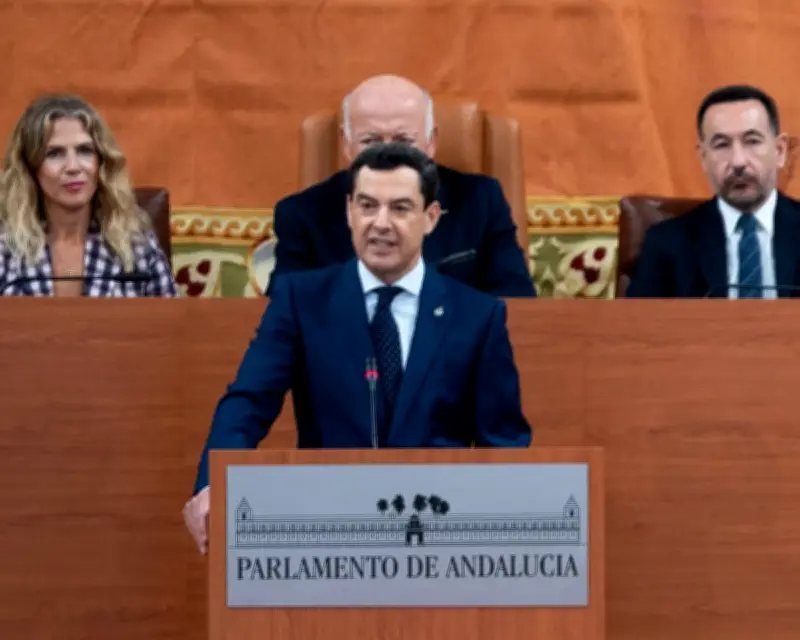
Spain's conservative Popular Party (PP) has reached a coalition agreement with the far-right Vox party to govern the southern region of Andalucia, a landmark deal that brings the far right into a regional government for the first time since the end of the Franco dictatorship.
Details of the Coalition Agreement
The agreement, announced late on Friday, gives Vox two positions in the regional cabinet: the ministries of Agriculture and Culture. The PP will hold the remaining 11 ministries, including the presidency. The coalition deal also includes a commitment to promote "Christian values" and to defend the unity of Spain, as well as a pledge to cut taxes and reduce bureaucracy.
The PP won the most seats in the June 19 regional election but fell short of an absolute majority, forcing it to seek support from Vox, which won 14 seats. The two parties together hold 58 seats in the 109-seat regional parliament, enough to govern.

Reactions and Political Implications
The deal has sparked controversy, with critics arguing that it normalizes the far right. "This is a sad day for Andalucia and for Spain," said Juan Espadas, the Socialist Party candidate who came second in the election. "The PP has chosen to ally itself with the extreme right, which denies gender violence and attacks the rights of minorities."
Vox leader Santiago Abascal defended the agreement, saying it was "a great opportunity to show that we can govern responsibly and implement the changes that Andalucians voted for."
The coalition is seen as a test case for future pacts between the PP and Vox at the national level. The PP has been hesitant to form alliances with Vox, but the party's new leader, Alberto Núñez Feijóo, has signaled a more pragmatic approach. Feijóo, who took over the party in April, has said he will not rule out coalitions with Vox if necessary to govern.
Impact on Spanish Politics
Andalucia, Spain's most populous region with 8.4 million inhabitants, has been a stronghold of the Socialist Party for decades. The PP victory in June was a major shift, and the coalition with Vox consolidates the right-wing bloc in the region.
The deal has also drawn international attention. The European Parliament's group of Socialists and Democrats condemned the agreement, calling it "a dangerous step backwards for democracy and human rights in Spain."
Political analysts say the coalition could influence the national political landscape ahead of the next general election, expected in late 2023. "This is a watershed moment," said Lluís Orriols, a political scientist at Carlos III University in Madrid. "If the PP can govern with Vox in Andalucia without major scandals, it will be more willing to do so at the national level."
Key Policies and Controversies
Vox's platform includes stricter immigration controls, a rollback of abortion rights, and a crackdown on Catalan separatism. The party has also opposed laws protecting victims of gender violence, arguing they discriminate against men.
The coalition agreement includes a commitment to "defend the unity of Spain" and to "promote the Christian roots of our culture." It also promises to reduce the regional debt and to implement tax cuts for businesses and high earners.
Critics have expressed concern over Vox's influence on cultural policy. The party's candidate for the culture portfolio, Manuel Gavira, has previously called for the removal of statues of historical figures linked to Spain's Islamic past and has criticized feminist and LGBTQ+ events.