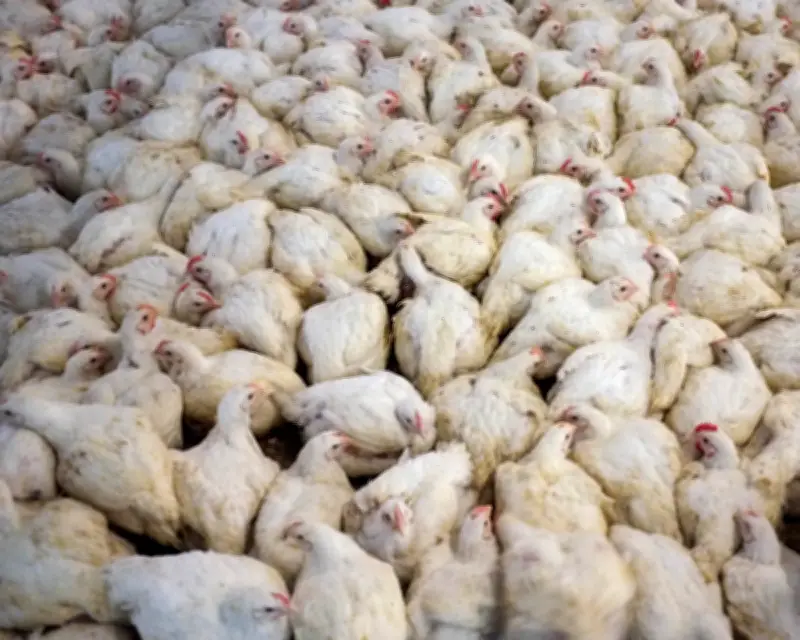
The global population of mammals and poultry raised for food has increased by a staggering 70% since 1970, according to a new report from the World Wildlife Fund (WWF) and the Zoological Society of London (ZSL). The study, published in the journal Nature, reveals that the number of animals farmed annually now exceeds 30 billion, highlighting the immense scale of industrial agriculture.
Key Findings of the Study
The research analyzed data from the Food and Agriculture Organization (FAO) and other sources, tracking the biomass of livestock and poultry. It found that chickens dominate, with over 23 billion raised each year, followed by cattle (1.5 billion), sheep (1.2 billion), and pigs (1 billion). The total biomass of farmed animals now far exceeds that of wild mammals and birds, with livestock accounting for 60% of all mammal biomass on Earth.
“The sheer number of animals we are raising for food is unprecedented and has profound implications for the planet,” said Dr. Robin Freeman, head of the ZSL’s Indicators and Assessments Unit. “This growth is driving deforestation, greenhouse gas emissions, and biodiversity loss.”

Environmental Impact
The report warns that the expansion of livestock farming is a major contributor to climate change, accounting for 14.5% of global greenhouse gas emissions. It also consumes vast amounts of land and water, with feed crops requiring 33% of global cropland. The study notes that the number of farmed animals has grown faster than the human population, which has increased by 150% since 1970.
“If current trends continue, the environmental pressures will only intensify,” said Dr. Freeman. “We need to rethink our food systems to reduce reliance on animal products.”
Regional Differences
The growth has been uneven across regions. Asia saw the largest increase, particularly in China and India, where rising incomes have boosted meat consumption. In contrast, Europe and North America have seen slower growth, with per capita meat consumption stabilizing or declining slightly. However, these regions still have high consumption levels, and the report emphasizes the need for dietary shifts globally.
Call for Action
The WWF and ZSL are urging governments and businesses to promote sustainable diets, reduce food waste, and invest in alternative proteins. They also call for stronger regulations on factory farming and land use. “We have the tools to change course, but it requires political will and consumer awareness,” said Dr. Freeman.