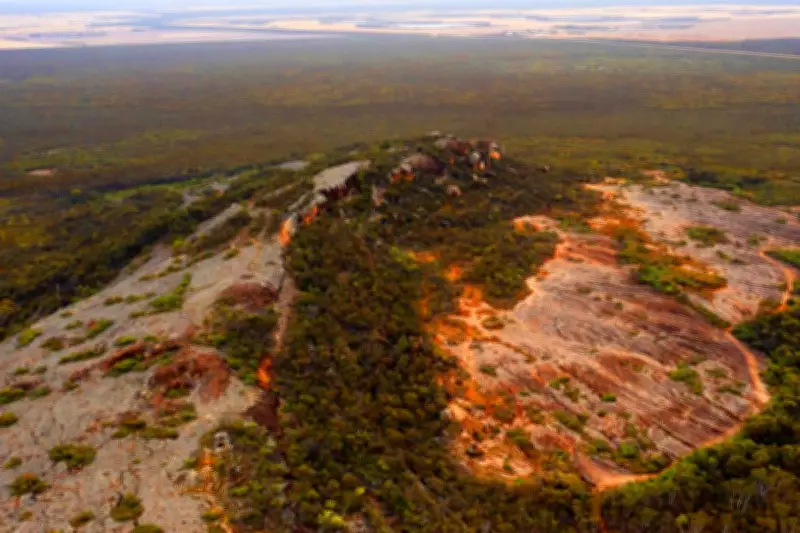
Mount Ridley Mines has officially commenced phase one metallurgical test work at its Winstons and Keiths prospects, which are part of the company’s extensive Grass Patch heavy rare earths project near Esperance in Western Australia.
Test Work Program Underway
The critical minerals company has engaged leading Perth-based laboratory Nagrom to spearhead the campaign, which aims to test the regolith-hosted heavy rare earth element mineralisation. Nagrom will analyse representative mineralised clay samples collected directly from the Winstons and Keiths prospects.
According to Mount Ridley, this laboratory work represents the first significant metallurgical program targeting its newly defined heavy rare earths, scandium, and gallium mineralisation. The campaign follows the release of a maiden mineral resource estimate for both prospects.

Resource Estimates
Between the two prospects, they host a multi-element JORC inferred resource of 122.5 million tonnes grading 889 parts per million (ppm) total rare earth oxides, including a premium basket of 44,610 tonnes of heavy rare earth oxides. Additional inventories include a world-class gallium resource of 838.7 million tonnes grading 29.3 ppm and a scandium resource of 367.98 million tonnes grading 57.3 ppm.
Expert Leadership
The test work program was designed and is being led by Mount Ridley’s newly appointed technical advisor for processing and metallurgy, Chris Larder. Chris brings extensive industry experience in developing processing flowsheets and conducting metallurgical test work for multiple Western Australian rare earth and gallium systems.
Earlier metallurgical work across the wider project examined lighter rare earths mineralisation at the Mia prospect, but studies at Winstons and Keiths were limited to preliminary baseline investigations. The new program aims to identify the best methods to extract heavy rare earths, scandium, and gallium from the clay-hosted mineralisation, which are now the company’s main development focus.
Company Statement
Mount Ridley Mines managing director and chief executive officer Allister Caird said: “The commencement of testwork at Nagrom is an important milestone for Mount Ridley. It is the first major metallurgical program we have undertaken since establishing our maiden resource estimates across the mafic derived Grass Patch Complex.”
Future Plans
The program’s results will be integrated into broader development initiatives, including work with the Lawrence Livermore National Laboratory in the USA. Mount Ridley aims to develop a complete processing solution—a streamlined flowsheet capable of upgrading, extracting, and cleanly separating all valuable minerals within its rare earths, scandium, and gallium mix.
In addition to Grass Patch, Mount Ridley maintains gold, nickel, and copper interests through its wholly owned Weld Range project in Western Australia, providing exposure to large-scale mineral systems in a proven mining region.
Next steps at Grass Patch include a major field-backed exploration push, with geos prioritising multiple high-priority walk-up drill targets identified through historical drilling and geophysics. These will form the basis of future exploration drilling programs slated for later in 2026.
With a substantial resource footprint already established, Mount Ridley is rapidly building its downstream pathway. If the laboratory technicians can crack the clay mineralogy code in the coming months, this Western Australian explorer could transition from a maiden resource story into a more advanced critical minerals contender.