Have you ever heard of Esperanto? Tucked away among the terraces of Redfern, an unremarkable redbrick building holds an international secret. Thousands of commuters and students pass it daily as they travel between Redfern railway station and the University of Sydney in the city's inner west.
Two words are embossed across the building's front wall: Esperanto House. It was during a walk to work a few weeks ago that it first caught my eye. Looking up from my uninspired pavement inspection, I spotted a green and white flag with a star in the top left corner fluttering from a post on the second floor.
As a self-proclaimed vexillologist, I can usually identify flags quickly. But this one baffled me. I switched into detective mode, pulling out my phone, eager to learn a potentially new flag. However, what I discovered was far more intriguing.

The flag was called the Esperanto flag — but what on earth is that?
What is Esperanto?
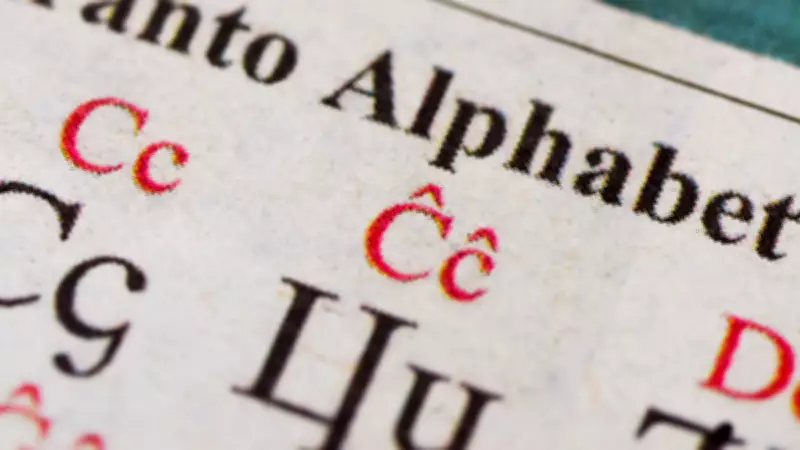
Esperanto is a constructed international auxiliary language developed by L.L. Zamenhof, a Polish ophthalmologist turned linguist, in 1887. Zamenhof was born in 1859 in what was then the Russian Empire, surrounded by people of diverse cultural and ethnic backgrounds who spoke different languages. According to Zamenhof, the community was deeply distrustful of one another due to communication barriers.
A portrait of L.L. Zamenhof hangs in Esperanto House. To eliminate unwarranted animosity, Zamenhof created Esperanto. The language primarily draws vocabulary from Romance languages (especially French, Italian, and Spanish), along with elements from Germanic, Greek, and Slavic languages.
While the idea of a language understandable to everyone worldwide is noble, Esperanto NSW president Jonathan Cooper explains that Zamenhof's reasons were mostly practical. "He wasn't so much of an idealist that he thought if everyone spoke the same language, there would be world peace, but he just thought it would be a good first step."
Esperanto Today
Esperanto is considered the most successful constructed international language globally, with an estimated two million speakers, though exact numbers are hard to verify. Despite only a few thousand native speakers — those who grew up speaking it — Cooper, who also runs Esperanto House, says it remains well established. "It's definitely a living, breathing language. Some people are disappointed because it hasn't taken over the world like they thought it would, but it's certainly not about to die."
The rise of the internet and the blurring of international and language barriers might have threatened Esperanto, as real-time translators simplify cross-language communication. However, Cooper believes the internet has been a boon. "The obvious positive about the internet for Esperanto is that international communication barriers are taken away." The internet has also exposed more people to Esperanto, allowing them to explore the language through apps like Duolingo.
Esperanto House
Esperanto House offers language classes, both in-person and online, as well as accommodation for up to two weeks for international Esperanto speakers visiting Australia. Despite existing for over 130 years, Cooper notes that some people don't consider Esperanto a proper language because it supposedly lacks a broader culture. But Cooper rejects this entirely. "Culture is made by people, not the language that they use. Esperanto injects the culture into the language."
While Esperanto hasn't become the globally dominant language originally intended, it still fosters human connection on an individual level. Cooper says the language is great because, despite being niche, meeting another Esperanto speaker creates an immediate bond, regardless of origin.
Visiting Esperanto House reminded me why humans are social creatures. People from France, South Korea, and Russia sat together in a courtyard, all connected by this one language. Without Esperanto, the courtyard would have been silent. But thanks to Esperanto, there was laughter.
Mia nomo estas Tim, kaj mi amas Esperanton.