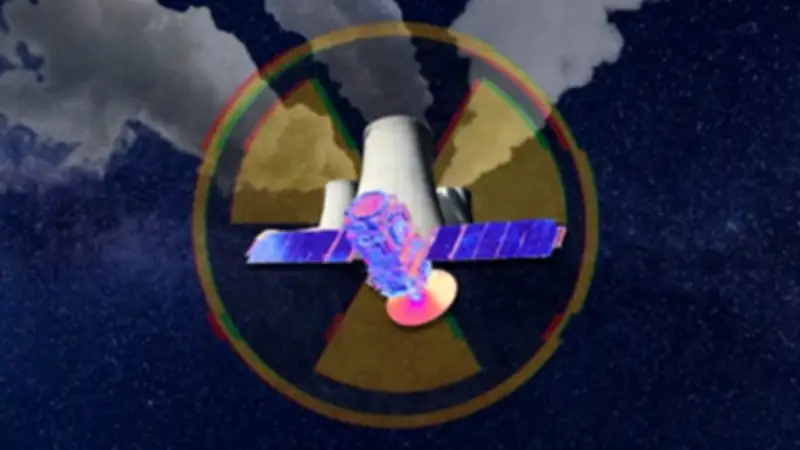
NASA is planning to launch Space Reactor-1 Freedom, the first nuclear-powered interplanetary spacecraft, by December 2028 to explore Mars. The agency also aims to deploy a small nuclear reactor on the Moon by 2030 under its Artemis program. These initiatives are part of a broader push for nuclear power in space, which includes the White House's National Initiative for American Space Nuclear Power.
Why Nuclear Power in Space?
Nuclear power sources in space vary by purpose and design. Radioisotope power systems generate electricity from the natural decay of plutonium-238, while fission reactors split atoms to produce heat, which is converted into electricity. On the Moon, where a day-night cycle lasts about 29.5 Earth days with two weeks of darkness, solar power alone is insufficient for a permanent presence. Space Reactor-1 Freedom will use a fission reactor for nuclear propulsion, cutting travel times to Mars and reducing astronauts' exposure to cosmic radiation.
A Long History of Nuclear Power in Space
Nuclear power has been used in space since the Apollo era. Later Apollo missions employed radioisotope thermoelectric generators to power lunar experiments. Today, similar systems power the Mars rovers Curiosity and Perseverance, as well as the twin Voyager spacecraft, which continue to communicate from interstellar space. The US launched the SNAP-10A fission reactor into orbit during the Cold War, though it operated for only about six weeks. The Soviet Union launched nuclear-powered radar ocean reconnaissance satellites (RORSATs) to monitor US Navy vessels.

Safety Risks and Technical Challenges
Nuclear power in space carries significant risks. In 1978, the Soviet RORSAT Kosmos 954 made an uncontrolled re-entry over Canada's Northwest Territories, spreading radioactive debris across 600 kilometers and contaminating Indigenous lands. Launch failures also pose risks, as rockets can explode at takeoff. Space nuclear systems are designed to limit radiological consequences, but fission reactors must withstand extreme temperatures, radiation, and vacuum. Researchers at the Massachusetts Institute of Technology are studying material performance under harsh conditions. End-of-life planning, including decommissioning and disposal, raises questions of intergenerational responsibility.
Rules and Guidance for Space Nuclear Power
The Outer Space Treaty of 1967 prohibits placing nuclear weapons in orbit or on celestial bodies but does not ban nuclear power sources. After Kosmos 954, the United Nations adopted the Principles Relevant to the Use of Nuclear Power Sources in Outer Space in 1992. These principles require safety assessments before launch, notification and international assistance for re-entry risks, and recognize state responsibility and liability. Reactors should not be made critical before reaching their operating orbit or trajectory. The UN Committee on the Peaceful Uses of Outer Space (COPUOS) and the International Atomic Energy Agency developed a broader safety framework in 2009, covering launch authorization, emergency preparedness, and operation and end-of-service phases. However, these principles and framework are non-binding, leaving safety assessments and launch authorizations to individual states.
Governing Nuclear Power in Space Responsibly
As more public and private actors develop space nuclear capabilities, states must consistently implement UN principles and the safety framework, and cooperate multilaterally to update them. International coordination and information-sharing are essential. Domestic regulators must pursue the highest safety standards, embed accountability, and resist pressures from compressed timelines, strategic competition, or commercial profit. Nuclear power will continue to play a role in humanity's off-Earth ambitions, but safety and accountability must come first.