

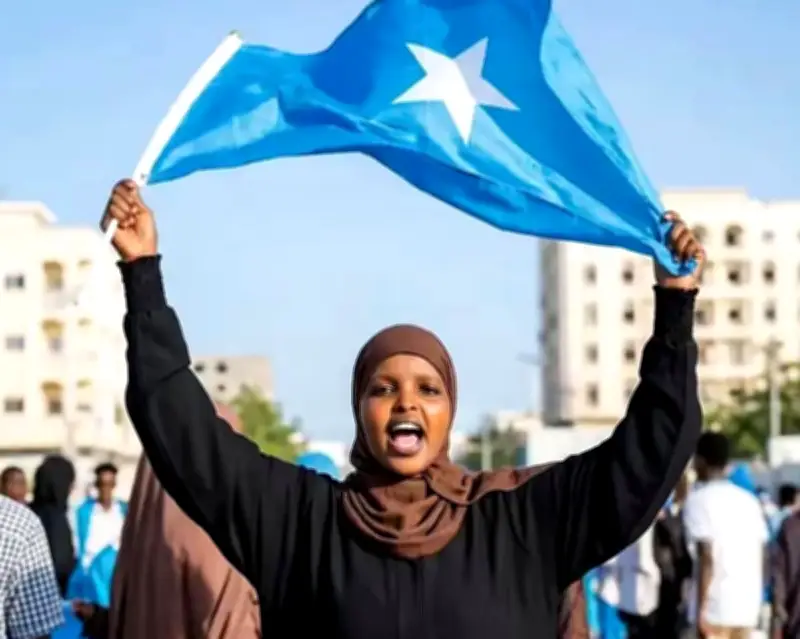
Sadia Moalim Ali, a 27-year-old nursing graduate and mother of a one-year-old, has been sentenced to three years in prison in Somalia for comments she made on Facebook and TikTok criticising the federal government. The case has sparked widespread outrage, with former President Sharif Sheikh Ahmed, former Prime Minister Hassan Ali Khaire, and human rights organisations condemning the ruling as politically motivated and fundamentally unjust.
Charges and Conviction
Ali was originally charged with insulting government institutions and incitement to commit a crime, but was convicted only of the former. The sentence was handed down on 25 June by the Banaadir Regional Court. Her comments addressed youth unemployment, high fuel prices, alleged corruption, nepotism, and forced evictions in Somalia.
Condemnation from Officials and Rights Groups
Former Prime Minister Hassan Ali Khaire wrote on X: “The three-year prison sentence handed down today … is deeply troubling and fundamentally unjust. This politically motivated arrest and conviction … reflects a disturbing pattern of judicial overreach, political retaliation, and abuse of state authority.” The Coalition of Somali Human Rights Defenders called for her immediate release, stating that “Ali’s conviction and harsh sentence represent a serious attack on freedom of expression and the legitimate work of human rights defenders in Somalia.”

Broader Pattern of Discrimination
The coalition noted that Ali’s case reflects a broader pattern of systematic discrimination against women who advocate for social and political change. “Female human rights defenders in Somalia continue to face disproportionate risks, including arbitrary arrest, judicial harassment, intimidation, online abuse and gender-based discrimination, aimed at excluding them from civic and political participation.”
Appeal and Allegations of Torture
Mohamed Sheikh Osman, one of Ali’s lawyers, rejected the ruling and said the defence would appeal. “Ali is not satisfied with the decision of the Banaadir Regional Court. The court issued a harsh ruling that could have been avoided,” he told reporters. Ali, who has been in custody since 12 April, told the Guardian in a May interview that she was subjected to torture. “I was forced to lie face down on the ground, and water was poured on me. I was kicked by guards with boots on. They stood over me and beat me with a baton. I was taken into solitary confinement and kept there for two days. I was deprived of food and basic necessities while I was locked in that cell. I wasn’t allowed to leave to go to the toilet.” At court, Ali said police officers had threatened her with rape. Torture is prohibited under international law and the UN Convention against Torture in all circumstances.
Systematic Crackdown on Rights
Since 2022, Somali authorities have been accused of engaging in a systematic and escalating crackdown on human rights, using arbitrary arrests, detention, harassment, threats, and intimidation to silence journalists, activists, and other people who express dissenting views.