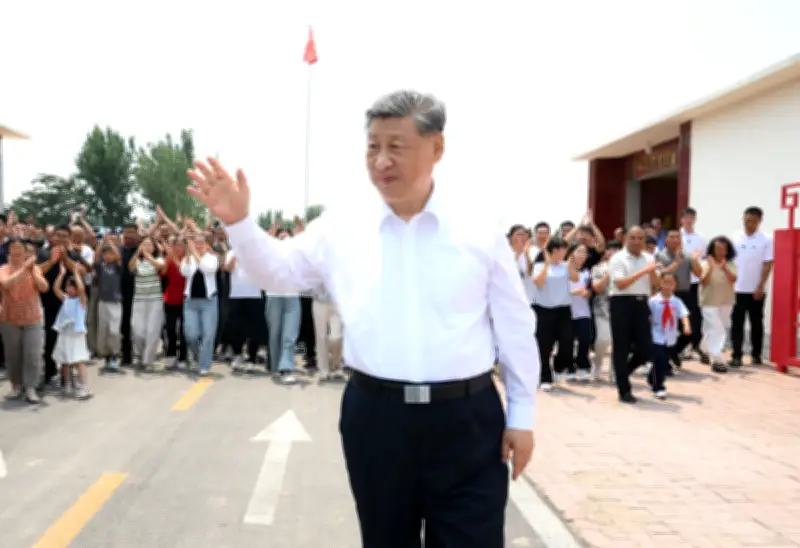
Chinese President Xi Jinping welcomed a gathering of world leaders from middle powers in Beijing on Friday, marking a significant push by China to strengthen ties with nations outside the traditional great-power rivalry. The summit, held at the Great Hall of the People, included leaders from Indonesia, Turkey, South Africa, Brazil, and Mexico, among others.
Strategic Realignment
The meeting comes as China seeks to position itself as a leader of the Global South, offering an alternative to the US-led order. According to a statement from the Chinese Foreign Ministry, the discussions focused on “shared development, multilateral cooperation, and reform of global governance.”
Xi emphasized that “middle powers are the stabilizers of the international system,” and called for a more inclusive approach to global challenges. The summit produced a joint communiqué pledging to boost trade, investment, and cooperation on climate change and digital economy.

Key Attendees and Outcomes
Indonesian President Joko Widodo, Turkish President Recep Tayyip Erdogan, South African President Cyril Ramaphosa, Brazilian President Luiz Inácio Lula da Silva, and Mexican President Andrés Manuel López Obrador were among the attendees. The leaders agreed to establish a regular dialogue mechanism and a fund for infrastructure projects in developing countries.
“We are witnessing a new chapter in South-South cooperation,” said President Lula, according to a Brazilian official. The summit also saw the signing of 15 bilateral agreements, including a free trade pact between China and the Gulf Cooperation Council.
Implications for Global Order
Analysts view the summit as a counterweight to the G7 and other Western-dominated forums. “China is cultivating a coalition of middle powers to amplify its voice on the world stage,” said Dr. Li Wei, a professor of international relations at Peking University. “This is a strategic move to reshape global governance in Beijing’s favor.”
The summit’s final declaration called for reforming the United Nations Security Council and the World Trade Organization to better reflect the interests of developing nations. It also criticized unilateral sanctions and protectionism, echoing China’s longstanding positions.