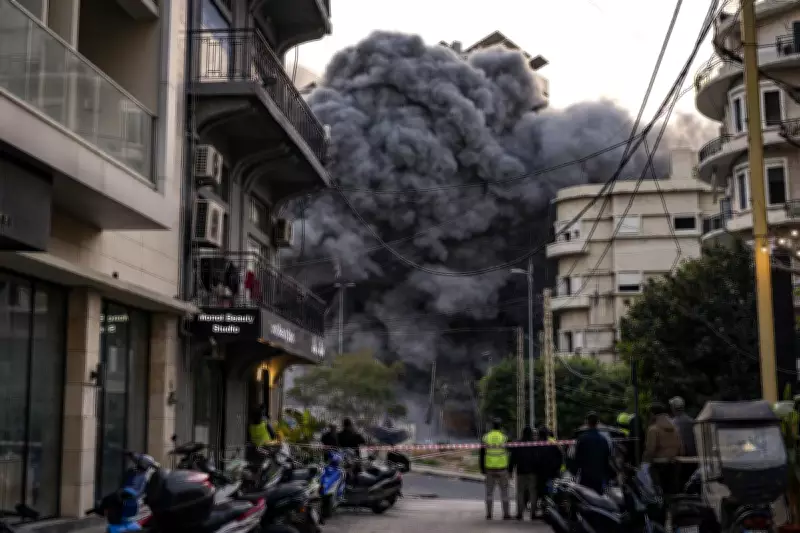
Andrew Miller expresses a heartfelt wish: "May this war resolve quickly, so we can get on with building a world with less darkness." This sentiment, shared from Beirut, Lebanon, captures a universal longing for peace amid global turmoil.
A Disrupted Morning and Distant Conflicts
An early morning alarm jolts Andrew Miller from deep sleep, triggering a surge of adrenaline and a foul mood that clings like a leopard's bite. His thoughts drift to Iran, a distant war he describes as the worst failure of human ingenuity, diplomacy, and virtue. He questions its relevance to his own life, pondering how individuals, like microplastics, seem inconsequential alone but gain significance together.
Childhood memories flood back—stories of famous wars from grandparents, parents, and teachers who served in uniform. Their fervent hope was that future generations would never have personal reasons to cry on ANZAC Day as they did. The use of secret intelligence to justify hostilities echoes familiar patterns from Vietnam and Iraq, adding to the dissonance.

Finding Solace in Manageable Problems
Seeking respite, Andrew picks up his coffee and heads to work, where bite-size problems offer a welcome distraction. As a medical professional, he monitors patients' oxygen levels with pulse oximeters, aiming for readings over 95 percent saturation. He shares a lighthearted dad joke: "call me if the oxygen levels exceed 100 percent."
During a procedure, a patient's oxygen levels dip below 85 percent, prompting immediate action. Andrew applies a face mask, adjusts ventilation, and prepares sedation drugs if needed. The crisis stabilizes, and with the list done, everyone recovers. Manageable problems, he notes, are a tonic for the soul, easing the leopard's grip on his mind.
A Proud Moment in the Supreme Court
Later, Andrew dons a rare tie and attends the Supreme Court, where his eldest daughter is being admitted as a lawyer. The ceremony, over 500 years old, evokes awe and tradition. Family and friends sit like excited children in assembly, shifting and whispering in the presence of authority.
As his daughter declares her commitment to conduct herself truly and honestly as a lawyer, Andrew feels emotional, joking that he got something in his eye. The Honourable Justice Larissa Strk invokes Aristotle's four cardinal virtues—prudence, justice, courage, and temperance—as a theme for her remarks. She emphasizes that imperfections and stumbles along the way make for better practitioners.
Reflections on Leadership and Hope
Andrew recalls Aristotle's warning about militaristic leaders who can conquer but not govern, noting that no hawkish leader has yet proven this wrong. He circles back to his initial wish, hoping for a quick resolution to the war so everyone, everywhere, can focus on building a future with less darkness in the shadows.
This personal narrative intertwines global concerns with intimate moments, highlighting the human capacity for resilience and hope amidst chaos.