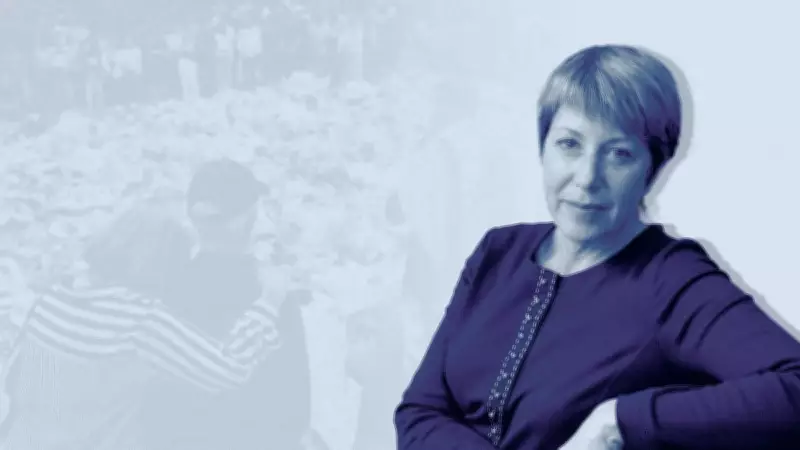
Danny Berkovic Questions Legitimacy of Jewish Council of Australia
In a pointed critique, Sydney businessman Danny Berkovic has challenged the fundamental premise of the Jewish Council of Australia, arguing that this recently formed advocacy group does not represent the Australian Jewish community despite its authoritative-sounding name. Berkovic, who helped organise the bondiresponse.com petition calling for a royal commission into anti-Semitism, has observed the council's statements circulating in political and media circles as if they carry communal weight.
A Question of Representation and Numbers
The Jewish Council of Australia was established in 2024 by individuals who openly reject positions taken by mainstream Jewish organisations, particularly concerning Zionism, Israel and definitions of anti-Semitism. While Berkovic acknowledges their right to hold these views, he takes issue with what he describes as misleading representation.
"What is misleading is the way the organisation's name creates the impression that it represents a community it plainly does not," Berkovic states, emphasising that Australia's approximately 120,000 Jews maintain diverse political and religious perspectives.

The council's own published material lists 1,407 signatories to its core principles since its founding, with 322 of those remaining anonymous. Even accepting these figures at face value, Berkovic notes this represents a tiny fraction of the Australian Jewish population.
"This is not a peak body. It does not function as one. It does not command anything approaching communal consent," he asserts, contrasting the council's numbers with the approximately 3,500 signatures gathered in just 67 hours for the bondiresponse.com campaign.
The Adelaide Writers' Festival Controversy
The debate extends to cultural institutions, particularly through the involvement of Louise Adler, a member of the Jewish Council of Australia's advisory committee and former director of the Adelaide Writers' Festival. Under Adler's stewardship, Writers' Week was cancelled in 2026 following controversy over the inclusion of author Randa Abdel-Fattah in the program.
In defending this decision, Adler claimed opposition to Dr Abdel-Fattah's appearance stemmed from "the mere Palestinian-ness of an author" constituting a threat to the Australian Jewish community. Berkovic strongly disputes this characterisation.
"That claim does not withstand scrutiny," he argues. "Dr Abdel-Fattah's ethnicity is irrelevant. No serious objection has been raised to her being Palestinian, and to suggest otherwise is not only wrong but deliberately inflammatory."
Examining the Actual Concerns
Berkovic contends the genuine concern relates to Dr Abdel-Fattah's published views, including her statement that Zionists have "no claim or right to cultural safety" and her support for excluding speakers from public platforms on ideological grounds.
He references NSW Premier Chris Minns' response to this position, noting the Premier described it as "intolerable for anyone to suggest that another Australian doesn't deserve a safe space, cultural or any other kind." Berkovic interprets this as a direct repudiation of the idea that cultural safety can be selectively withdrawn based on political views.
"Pretending that the debate around Dr Abdel-Fattah is about her 'mere Palestinian-ness' is therefore not an innocent misunderstanding," Berkovic suggests. "It is a reframing that has the effect of shifting scrutiny away from her views and on to a caricature of Australian Jews as fearful and censorious."
Fundamental Misrepresentations
Berkovic identifies what he sees as two false premises underlying the council's framing of the controversy:
- That criticism of someone's statements equates to hostility toward their identity
- That those raising concerns represent a unified, powerful bloc
"Neither claim withstands scrutiny," he maintains, arguing that if Adler or the Jewish Council of Australia wish to advocate for Dr Abdel-Fattah's views, they should do so directly rather than misrepresenting objections or inventing motives.

Berkovic concludes with a broader critique of public discourse, suggesting that "at a moment when Australians are looking for restraint, accuracy and good faith in public debate, Adler and her supporters are delivering the opposite."
The controversy highlights ongoing tensions within Australia's cultural and political landscape regarding representation, free speech, and community identity in increasingly polarised times.