The Legacy of Mokare: A Diplomat in Early Albany
Menang leader Mokare was a pivotal figure in the early days of Albany, known then as Kinjarling. As a diplomat and negotiator, he shared his cultural knowledge with settlers who arrived in the region. His influence was profound, fostering relationships between the newcomers and the Noongar Menang people, the traditional owners of the land.
Friendship with Dr Alexander Collie
Mokare developed a close friendship with the first Government Resident, Dr Alexander Collie, a medical doctor and amateur botanist. In Dr Collie's early letters, he referred to Mokare and his brother Nakina as his house guests. Mokare served as a guide and interpreter on an expedition to the Porongorups in April 1831, a role commemorated by a memorial on Mount Barker.
Information from Mokare and Nakina provided the foundation for Dr Collie's essay, The Aborigines Of King George Sound, published in the Perth Gazette in 1834. Dr Collie wrote, We certainly had come into their country and set ourselves down, reflecting on the settlers' arrival.

Mokare's Death and Burial
When Mokare fell ill, possibly from influenza, Dr Collie nursed him in his home. Upon Mokare's death in 1831, Dr Collie assisted in burying him according to Aboriginal customs. Europeans and Aboriginals gathered at Dr Collie's house and walked to a site chosen by Nakina, where Europeans dug the grave under Nakina's instruction. Mokare was laid to rest with his cloak and possessions.
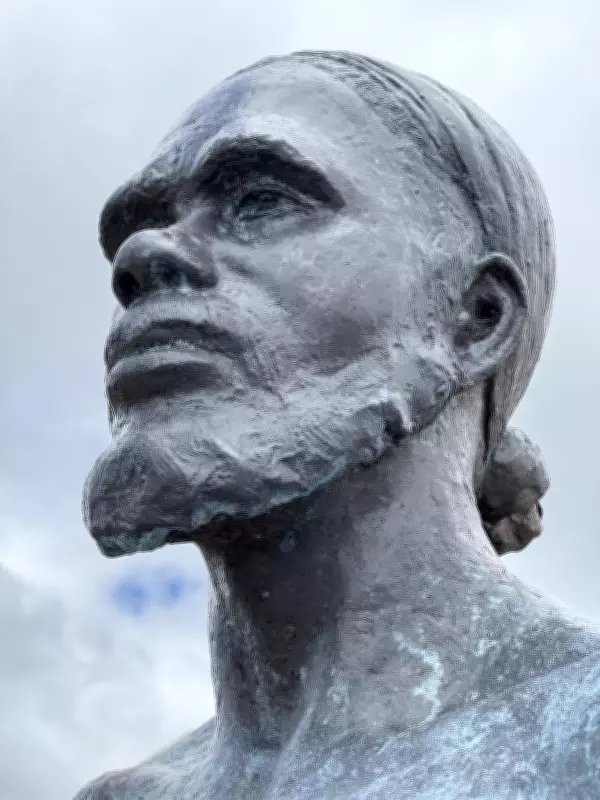
In 1835, as Dr Collie neared death, he requested to be buried alongside Mokare. However, the Town Hall was constructed on the burial site between 1886 and 1888, leading to Dr Collie's remains being relocated to Memorial Park Cemetery. The whereabouts of Mokare's remains are unknown, but a statue of him stands in Alison Hartman Gardens, slightly up York Street from the original site.
Other Influential Menang Leaders
While Mokare is a standout figure, other Menang leaders played significant roles. Wandinyil, later known as King Tommy, observed the early interactions between traditional owners and settlers. Historical documents indicate he helped plant a Norfolk Island pine tree that still thrives in the gardens of Strawberry Hill, also called Barmup.
Wandinyil valued the cultural teachings of his elders and maintained a camp on Mt Melville above Serpentine Road. He advocated for equality and began questioning the settlers' actions, which led to his imprisonment on Rottnest Island. After working as a whaler, he opposed whale killing, resulting in his arrest and another stint on Rottnest Island in 1843.
Wandinyil sought land for his tribe without segregation, believing in the integration of Menang and settlers to forge a shared future. He adopted the name King Tommy of Albany and, in October 1890, presented a petition to Governor Sir William Robinson during celebrations for Western Australia's self-government. The petition asserted Albany belonged to his tribe, predating the Mabo land rights decision by over a century.
The Menang People's Worldly Perspective
Research into the Menang people reveals their stoic, resilient, and realistic nature, deeply connected to their land. They were worldly, having encountered various visitors over time and adapting to those who stayed. For 200 years, Albany has embraced diversity, a testament to this historical integration.
Today, figures like Larry Blight and Vernice Gillies continue Mokare's legacy by sharing cultural knowledge through fully guided Aboriginal tours for Kurrah Mia. Reflecting on this, the author stands before Mokare's statue in Alison Hartman Gardens, having walked from Dr Collie's grave near Dog Rock.
A Multicultural Scene in Modern Albany
During this visit, the author encountered Albany's Christmas Festival and Pageant, with streets closed and floats parading in red and green. This scene echoes history, as the Amity arrived in King George Sound on Christmas Day in 1826. Children danced in artificial snow pumped from the Albany Library balcony, creating a vibrant, multicultural atmosphere that Mokare likely would have appreciated.
The enduring spirit of the Menang people and their leaders continues to shape Albany's community, highlighting a legacy of diplomacy and cultural exchange that remains relevant today.