Community Gathers in Newcastle to Mourn 'Invasion Day' After Rally Cancellation
Despite the official cancellation of an Invasion Day Rally, hundreds of individuals converged at Newcastle's Civic Park in a peaceful demonstration of protest and solidarity. The event, originally organized by students from the University of Newcastle and scheduled for 9am on January 26, was called off in the days leading up to it. However, this did not deter community members from assembling throughout the morning to show their support for Indigenous Australians, many of whom view the date as one of mourning and survival rather than celebration.
Unofficial Gathering Draws Diverse Crowd
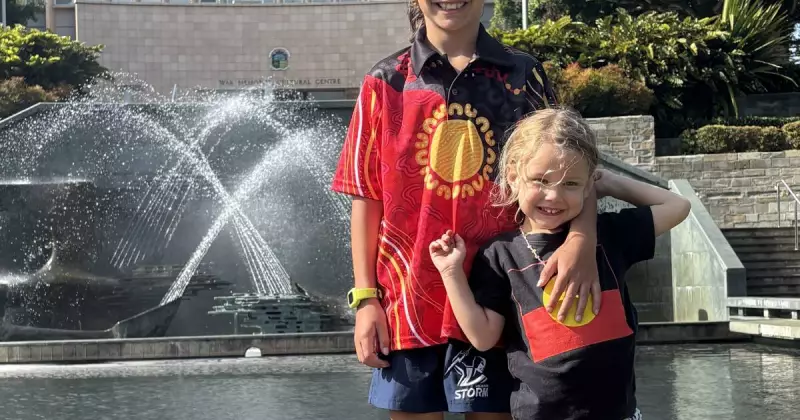
By 10am, approximately 200 people had gathered in the parkland, with many unaware that the planned rally had been cancelled. The atmosphere was relaxed and respectful, as attendees shared stories and enjoyed the sunny weather. April Phillips, a resident of Cardiff, attended with her two children, Aston, 8, and Kaiya, 3. She explained that her family participates in Invasion Day events annually to connect with the community and acknowledge the day of mourning.
"We want to pass on that sense of community to the kids and speak out to show that this is not a day that everyone is able to celebrate," Phillips said. She expressed concern over the lack of significant change in recognizing the pain the day holds for Indigenous Australians, noting, "Our country is still quite racist, people struggle to see the Aboriginal perspective, that today marks the day colonialism began in Australia and changed our way of life forever."

Families Advocate for Change and Unity
Holly and Jacob Swab from Wallsend attended the gathering with their daughters Frankie, 2, and Goldie, 4. Mr. Swab emphasized the need to change the date to something all Australians can celebrate, stating, "It's a bit embarrassing, the lack of empathy that some people have in relation to the pain this day has for others. It's a bit of a kick in the pants each year that it is something that people think can't be changed."
Ms. Swab added that the family aimed to show support for Indigenous Australians and work towards unity. "As parents we kind of have to be the change you want to see in the world," Mr. Swab remarked. "We are responsible for raising our kids who will be shaping the movements of Australia." Ms. Swab expressed disappointment that people cannot unite for a day that could be inclusive, saying, "People feel like they are having something taken away from them. They don't see that other people aren't included."
Peaceful Atmosphere and Community Solidarity
The gathering remained peaceful throughout, with the only disruption coming from a passer-by on a pushbike who attempted to stir up the group but was widely ignored. Chloe Toole, a Wiradjuri woman originally from Bathurst, highlighted the importance of gathering to show solidarity on a date that can carry pain and trauma. "It's a small way to show support, and you can really feel it with a few hundred people here gathered together peacefully," she said. "It is as simple as sitting together, seeing other people, especially all the young kids here to support each other."
Toole noted that the push to change the date persists, despite what she perceives as a rise in racism in the community. "I feel like it is something that is being imported from the United States, the anti-immigration sentiment and aggression towards Indigenous people," she explained. "Feels like we are very divided at the moment and people are emboldened to harass others."
Historical Context and Ongoing Advocacy
Shelley Morris, a Gomeroi woman, shared that she was following in the footsteps of her mother, a long-time campaigner for Indigenous causes. "This gathering is not about hate," Morris asserted. "We are gathered with kids and families, people from all walks of life and of all races. It is not about confrontation." She acknowledged that community response has improved over the years but emphasized there is still progress to be made. "We are calling for the date to change, but I am still a proud Aussie but I am just as proud to be an Aboriginal woman."

January 26 marks the arrival of the First Fleet in 1788 and the beginning of British colonisation in Australia, a day many Indigenous people observe as one of mourning. While latest polling suggests support is firming for Australia's national day to remain on January 26, events like this in Newcastle highlight the ongoing dialogue and community action surrounding the date.