Reuters Investigation Uncovers Strongest Evidence Yet on Banksy's Identity
A major investigation by global news agency Reuters has revealed what it describes as the most compelling evidence to date regarding the true identity of the anonymous street artist Banksy. The inquiry points to a British man long suspected of being behind the global phenomenon, with new documents directly linking the name Robin Gunningham to the artist's early works.
The Ukraine Connection and Initial Clues
The Reuters investigation began in late 2022 after Banksy surfaced in war-ravaged towns near Kyiv, Ukraine. In the village of Horenka, witnesses reported seeing an ambulance pull up to a bombed apartment block. Three men emerged, with two wearing masks and carrying cardboard stencils, while the third, unmasked, was identified as British photographer Giles Duley, who has one arm and two prosthetic legs.
Within minutes, the artists spray-painted a surreal image of a man bathing in the ruins, which Banksy later confirmed on Instagram. The scale and coordination of these Ukraine murals renewed efforts to identify the elusive artist. Reporters returned to Horenka with a photo lineup of suspected identities, including Robert Del Naja, frontman of the British trip-hop band Massive Attack, who has long been linked to Banksy.

A local woman who made coffee for the artists reacted strongly when shown Del Naja's image, with Reuters noting her "eyes widened," though she denied recognizing him. Immigration sources later confirmed Del Naja entered Ukraine days before the murals appeared, but Reuters suggests he may have been working alongside Banksy rather than being the artist himself.
The Turning Point in New York
The investigation's breakthrough came thousands of kilometres away in the United States. Reuters uncovered previously unreported police files and court records tied to a 2000 arrest in New York, where a graffiti artist was caught defacing a billboard during Fashion Week. This case matches a long-known episode from Banksy's early career, as the billboard had already been documented by Banksy's former manager as one of his early works.
Photos published by his former manager in 2019 show the same altered Marc Jacobs billboard at 675 Hudson Street, left unfinished because the artist was arrested mid-act. Among the documents was a handwritten confession signed Robin Gunningham, directly linking that name to the incident. According to Reuters, the artist had climbed onto the rooftop and painted over the ad, giving the model cartoonish teeth and adding a large speech bubble he did not finish before being caught.
Gunningham, a Bristol-born artist, had long been named in media reports as a possible Banksy candidate. Reuters stated that the combination of the signed confession and the clear match to this documented Banksy stunt establishes his identity "beyond dispute." The files show he was arrested at 4:20 am on September 18, 2000, charged over damage exceeding $1500, and later pleaded guilty to a reduced offence, paying a fine and completing community service.
Disappearing from the Record and Legal Pushback
Reuters reports that Gunningham later changed his name, effectively vanishing from public records. His former manager said searching for him now would be "a straight dead end," adding, "There is no Robin Gunningham. The name you've got I killed years ago." The investigation identified a possible new identity but chose not to publish it in full, citing privacy concerns.
Banksy did not respond to detailed questions from Reuters, and his inner circle remained silent. His lawyer, Mark Stephens, pushed back strongly, saying the artist "does not accept that many of the details" in the investigation are correct, without specifying which ones. Stephens urged Reuters not to publish, arguing anonymity is essential to Banksy's work and safety.
"Working anonymously or under a pseudonym serves vital societal interests," he said, warning it allows artists to "speak truth to power without fear of retaliation, censorship or persecution." He also noted that Banksy has faced "fixated, threatening and extremist behaviour," and claimed revealing his identity could put him at risk and interfere with his art.

The Mystery Fueling a Global Brand
For many, Banksy's anonymity is central to his appeal. Art historian Ulrich Blanche told Reuters the secrecy is "a statement in itself," helping the artist operate in public while staying out of reach. Works like Girl with Balloon, once voted Britain's favourite artwork, and Devolved Parliament, showing MPs as chimpanzees, have become cultural touchstones.
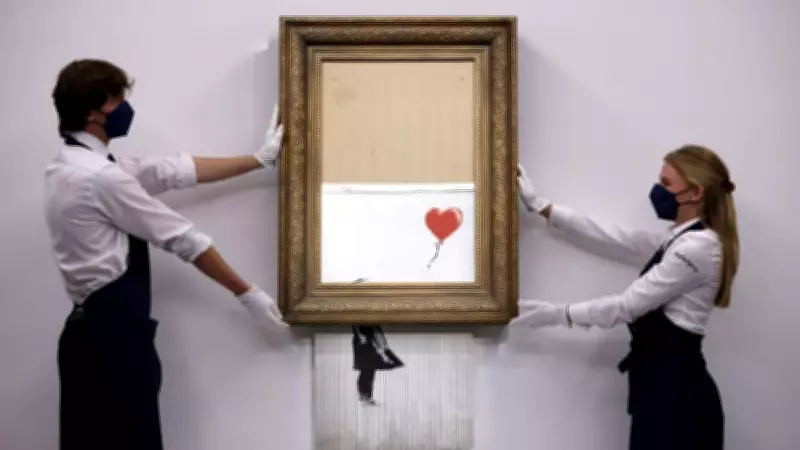
At auction, prices have soared into the millions. In one of the art world's most infamous moments, his Girl with Balloon piece partially shredded itself seconds after selling. It was later renamed Love is in the Bin and resold for far more. Banksy has long leaned into the mystery, once writing, "Invisibility is a superpower."
The Reuters investigation draws the clearest line yet between the name Robin Gunningham and the artist known as Banksy, but without confirmation, the world's most famous anonymous artist remains just that.