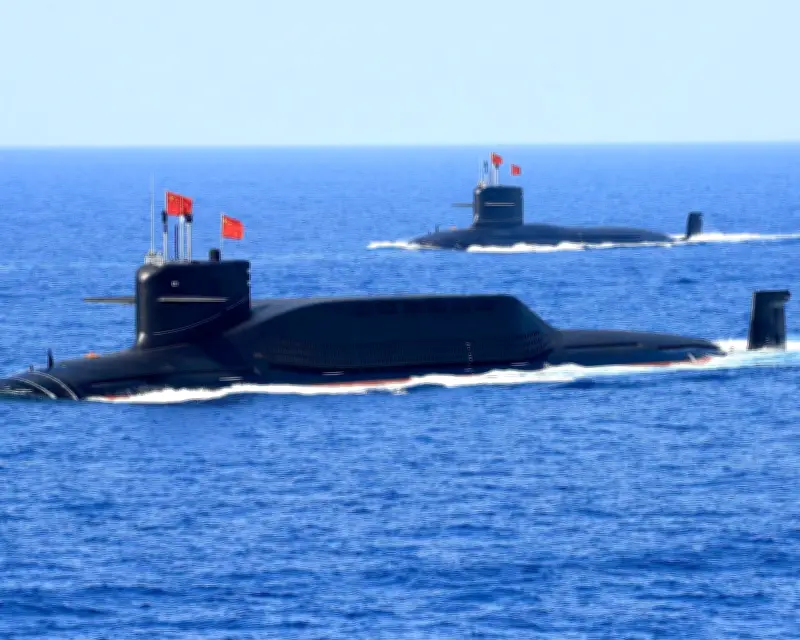
On Monday, at 12:01 pm, a People's Liberation Army Navy submarine test-fired a ballistic missile into the South Pacific nuclear-free zone. This marks the second such test by China in the Pacific in two years. The timing coincided with Fiji becoming Australia's fourth formal treaty ally, after the US, New Zealand, and Papua New Guinea, under the Ocean of Peace Alliance pact.
Timing and Provocation
David Vallance, a research associate in the Lowy Institute's international security program, described the timing as 'provocation at best, outright coercion at worst.' He noted that the test was unlikely spontaneous, given the complexity involved, but suggested the signing of the Ocean of Peace Alliance may have accelerated the schedule.
China informed regional countries, including Australia and New Zealand, of the test only hours in advance, adhering to legal requirements but lacking transparency. Vallance stated, 'Transparency about weapons testing should try to build trust, or at least alleviate suspicion, but when information about a test comes only hours earlier this does neither.'

Technical Details of the Missile
According to reports, the missile tested was a JL-3 submarine-launched ballistic missile (SLBM), capable of carrying multiple warheads, each with a nuclear payload. The JL-3 has an estimated range of 10,000 km, suggesting it was likely fired from a nuclear-powered ballistic missile submarine operating in the South China Sea.
China currently operates six such submarines, with the capacity to build up to six per year at its Bohai shipyards. Recent images from Shanghai indicate a second shipyard has begun constructing nuclear-powered submarines, expanding China's capabilities.
Implications for Australia and the Region
Vallance linked the test to broader Chinese military assertiveness, including a naval task group's circumnavigation of Australia last year with live-fire exercises, and harassment of Australian patrol aircraft, helicopters, and naval personnel. He argued that these actions demonstrate China's increasing willingness to use force to coerce Indo-Pacific states into adopting policies favorable to Beijing.
He quoted China's ambassador to Australia: 'Rumours cease when people are truly well-informed, and facts speak louder than words.' Vallance then outlined the facts: the missile's range, its nuclear capability, and the growing submarine fleet.
Strategic Coercion and Regional Response
Vallance noted that since Mao Zedong's era, China has tasked the PLA with carrying out 'weishe' (coercion). Under Xi Jinping, this strategy has become more expansive, aimed at preserving Beijing's 'period of strategic opportunities' and actively shaping the region. This test is the latest evidence of China resorting to overt shows of force.
Pacific nations, including Australia, have voiced their commitment to the Pacific as an ocean of peace. Vallance questioned whether China prefers 'pieces of shrapnel in the ocean,' contrasting with the principles of 'mutual respect, equal treatment, mutual benefit and win-win outcomes, openness and inclusiveness.'