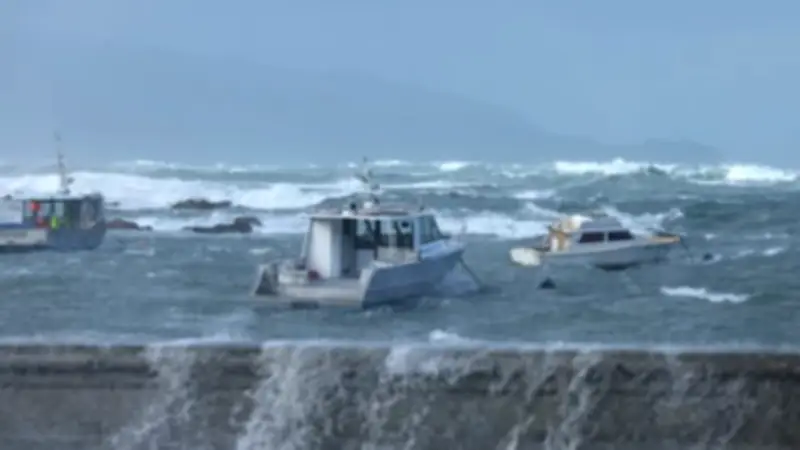
Earlier this month, Wellington declared a local state of emergency, including evacuation orders, when forecast powerful swells threatened to inundate coastal properties. Hundreds of people evacuated, but when the damage and inundation remained limited, mainstream and social media raised questions about whether the hazard warning was an overreaction that risked creating 'emergency warning fatigue'.
More Frequent Warnings Ahead
As extreme weather events become more frequent due to climate change, communities will face more hazard warnings. Some may turn out to be too cautious. Researchers are investigating why some people already fail to follow protective orders in emergency warnings. They argue a 'relational governance' approach can address this issue by building trust and shared responsibility between communities, experts and governing bodies before and after events.
This concept provides a platform for effective communication, not just in the lead-up to a hazardous event but also afterwards. This reduces the risk of people taking warnings less seriously even when some turn out to be false alarms.

Forecasts Are Probabilities, Not Promises
Science does not provide certainties, but rather probabilities informed by observations, models and prior understanding. In the case of the Wellington swell, scientists could say with high confidence that waves would be large. Atmospheric conditions drove a sustained and strong southerly airflow extending some 2,000 kilometres from near the Antarctic margin all the way past the eastern coast of the North Island.
Strong winds sustained over a long, uninterrupted distance provided conditions for generating large swells with damaging impacts on shore. Indeed, one wave buoy recorded a maximum wave height of around 10 metres, with peak averages closer to 4 metres. This was without doubt an extreme event.
But local impacts, such as coastal inundation and damage, depend on many additional factors. This includes tide levels, local-scale coastal topography and bathymetry, and subtle variations in storm evolution. Models capture some of these variables, but not perfectly. Small differences in these factors can lead to large differences in outcomes from one place to the next. Nevertheless, decision-makers are often forced to act in situations of deep uncertainty in which scenarios may not play out as expected.
Crying Wolf
Based on Aesop's Fable, the 'cry wolf' syndrome suggests that repeated false alarms undermine the efficacy of early warning systems. The syndrome has been studied in psychology, economics, sociology and hazard-management disciplines. Generally, research suggests the likelihood of people responding appropriately to a hazard warning is not diminished by it, as long as the basis for the warning is well understood. Social connectedness, previous experiences of disasters and institutional trust all play a role in how people respond to alarms.
Narrative Escalation
In April 2026, a widespread red warning was issued over the North Island due to the uncertain track and potential severity of ex-tropical cyclone Vaianu. Some councils in the Hawkes Bay region declared local states of emergency. One local mayor refused to join them, suggesting the country was becoming 'woke' when it came to emergency declarations.
This narrative escalation mirrors dynamics that have been observed during other politically contested events such as pandemics, wildfires and floods. When trust in institutions is contested, precautionary warnings can become entangled with narratives about government competency, bureaucratic overreach and legitimacy. The overall effect is more akin to 'institutional trust fatigue' than emergency warning fatigue. When that happens, hazard warnings become subject to political agendas rather than acting as technical communications. The 'woke' frame now exists in New Zealand's political discourse and could apply to future emergency declarations.
What Happens Afterwards Matters Just as Much
In New Zealand, emergency declarations are designed primarily as legal and operational tools, rather than risk-communication tools. Sound precautionary emergency management can appear indistinguishable from overreaction when damage is either successfully avoided or the hazard impact is less than forecast.

One solution is to move from a model focused on issuing warnings to one that offers clear justification and publicly accessible reviews following an event. Such systems already exist elsewhere. For instance, California's emergency-management system requires timely, open post-event reports that explore what happened, what decisions were made, the effectiveness of actions, and the lessons learned.
However, such systems often focus on what an agency learned from an event rather than public legitimacy. While public accountability is required, it is an insufficient measure for rebuilding trust. Relational governance focuses attention on relationship – between communities, experts and agencies – before, during and after extreme events. Iwi and community groups should be involved, as critical knowledge-holders, in the design of such frameworks, including input into thresholds that trigger actions.
Post-event reporting can then form the basis of iterative and reflective processes of public engagement that build trust, legitimacy and a shared understanding of uncertainty. As communities encounter climate hazards with increasing frequency, such relational work to strengthen connections between communities and agencies may prove as important as the warning systems themselves.