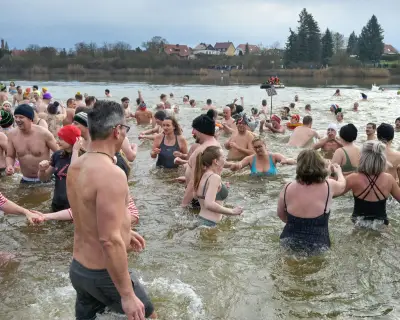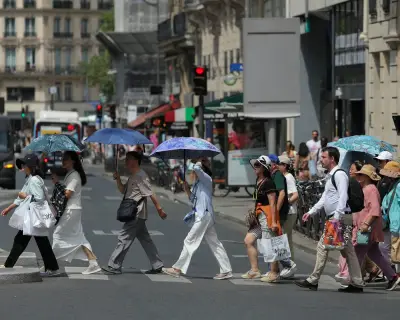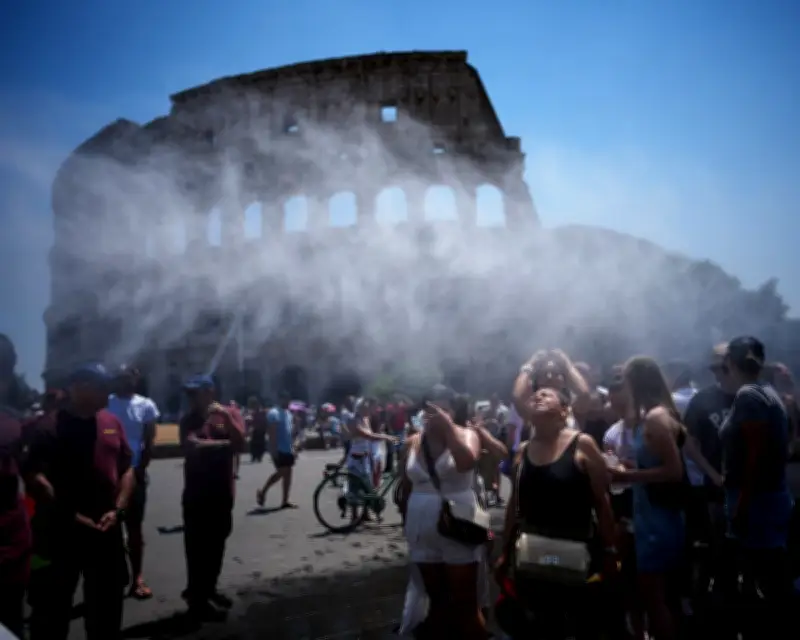
Last week's record-breaking heatwave across Europe, which saw temperatures soar above 40°C and affected more than 150 million people, has raised urgent questions about the continent's preparedness for extreme weather and the political response to the climate crisis. While scientists have long warned of such events, the heatwave has paradoxically created an opportunity for climate-sceptical far-right parties to gain support, according to experts.
Unprecedented Heat and Rising Death Toll
At its peak, the heatwave pushed temperatures past 40°C in several countries, including Germany, Poland, Czechia, and Hungary, with the UK recording its hottest June day ever at 37.3°C. The extreme heat has been linked to hundreds of deaths. Spain, which publishes real-time statistics on heat-related excess deaths, reported over 100 per day since Wednesday. French authorities recorded at least 1,000 additional deaths between 24 and 27 June, a figure expected to rise, including four toddlers who died in heat-related incidents. In a Paris suburb, a three-year-old boy was found dead after climbing into a car and becoming trapped.
Ajit Niranjan, the Guardian's Europe environment correspondent, noted that the heatwave's timing—occurring earlier in the year than ever before—underscores the accelerating pace of climate change. Europe is the world's fastest-warming continent, heating at twice the global average rate.

Unprepared Infrastructure and Health Systems
The heatwave placed immense strain on health and transport networks. In the UK, hundreds of schools closed early, workplaces became unbearable, and train operators advised against travel. The London Ambulance Service recorded its busiest day ever for the most serious callouts on Wednesday, with 642 responses to cardiac arrests, patients who stopped breathing, and life-threatening injuries. That record was broken just two days later, with more 999 calls than during the COVID-19 pandemic. In Germany, the town of Bautzen in eastern Saxony broke the national record for the highest overnight minimum temperature at 29.4°C.
Climate scientists had assumed that such extreme weather events in wealthy countries would galvanize support for renewable energy and green policies. However, this logic has not held. Instead, the climate has become a frontier of culture wars, with debates over air conditioning and public complaints about the heat being dismissed as "wimpy."
Far-Right Parties Exploit the Crisis
Niranjan highlighted a counterintuitive trend: far-right parties that deny climate science often gain traction after extreme weather events. They frame the disasters as failures of government policy, arguing that focusing on climate change was part of the problem and that mismanagement is to blame. This dynamic was seen after the 2021 floods in Germany's Ahr valley, which killed 188 people, and the 2024 floods in Valencia, Spain, where over 230 died after a year's worth of rain fell in eight hours. In both cases, climate change contributed to the extreme weather, but poor governance exacerbated the outcomes.
"Both sides of this issue need to be addressed," Niranjan said. "There is this weird tendency where political parties completely deny one of the causes by either focusing just on climate or just on adaptation, without having a good plan for the other. This is certainly a part of the strategy used by far-right parties to bash climate policy."
The Air Conditioning Debate
Social media amplified divisions over how to protect people from heat. In Paris, videos of people frying eggs on balconies went viral, while a post by Stripe CEO Patrick Collison, seen by nearly 20 million people, argued that Europe should embrace air conditioning and "admit that the American approach to summer was correct all along." However, Niranjan noted that the online debate exaggerates real-world resistance. "Within Europe, air conditioning is nowhere near as big of a fight as some of the international press have made it out to be," he said. "There are very few actual restrictions on putting in air conditioning units in your home. This meme in the US that we hate air-con and refuse to have it is not really true."
In France, green progressives have argued against air conditioning on ideological grounds, while the far-right National Rally has capitalized by announcing a "major" plan for AC.

Protecting the Vulnerable
Even with significant emissions cuts, extreme weather events will worsen in coming years. Niranjan emphasized that individuals can take meaningful action to help those most at risk. "For people who have this feeling of futility about climate change, there is still a lot we can do," he said. "Obvious things like drinking water, wearing loose-fitting clothing, staying in the shade, and avoiding the hotter parts of the day. But we also need to look out for vulnerable people. Older people especially cannot regulate their body temperature as well."
The World Health Organization reported that nearly 200,000 people have died in Europe due to heat in the past four years, with the majority of deaths preventable through adaptation measures. "The advice that a lot of charities have given is to check on your elderly neighbours, particularly those who live alone," Niranjan added. "Pop over with a glass of icy water or an ice-cream. None of this will make a difference to the big picture on the climate crisis, but it is ridiculously hot, and people are dying without many of us realising."