European Union diplomats are locked in a deepening dispute with the Trump administration over who should serve as the next top international envoy for Bosnia and Herzegovina, according to multiple diplomatic sources. The clash threatens to destabilize the already fragile political settlement in the Balkan nation.
Key Positions at Stake
The position in question is the High Representative for Bosnia and Herzegovina, a post created by the 1995 Dayton Peace Accords to oversee civilian implementation of the peace agreement. The current officeholder, Christian Schmidt, a German politician, has served since 2021, but his mandate expires later this year. The EU and the United States traditionally coordinate on the appointment, but this time Washington has put forward a candidate strongly opposed by Brussels.
According to three EU diplomats familiar with the negotiations, the Trump administration has nominated Michael Murphy, a former U.S. ambassador to Croatia and a known hardliner on Balkan issues. EU officials argue that Murphy's confrontational style could inflame ethnic tensions in Bosnia, which is already grappling with separatist rhetoric from Bosnian Serb leader Milorad Dodik.

EU's Preferred Candidate
The EU has instead rallied behind Johann Sattler, the current EU ambassador to Bosnia and Herzegovina, who has extensive experience in the region and is seen as more palatable to all three main ethnic groups: Bosniaks, Serbs, and Croats. "Sattler has the trust of the parties on the ground," said one senior EU diplomat, speaking on condition of anonymity. "Appointing someone with a different approach could undo years of painstaking progress."
The disagreement comes at a critical time. Bosnia's political system remains deeply fractured, with Dodik's Serb-led entity, Republika Srpska, increasingly challenging the authority of the central state. In recent months, Dodik has threatened to secede, prompting warnings from both the EU and the U.S. about the inviolability of Bosnia's borders.
US Stance and Broader Implications
The Trump administration has defended its nominee, arguing that Murphy's experience in Croatia and his tough stance on corruption make him ideal for the role. "The United States remains committed to the stability of Bosnia, but we need a High Representative who will hold all parties accountable," a State Department spokesperson said in a statement. The spokesperson did not comment on the EU's objections but noted that the appointment is a matter for the Peace Implementation Council (PIC), a group of 55 countries and international organizations that oversees the Dayton Accords.
However, the PIC operates by consensus, meaning the EU can block any nominee it deems unacceptable. This has led to a diplomatic standoff, with no clear resolution in sight. "We are in a waiting game," said a second EU diplomat. "Neither side wants to blink first, but the longer this goes on, the more the vacuum empowers extremists."
Historical Context and Recent Developments
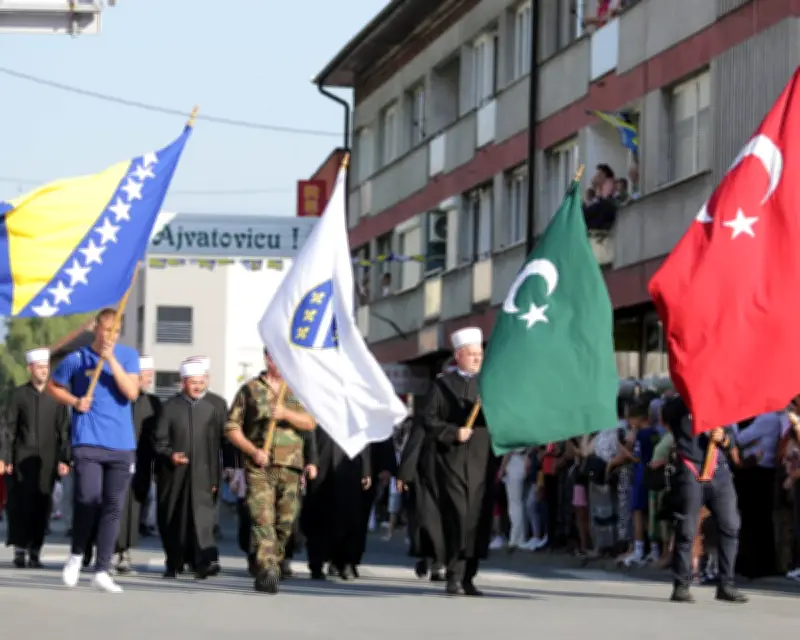
The High Representative's office has been a source of contention for years. Critics argue that the position, which has the power to impose laws and dismiss officials, is an undemocratic relic of the post-war era. Bosnian Serb and Croat leaders have called for its abolition, while Bosniaks and international actors see it as essential for preventing the country's collapse.
In a related development, the EU's foreign policy chief, Josep Borrell, is expected to raise the issue at the next meeting of EU foreign ministers. Borrell has previously warned that any unilateral move by the U.S. on the appointment could damage transatlantic relations. "The EU is united in its position," Borrell said in a recent press conference. "We cannot accept a candidate who does not enjoy the broad support of the international community."
The standoff has also drawn attention to broader tensions between the EU and the Trump administration over the Western Balkans. Washington has accused Brussels of being too slow in expanding EU membership to the region, while the EU has criticized the U.S. for undermining multilateral institutions. The Bosnia envoy dispute is seen as a test case for how the two sides will manage other regional issues, including Kosovo-Serbia normalization and political instability in Montenegro.

Impact on the Ground
In Bosnia, the uncertainty over the High Representative's future is already affecting daily politics. Dodik has seized on the division to push his separatist agenda, calling for the dissolution of the Bosnian army and judiciary. "The international community is fighting over a post while Bosnia burns," said a Sarajevo-based political analyst. "This plays directly into the hands of those who want to see the country break apart."
Meanwhile, civil society groups have urged the PIC to resolve the impasse quickly. "Every day without a High Representative is a day lost in the fight against corruption and ethnic nationalism," said Aida Prelic, a researcher at the Balkan Investigative Reporting Network. "We need someone who can act decisively, not a political pawn in a transatlantic spat."
The PIC is scheduled to meet again in September, but diplomats say a breakthrough before then is unlikely. In the meantime, the EU and the U.S. are exploring compromise candidates, though neither side has shown willingness to back down. "This is about more than just one person," the senior EU diplomat said. "It's about who sets the agenda for Bosnia's future."